|
|
|
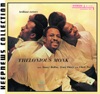
| “Monk invests the music with an emotional depth far beyond what may be described as a simple torch song....” |
|
 |
|
- Jeremy Wilson
|
|
| |
“I Surrender Dear” was Bing Crosby’s first solo hit, and, although it came about by circuitous circumstances, it played a large part in the beginning of his singing and film success.
Known as The Rhythm Boys, Bing Crosby, Harry Barris, and Al Rinker were a popular trio who performed with the Paul Whiteman Orchestra. In 1930, Bing Crosby was arrested on a drunk driving charge, an event that led to Paul Whiteman’s releasing the trio. The Rhythm Boys then joined Gus Arnheim and His Orchestra. It was with Gus Arnheim that Crosby recorded the Harry Barris/Gordon Clifford composition.
|
| |
| |
|
| |
|
|
| |
| |
|
| |
|
|
| |
| |
|
| |
|
Climbing the charts to third place in early 1931, this recording resulted in Crosby signing with CBS for his first radio show. Also that year, Crosby was asked by Max Sennett to do a short, musical film entitled, I Surrender Dear. Its success led to the production of more 2-reel films.
|
|
| |
|
| |
|
As Crosby’s solo career advanced, his commitment to The Rhythm Boys receded, resulting in their dissolution later in the year. This left Harry Barris free to pursue his career as a pianist, vocalist, bandleader, and even as supporting actor in a handful of movies.
“I Surrender Dear” also charted in 1931 for one week with Earl Burtnett and His Los Angeles Biltmore Hotel Orchestra (vocalist Don Dewey) and peaked at number eighteen. In 1935 it charted for one week with Red Norvo and His Orchestra, rising to number twenty.
Usually performed at a relaxed tempo, “I Surrender Dear” has been called “haunting” and “lonely” and even “slow and creepy.” This does not mean that it is dreary or distasteful. It is better characterized as “emotionally powerful,” a comment made regarding the arrangement on Thelonious Monk’s Brilliant Corners. Monk invests the music with an emotional depth far beyond what might be described as a simple torch song, given a cursory glance at the lyrics.
|
|
|
|
More information on this tune... |
|
|
 Thomas S. Hischak
The Tin Pan Alley Song Encyclopedia
Greenwood Press
Hardcover: 552 pages
(Hischak gives the history of the song and lists the performers and the films which feature it.)
|
|
|
|
- Jeremy Wilson
|
|
| This section suggests definitive or otherwise significant recordings that will help jazz students get acquainted with
“I Surrender Dear.” These recordings have been selected from the Jazz History and
CD Recommendations sections.
|
If looking for a definitive vocal performance of this tune, one should begin with Louis Armstrong’s 1931 recording ( Louis Armstrong 1930-1931). Many subsequent interpretations of the tune have been influenced by Armstrong’s playing and singing here. On the instrumental end, Thelonious Monk’s 1956 performance is a stunning reading of the tune and is also very significant as the lone standard on what may have been the most important album of his career, Brilliant Corners.
Noah Baerman - Jazz Pianist and Educator
|
|
Musical analysis of
“I Surrender Dear”
|
| Original
Key |
C major |
| Form |
A - A - B
- A |
| Tonality |
There is
a great deal of tension between major and
minor before resolving to C major at the
end of the “A” sections. |
| Movement |
Primarily
thirds in “A” sections, ascending for four
measures, then cascading back down in measure
5. “B” moves step-wise over the range of
a minor 3rd before a final downward leap
of a fifth and subsequent bounce back up
a fourth, returning to “A”. |
|
Comments
(assumed
background)
|
|
If one takes the practice of chord substitution
into consideration, the opening harmonic
progression of this song is similar to “I’ve Got You Under My Skin” and “Cheerful
Little Earful.” It is basically a ii7-V7-I-VI7,
with a iii substituting for “I.” This gives
the song an unsettled feeling, reflecting
the tortured emotions of the singer. Although
the harmony returns to “I” in measure 5,
this is not the true resolution, which is
delayed until the final (and title) line
of the chorus, “I surrender, dear.” In
“B”, the progression jumps up to III7 as
if there were to be a false key change to
A minor, but–keeping with the spirit of
the lyric–never quite makes it there, instead
reaching up to the IV chord (in the original
key, E7-F), then slipping back, only to
reach again – and slip back. Eventually,
it finally does resolve to vi, leading to
the II7-V7 progression that should logically
return to I but doesn’t until the final
measures of the song.
It is also worth noting that the melody
ends, not on the tonic note, but on the
fifth, thus strengthening the impression
of unresolved feelings and inner conflict.
This is not a difficult piece since it stays
within the range of a ninth. Performers
should listen carefully to their rhythm
section, keeping in mind that virtually
every harmonic resolution is a delayed one.
|
|
K. J. McElrath - Musicologist for JazzStandards.com |
|
Louis Armstrong is aptly credited as being the
first jazz vocalist. In some manner he influenced
almost every jazz (and pop vocalist) of the twentieth
century. His version of “I Surrender Dear” from
1931 exhibits every aspect of his ingenious vocal
style. In one chorus, he improvises not only melodically
but with the lyrics, even adding a brief bit of
scat singing.
The tune became a jam session favorite, especially
with swing players like Roy Eldridge and Chu Berry,
whose 1940 version under the band name “Chocolate
Dandies” is a wonderful example of these seminal
players stretching out. Also from 1940 is a memorable
version by
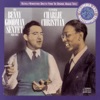
Benny Goodman’s sextet featuring young lion
Charlie Christian on electric guitar.
Chris Tyle - Jazz Musician and Historian
 Chocolate Dandies
1928-1940
EPM Musique 157982
|
|
|
|
|
Additional information for "I Surrender Dear" may be found in:
|
|
|
Thomas S. Hischak
The Tin Pan Alley Song Encyclopedia
Greenwood Press
Hardcover: 552 pages
(1 paragraph including the following types of information: film productions, history and performers.)
|
|
|
|
|
“I Surrender Dear” was included in these films:
- I Surrender Dear (1931, Bing
Crosby)
- The Tip-Off (1931)
- The Bloodhounds of Broadway
(1989, Madonna and Jennifer Grey sing a duet)
|
|
|
|
Comment Policy
- Your comments are welcome, including why you like
this tune, any musical challenges it presents, or additional background information.
- Jazz musicians, fans, and students of all ages use this website as an educational resource.
As such, off-topic, off-color, unduly negative, and patently promotional comments will be removed.
- Once submitted, all comments become property of JazzStandards.com.
By posting, you give JazzStandards.com permission to republish or otherwise distribute your comments in any format or other medium.
JazzStandards.com reserves the right to edit or remove any comments at its sole discretion.
|
|
| Click on any CD for more details at Amazon.com |
 Lennie Tristano
Out On A Limb
1998 Indigo 98
Original recording 1946
|
|
Tristano’s revolutionary approach to improvisation is perhaps most dramatically evident on his early recordings of standards in a trio with guitarist Billy Bauer. This compilation provides multiple takes of “I Surrender Dear,” which offers a fascinating source of study and comparison.
|
 Django Reinhardt
Django in Rome 1949-1950
Jsp Records
Original Recording 1949
|
|
These sessions marked the end of guitarist Reinhardt’s relationship with violinist Stephane Grappelli. This performance, alongside a group of Italian musicians, is full of the lyricism, energy and interplay that Reinhardt and Grappelli spent fifteen years developing.
|
 Paul Gonsalves
Gettin' Together
1991 Original Jazz Classics 203
Original recording 1960
|
|
Tenor saxophonist Gonsalves is heard here accompanied by the sympathetic rhythm section of pianist Wynton Kelly, bassist Sam Jones and drummer Jimmy Cobb. The interpretation is slow, sultry and achingly lyrical.
|
|
 Howard Alden & George Van Eps
Seven and Seven
1993, Concord 4584
|
|
Two seven-string guitar masters, here in a duo setting, update “I Surrender Dear”’ in a gentle reading. Their technical brilliance and insightful interpretations are applied to several other top standards on the CD as well.
|
|
 Thelonious Monk
Brilliant Corners
1991, Orig. Jazz Classics 26
Original recording, 1956
|
|
The pianist gives "I Surrender Dear"' a quirky reading in this, one of his most important recordings.
|
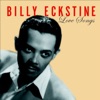
 Billy Eckstine
Love Songs
2004, Savoy Jazz
Original recording, 1954
|
|
The voice of Mr. B is like no other--deep, rich, warm, and seemingly effortless. This is a great collection of songs delivered in his inimitable manner.
|
|
|
|