|
|
|
| Thelonious Monk’s “Evidence” was first titled “Justice” and then “We Named It Justice,” both puns of the song on which it was loosely based, “Just You, Just Me.” |
|
 |
|
- JW
|
|
| |
Marion Davies and Lawrence Gray introduced “Just You, Just Me” in the 1929 MGM film Marianne. Also in the cast were Cliff Edwards, George Baxter, and Benny Rubin. Marianne was only moderately successful at the box office. According to Clive Hirschhorn in Hollywood Musicals, it was “the only musical in the history of the genre in which the leading lady and a pig attempt to upstage one another.”
|
| |
| |
|
| |
|
|
| |
| |

|
More on Lawrence Gray
|
|
| |
|
“Just You, Just Me” has fared much better than Marianne, becoming the most recognized song written by either Jesse Greer or Raymond Klages. The 1929 Cliff Edwards recording was on the pop charts for two weeks, rising to number 13, and subsequently, “Just You, Just Me” was recorded hundreds of times by over one hundred artists.
|
|
| |
|
| |
|
Lyricist Raymond Klages often partnered with songwriter Jesse Greer. Both wrote many dozens of songs for Broadway and Hollywood musicals during the 1920s and 1930s.
|
| |
| |
|
| |
|
|
| |
| |
|
| |
|
According to www.monkzone.com the “Official Thelonious Sphere Monk Website,” the (Monk) composition, “Evidence,” which was first recorded on July 2, 1948, went by various names, notably “Justice” and “We Named It Justice,” both puns of the song on which it was loosely based, “Just You, Just Me.” “Just Us” became “Justice” and finally “Evidence.” Both “Just You, Just Me” and “Evidence” are available from a 1964 session on Thelonious Monk’s, Live at the It Club
|
|
|
|
| This section suggests definitive or otherwise significant recordings that will help jazz students get acquainted with
“Just You, Just Me.” These recordings have been selected from the Jazz History and
CD Recommendations sections.
|
Lester Young had a deep relationship with “Just You, Just Me,” which he recorded several times, highlighted by a delightful 1952 performance with Oscar Peterson’s trio ( With the Oscar Peterson Trio). Meanwhile, Thelonious Monk’s 1956 performance of “Just You, Just Me” ( The Unique Thelonious Monk) shows the depth of his relationship with the tune, not surprising given that he used the tune as the basis for one of his own significant tunes, “Evidence.” Among vocal performances, Ella Fitzgerald’s nimble and light-hearted 1958 performance ( Ella Swings Lightly) is an excellent jumping-off point.
Noah Baerman - Jazz Pianist and Educator
|
|
Musical analysis of
“Just You, Just Me”
|
| Original
Key |
C major |
| Form |
A – A – B
– A |
| Tonality |
Major throughout |
| Movement |
Generally
downward by step, with some upward skips.
Sustained and repeated notes; some arpeggiation. |
|
Comments
(assumed
background)
|
|
Slow rhythm, both melodically and harmonically,
makes this an ideal “jam” tune. Melodic
structure is generally confined to chord
tones, making it easier to use exotic chord
substitutions and extended harmonies. The
progression of “A” bears some relation to
“rhythm changes” (“I
Got Rhythm”) in that a I – VI7 – ii
– V7 is used, followed by a variation of
I– I7 – IV – iv. (This tune substitutes
a bVII7 – Bb7 in the key of C – for the
iv chord.) The differences are that this
tune goes through the I – VI7 – ii V7 only
once, with each chord lasting twice as long–and
that VI7 is substituted for vi. The last
four measures of “B” turn this progression
on its head, going I – vi – II7 – V7. (The
vi here is preceded by a III7, presumably
because of the melody note at that point.) |
|
K. J. McElrath - Musicologist for JazzStandards.com |
|
Xylophonist/vibraphonist Red Norvo’s 1938 version
of this 1929 composition features an arrangement
by Eddie Sauter and some fine solos. A bop-influenced
big band arrangement by Benny Carter from 1943 features
the leader both on alto saxophone and trumpet.
Pianist Eddie Heywood’s 1944 combo recording
spotlights a neat arrangement and great solos by
trombonist Vic Dickenson, alto saxophonist Lem Davis,
trumpeter Doc Cheatham and the leader.
The tune picked up great momentum post-WW2 with
a plethora of small combo recordings. An interesting
recording from 1946 of Buddy Rich’s big band features
a marvelous arrangement by Tadd Dameron, who would
feature prominently in the bebop movement as an
arranger, bandleader, and pianist.
Chris Tyle - Jazz Musician and Historian
 Red Norvo and His Orchestra
1937-1938
Classics 1192
|
|
|
 Eddie Heywood and His Orchestra
1944-1946
Classic 1038
|
|
|
 Buddy Rich and His Orchestra
1947-1947
Classic 1099
|
|
|
|
|
Additional information for "Just You, Just Me" may be found in:
|
|
|
“Just You, Just Me” was included in these films:
- This Could Be the Night (1957)
- New York, New York (1977,
Liza Minnelli)
- Everyone Says I Love You (1997,
opening song, Helen Miles Singers)
- The Prize (1963)
- Hannah and Her Sisters (1986)
- Nat King Cole: Encore
(2004, compilation DVD)
|
|
|
|
Comment Policy
- Your comments are welcome, including why you like
this tune, any musical challenges it presents, or additional background information.
- Jazz musicians, fans, and students of all ages use this website as an educational resource.
As such, off-topic, off-color, unduly negative, and patently promotional comments will be removed.
- Once submitted, all comments become property of JazzStandards.com.
By posting, you give JazzStandards.com permission to republish or otherwise distribute your comments in any format or other medium.
JazzStandards.com reserves the right to edit or remove any comments at its sole discretion.
|
|
| Click on any CD for more details at Amazon.com |
 Thelonious Monk
The Unique Thelonious Monk
1991 Original Jazz Classics 64
Original recording 1956
|
|
This playful performance is the first of Monk’s numerous recordings of “Just You, Just Me,” which formed the basis for the classic Monk original “Evidence.”
|
 Jaki Byard
Freedom Together!
1997 Label 1898
Original recording 1966
|
|
Byard had already come into his own as a pianist by the time of this recording. What few realized, though, was what a fine saxophonist he was also. With two of his most valued cohorts, bassist Richard Davis and drummer Alan Dawson, Byard romps convincingly through this tune on tenor saxophone.
|
 Lester Young, Oscar Peterson Trio
Lester Young with Oscar Peterson Trio
Verve
|
|
Young gets to really stretch out on this performance, recorded nine years after his quartet version for Savoy. Oscar Peterson and his group play brilliantly and push Young to impressive heights.
|
 Bill Evans
Conversations With Myself
Polygram Records
Original Recording 1963
|
|
Evans overdubs multiple piano parts here, interacting with his own playing in creative and surprising ways. Each part he records stands on its own merits, and the combination of them is fascinating.
|
|
 Nat King Cole
Complete After Midnight Sessions
Blue Note Records
|
|
This is Cole’s jazziest vocal album, featuring his trio--John Collins (g), Charlie Harris (b) and Cole on piano--with guests, Lee Young (d), Willie Smith (as), Harry Edison (tp), Stuff Smith (violin), and Juan Tizol (tb). They cover three top standards--“Just You, Just Me,”’ “Caravan,”’ and “Sweet Lorraine.”’
|
 Benny Green
Green's Blues
2001 Telarc 83539
Original recording 2001
|
|
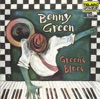
In this solo piano outing Green polishes off “Just You, Just Me” with a flurry of notes, displaying the technique that made him Oscar Peterson’s protege.
|
|
 Ella Fitzgerald
Ella Swings Lightly
1992, Polygram 517535
Original recording, 1958
|
|
Ella is backed here by the superb Marty Paich Dek-tette in an up-tempo version of "Just You, Just Me."'
|
 Lester Young
Verve Jazz Masters 30
1994, Verve 521859
Original recording, 1943
|
|
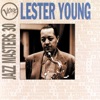
This is a three-minute version with Johnny Guarneri (p), Slam Stewart (b), and Sid Catlett (d). The CD includes six different small group sessions and is an excellent introduction to the saxophonist. A seven-minute version is available on Lester's In Washington D.C., 1956, Volume Three.
|
|
|
|