|
|
|
| “Among jazz instrumentalists, ‘I Got Rhythm’ is hands-down the most common Gershwin song.” |
|
 |
|
- C. Andre Barbera
|
|
| |
Not only did Ethel Merman introduce “I Got Rhythm” in the Broadway musical, Girl Cray, but Girl Crazy introducedEthel Merman to Broadway. The show opened on October 14, 1930, at the Alvin Theatre and ran for 272 performances. Ginger Rogers was the co-star of the show, but in her debut as a leading lady she lost the limelight to Ethel Merman.
Girl Crazy was originally written as a vehicle for Bert Lahr, but when he turned down the part for legal reasons, Willie Howard was brought in to take his place. The orchestra was the Red Nichols Band, including Benny Goodman, Glenn Miller, Jack Teagarden, Jimmy Dorsey, and Gene Krupa. This star-studded orchestra thrilled the audiences with jam sessions during the intermissions. George Gershwin conducted the music at the premier, but after that Earl Busby took over the baton.
A short time later, in 1930, Red Nichols and His Five Pennies with vocalist Dick Robertson took “I Got Rhythm” onto the recording charts, rising to number five. In 1931 Ethel Waters’ rendition peaked at seventeen, and in 1932 a Louis Armstrong version also rose to seventeen. Later on, in 1967, The Happenings (yes, the Happenings) recorded a rock version of “I Got Rhythm” which sold over a million copies and, according to The Happenings Official Web Site, placed number one on the charts.
|
|
| |
|
| |
|
In 1930 Ethel Merman had left her secretarial position and was just breaking into show business. An oft-repeated story was of her audition for Girl Crazy with George and Ira Gershwin. Merman was nervously lost in thought as to how she might phrase one of the songs by these songwriting masters who were seated before her. George Gershwin mistakenly thought Ethel Merman was tentative about his compositions. He offered to change anything she didn’t like in the songs. Surprised, she blurted out, “They will do very nicely, Mr. Gershwin.” The Gershwins were impressed by what they took as self-assurance, a quality for which Merman would later become well known. Her sensational performance in Girl Crazy was the beginning of a five-decade career; her last New York performance was at Carnegie Hall in 1982.
|
| |
| |
|
| |
|
|
| |
| |
|
| |
|
Other songs in the Girl Crazy score include:
A 1932 RKO film adaptation of Girl Crazy, starring Bert Wheeler and Robert Woolsey, relied on sophomoric comedy and not the original Gershwin score, retaining only “Bidin’ My Time,” “I Got Rhythm,” and “But Not For Me.” Variety called it “a weak sister” of the Broadway production.
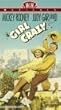 A 1943 release of the film fared much better. MGM’s Girl Crazy was the eighth Mickey Rooney/Judy Garland film and was generally well reviewed. The original story and score were left almost intact and all of the songs were included along with “Fascinating Rhythm” from 1924’s Lady Be Good. A 1943 release of the film fared much better. MGM’s Girl Crazy was the eighth Mickey Rooney/Judy Garland film and was generally well reviewed. The original story and score were left almost intact and all of the songs were included along with “Fascinating Rhythm” from 1924’s Lady Be Good.
Girl Crazy was also the basis for the 1966, MGM film, When the Boys Meet the Girls, starring Connie Francis and Harve Presnell. Suffice it to say that the best thing about this musical was its songs.
And finally, Girl Crazy was used as the basis for the 1992 Broadway hit, Crazy for You, which openedFebruary 19, 1992, and ran for 1622 performances. Seven of the songs from Girl Crazy were included in the score along with 13 other Gershwin songs.
“I Got Rhythm” was George Gershwin’s favorite among the songs he composed for Broadway musicals. An indication of this affection was the dedication to his brother Ira of his last concert work, The “I Got Rhythm” Variations, which was written expressly for a 1934 concert tour with the thirty-piece Leo Reisman Orchestra, conducted by Charles Previn. The 12,000-mile tour was a self-financed affair to celebrate the tenth anniversary of “Rhapsody in Blue.”
|
|
|
|
More information on this tune... |
|
|
 Will Friedwald
Stardust Melodies
Pantheon; 1st edition
Hardcover: 416 pages
(The author devotes 30 pages to ”I Got Rhythm” including its significance in history, analyses of the lyric and music, information on the songwriters, performers, and recordings. Eleven other great American songs are examined in depth in the book.)
|
|
|
|
See the Reading and Research page for this tune for additional references. |
|
- Jeremy Wilson
|
|
| This section suggests definitive or otherwise significant recordings that will help jazz students get acquainted with
“I Got Rhythm.” These recordings have been selected from the Jazz History and
CD Recommendations sections.
|
There is something deceptive about exploring the definitive versions of “I Got Rhythm.” Its chord changes have been mined for countless other jazz tunes and there are classic performances of these other tunes, with solos that are completely applicable to “I Got Rhythm,” by virtually every major jazz artist from the swing and bop movements. Looking only at versions of “I Got Rhythm” itself, Benny Goodman’s live quartet version from his famous Carnegie Hall concert ( Carnegie Hall Jazz Concert) is both historically significant and brilliant. Also brilliant is Nat “King” Cole’s 1946 trio version ( Transcriptions), which shows him bridging the gap between swing and bop. Among vocal versions, Ella Fitzgerald’s 1959 recording ( Oh, Lady, Be Good! Best of the Gershwin Songbook) is a good place to start, as the performance is swinging and faithful to the song.
Noah Baerman - Jazz Pianist and Educator
|
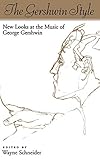
In Wayne Schneider’s The Gershwin Style: New Looks at the Music of George Gershwin, contributor C. Andre Barbera says, “Among jazz instrumentalists, ‘I Got Rhythm’ is hands-down the most common Gershwin song.” He goes on to say that the reason for its popularity is its regularity and simplicity which afford space for invention and also the fact that it was published in the “jazz-friendly” key of B-flat major.
Jazz musicians are familiar with the term “rhythm changes,” which is a phrase referring to the chord progressions of “I Got Rhythm.” In the first few decades of the 1900’s, record companies began encouraging musicians to reuse chord progressions of existing popular songs. In that way, they could borrow the harmonic formula of a successful song without running afoul of copyright laws. Although the “rhythm changes” are usually attributed to Gershwin’s “I Got Rhythm,” their exact origin is not known; many of the well-known composers of jazz standards, including Gershwin, mined the early jazz clubs for their material.
Regardless of their origin, the “rhythm changes” have been used for hundreds of published songs. Some examples are, “Allen’s Alley,” “Don’t Be That Way,” “The Flintstones,” “The Jeep is Jumpin’,” “Lemon Drop,” “Lester Leaps In,” “Red Cross,” “Rhythm-a-ning,” “Salt Peanuts,” “Shaw Nuff,” and “Squatty Roo.”
Charlie Parker had a genius for writing songs based on the chord progressions of “I Got Rhythm.” Just a few of these inventions are “Kim,” “Dexterity,” “Ah-Leu-Cha,” “Crazeology,” “Anthropology” and “Moose the Mooche.”
Sometimes Ira Gershwin would write the lyrics to a song and George would add the music. In the case of “I Got Rhythm,” George wrote the music and only after several weeks and many discarded attempts did Ira come up with satisfactory lyrics. The slangy lyrics reflect the exaggerated jazz rhythm in George’s music and also the upbeat tempo. The lyric’s optimism seems to be escapist fare aimed squarely at a depression-weary audience. In the verse, the singer declares happiness, cheer, and no need of money and then asks, “How do I get that way?” The answer in the refrain is, of course, “I Got Rhythm,” but also, music, my man, daisies, green pastures, starlight, and sweet dreams. -JW
|
Musical analysis of
“I Got Rhythm”
|
| Original
Key |
Bb major |
| Form |
A1 – A1 –
B – A2 (with two measure extension; usually
omitted today) |
| Tonality |
Major throughout |
| Movement |
“A” is pentatonic
rising and falling starting on the fifth
degree of the scale. “B” is note embellished
by upper and lower neighbors that leap down
a fifth; sequence repeats a step lower before
returning to “A” |
|
Comments
(assumed
background)
|
| The favorite harmonic progression of all
time except for the blues. The first two
measures correspond to the I – vi – ii7
–V7 of “Blue Moon” and “Heart And Soul,” etc. The next four measures–as
penned by Gershwin–are iii – ct˚7 – ii7
– V7 (Dm7 - Db˚7 – Cm7 – F7 in the original),
a nice variation. The final four measures
consist of I –I7 (V7/IV) – IV – iv – I over
an descending bass line. “B” is based on
a circle of fifths from the III7 chord,
but Gershwin surprises us just before V7
by inserting a Fr+6 (Gb7(b5) in the original
key). |
|
K. J. McElrath - Musicologist for JazzStandards.com |
|
June 9, 1945, stands out in particular as a fascinating
moment in jazz history. A concert held in New York’s
Town Hall featured some of the top small jazz groups
of the day. As a “filler,” there was a duet by Don
Byas (tenor saxophone) and Slam Stewart (string
bass)--an unheard of combination in jazz at that
time.
Byas’ mentors were Coleman Hawkins and Ben Webster,
yet he was working on 52nd Street with more harmonically
advanced players like Charlie Parker and
Dizzy Gillespie, their work influencing his
approach (in turn, Byas influenced players like
Sonny Rollins). Slam Stewart created a sensation
by his great bass playing and unusual bowed solos
with which he vocalized. Together, their performance
on “I Got Rhythm” not only stole the show but made
it clear that jazz was changing.
Unbelievably, this performance is not currently
available on CD. However there have been a number
of LP issues on Mainstream, Atlantic and CBS Special
Products Commodore reissue series.
Chris Tyle - Jazz Musician and Historian
|
Additional information for "I Got Rhythm" may be found in:
|
|
|
Will Friedwald
Stardust Melodies
Pantheon; 1st edition
Hardcover: 416 pages
(30 pages including the following types of information: history, lyric analysis, music analysis, performers, recordings and song writer discussion.)
|
|
|
|
|
 Ira Gershwin
Lyrics on Several Occasions
Limelight Editions
Paperback: 424 pages
(3 pages including the following types of information: anecdotal, lyric analysis and song lyrics.)
|
|
|
|
|
 Robert Gottlieb, Robert Kimball
Reading Lyrics
Pantheon
Hardcover: 736 pages
(Includes the following types of information: song lyrics.)
|
|
|
|
|
 Gerald Mast
Can't Help Singin'
Overlook Press; Rei edition
Paperback: 400 pages
(1 paragraph including the following types of information: lyric analysis and music analysis.)
|
|
|
|
|
“I Got Rhythm” was included in these films:
- Girl Crazy (1932, Kitty Kelly)
- Girl Crazy (1943, Judy Garland,
Mickey Rooney, Six Hits and a Miss, The Music
Maids,
- Rhapsody in Blue (1945, Hazel
Scott)
- An American in Paris (1951,
Gene Kelly, Children)
- Sincerely Yours (1955, Liberace)
- When the Boys Meet the Girls
(1965, Connie Francis, Harve Presnell, Louis
Armstrong)
- That’s Entertainment II (1976,
Judy Garland, Mickey Rooney, Chorus, Tommy Dorsey
Orchestra,
- American Pop (1981)
- My Girl (1991, Ann Nelson)
- Mr. Holland’s Opus (1995)
- Celebrity (1998, Teddy Wilson
Trio)
And on stage:
- Girl Crazy (1930, Ethel Merman,
The Foursome) Broadway musical
- Who Cares? (1970, New York
City Ballet) dance theater
- Crazy for You (1992, Jodi
Benson, The Company) Broadway musical
- Ethel Merman’s Broadway (1992,
Rita McKenzie) Off-Broadway
- Minnelli on Minnelli (1999,
Liza Minnelli) Broadway special
- Forbidden Broadway 2001: A Spoof Odyssey
(2000) Off-Broadway satirical revue
And on television:
- The Muppet Show (1980, Fozzie,
Rowlf) Season 4, Episode 120
- Crazy for You (1999, Stacey
Logan) PBS Great Performances
- Introducing Dorothy Dandridge
(1999, Halle Berry dubbed by Wendi Williams)
HBO biopic
|
| This section shows the jazz standards written by the same writing team. |
|
|
|
|
Comment Policy
- Your comments are welcome, including why you like
this tune, any musical challenges it presents, or additional background information.
- Jazz musicians, fans, and students of all ages use this website as an educational resource.
As such, off-topic, off-color, unduly negative, and patently promotional comments will be removed.
- Once submitted, all comments become property of JazzStandards.com.
By posting, you give JazzStandards.com permission to republish or otherwise distribute your comments in any format or other medium.
JazzStandards.com reserves the right to edit or remove any comments at its sole discretion.
|
|
| Click on any CD for more details at Amazon.com |
 Quintet of the Hot Club Of France
Swing from Paris
Emarcy Import
Original recording 1935
|
|
This recording documents the rise to prominence of the Quintet of the Hot Club of France, featuring guitarist Reinhardt and violinist Stephane Grappelli. Both soloists are on fire on this spirited performance.
|
 Count Basie & His Orchestra
America's #1 Band
Sony
Original Recording 1950
|
|
This dynamic live recording shows the Basie band in its prime. Featured soloists on this tune include Harry “Sweets” Edison on trumpet, Vic Dickenson on trombone and Lester Young on tenor saxophone.
|
 Benny Goodman
Carnegie Hall Jazz Concert
Sony 65143
Original recording 1938
|
|
A tour-de-force quartet performance of “I Got Rhythm” was a highlight of this groundbreaking concert. Clarinetist Goodman, pianist Teddy Wilson, drummer Gene Krupa and vibraphonist Lionel Hampton are all in peak form and meld beautifully.
|
 Ella Fitzgerald
Oh, Lady, Be Good! Best of the Gershwin Songbook
1996 Polygram 529581
Original Recording 1959
|
|
Nelson Riddle’s orchestra begins with a slow, string-heavy reading of the verse. Once the main part of the tune enters, though, it’s vintage, swinging Fitzgerald, complete with some restrained but masterful scatting.
|
 Nat King Cole Trio
Transcriptions
Blue Note Records
Original recording 1949
|
|
Pianist Cole’s classic trio with guitarist Oscar Moore and bassist Johnny Miller is heard in peak form on this virtuosic up-tempo instrumental performance.
|
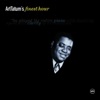
 Art Tatum
Art Tatum's Finest Hour
Polygram Records
Original Recording 1940
|
|
Pianist Tatum is heard here in his trio with bassist Slam Stewart and guitarist Tiny Grimes. The bright tempo and challenging harmonies of the tune sound like toys in Tatum’s hands as he slashes his way through the tune.
|
 Hampton Hawes
Hampton Hawes Trio, Vol. 1
1991 Original Jazz Classics 316
|
|
Pianist Hawes always struck a natural balance between the traditional and the modern. His energetic and soulful trio performance of “I Got Rhythm” is one of the prime examples of this.
|
|
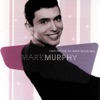
 Mark Murphy
Crazy Rhythm and His Debut Recordings
1999 GRP Records 670
Original recordings 1956-1957
|
|
Vocalist Murphy sounds as great today as he did in this composite of early recordings. He’s always taken liberties with every aspect of a song to make it his own. In the mid-section of “I Got Rhythm”’ the backup musicians go crazy while he holds a deliberate pace. He also includes the seldom heard verse.
|
 King & Moore
Potato Radio
1993, Justice Records 802
|
|
Vocalist Nancy King and bassist Glen Moore set a new rhythmic pattern for “I Got Rhythm” before Nancy scats it to Mars and back, settling back in to end with a giggle.
|
|
 Charlie Parker
Essential
Polygram Records 517173
Compilation
|
|
This twelve-minute rendition is from a live no-net performance of Jazz at the Philharmonic. It’s a virtual wall of jazz sound and excitement.
|
 Zoot Sims
Zoot Sims and the Gershwin Brothers
1991, Original Jazz Classics 444
Original recording, 1975
|
|
This recording has a crackerjack line-up, including Oscar Peterson, piano; Joe Pass, guitar; George Mraz, bass; and Grady Tate, drums. Zoot is in fine form and finds plenty of meat in this timeless standard.
|
|
|
|