|
|
|
| “An interesting comparison is the contrasting styles of pianists Art Tatum and Erroll Garner in their versions from 1949.” |
|
 |
|
- Chris Tyle
|
|
| |
On November 8, 1926, the musical Oh Kay! opened at the Imperial Theater, and during that memorable performance Gertrude Lawrence introduced the audience to a song entitled “Someone to Watch over Me.” Oh Kay! would enjoy great success on Broadway, running for 256 performances before crossing the Atlantic for a London version in 1927. The musical would again court success in a 1960 Off-Broadway revival and again on Broadway in 1990.
|
| |
| |
|
| |
|
It is little wonder the musical was such an enduring hit. With a libretto written by Guy Bolton and P.G. Wodehouse and music and lyrics by George and Ira Gershwin the score included songs such as “The Woman’s Touch,” “Don’t Ask!” “Dear Little Girl,” “Maybe,” “Clap Yo’ Hands!” “Do, Do, Do,” “Bride and Groom,” “Fidgety Feet,” “Heaven on Earth,” “Oh, Kay!” and, of course, “Someone to Watch over Me.” Joining Gertrude Lawrence in the original cast were Oscar Shaw, Victor Moore, Harland Dixon, The Fairbanks Twins, Gerald Oliver Smith, Betty Compton, and Constance Carpenter.
While the musical did have many things going for it, competition was fierce on Broadway. Ira Gershwin was quick to point out that “Oh, Kay!” was one of eleven shows opening that night and one of over 240 shows opening that year.
The working title for the production was Mayfair and then Cheerio, before it became “Oh, Kay!” It is widely believed that “Kay” refers to George’s romantic and musical colleague, Kay Swift (1897-1993), an accomplished pianist and composer and the first woman to write a complete Broadway musical, Fine and Dandy (1930).
Publicist and lyricist Howard Dietz is credited with helping write the lyrics to the songs “Oh, Kay!” and “Heaven on Earth” during Ira’s six-week hospitalization for an appendectomy. In his autobiography, Dancing in the Dark, Dietz comments that George gave him credit for an undistinguished song, “Oh, Kay!” written by Ira and no credit for “Someone to Watch over Me,” for which Dietz claims credit for naming the tune and assisting with the lyrics. Dietz said, “George paid me next to nothing. It was decided I was to get one cent for every copy of sheet music sold. When Ira sent me my first paycheck it was for 96 cents.”
“Someone to Watch over Me” was a hit three times over in 1927. In February, Gertrude Lawrence’s recording with Tom Waring at the piano was on the charts for 11 weeks, peaking at number two. In March, George Olsen and His Orchestra, with vocalists Fran Frey, Bob Borger, and Bob Rice, took an upbeat version to number three. Also in March George Gershwin’s own version rose to number seventeen.
|
|
| |
|
| |
|
“Someone to Watch over Me” was originally written as an up-tempo rhythm song. While experimenting one day, George played it at a slower pace, and the brothers immediately recognized it as the wistful, warm song that we know today. The song became a highlight of “Oh Kay!” as a forlorn Gertrude Lawrence, alone on stage and dressed in a maid’s uniform, sang “Someone to Watch over Me” to a rag doll. Broadway critic Percy Hammond wrote that Lawrence’s performance had “wrung the withers of even the most hard-hearted of those present.”
|
| |
| |
|
| |
|
|
| |
| |
|
| |
|
|
|
|
|
More information on this tune... |
|
|
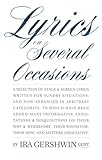 Ira Gershwin
Lyrics on Several Occasions
Limelight Editions
Paperback: 424 pages
(The lyricist himself devotes four pages to “Someone to Watch Over Me,” telling anecdotes, recalling its history, and discussing his lyric.)
|
|
|
|
See the Reading and Research page for this tune for additional references. |
|
- Jeremy Wilson
|
|
| This section suggests definitive or otherwise significant recordings that will help jazz students get acquainted with
“Someone to Watch Over Me.” These recordings have been selected from the Jazz History and
CD Recommendations sections.
|
The tenderness of “Someone to Watch Over Me” is particularly well-suited to intimate musical settings. Ella Fitzgerald’s 1950 performance ( Pure Ella), accompanied only by the piano of Ellis Larkins, is a great example of this and a classic among Fitzgerald’s many great ballad recordings. Blossom Dearie’s gorgeous 1959 recording ( My Gentleman Friend) also revolves around piano, in this case her own, though there is subtle rhythm section activity here as well. Art Tatum, meanwhile, enjoyed some of his most lyrical moments on his many solo piano explorations of this tune, beginning with a great recording in 1949 ( 1949).
Noah Baerman - Jazz Pianist and Educator
|
George Gershwin’s use of repeated
notes is widely recognized and found
in many of his songs, including
“Oh,
Lady Be Good!” (1924), “That
Certain Feeling” (1925), “They
Can’t Take That Away From Me”
(1937), and “A
Foggy Day” (1937). In Wayne
Schneider’sThe
Gershwin Style: New Looks at the
Music of George Gershwin,
contributor C. Andre Barbera says,
“[Repeated notes] build melodic
tension while emphasizing rhythm
and holding the door open for harmonic
ingenuity…the ear is simply drawn
to the harmonic progressions.” The
opportunity to showcase harmonic
ingenuity makes these songs compelling
to many jazz musicians. And shifting
the complexity to the bass line
increases the likelihood the song
will be a hit because more artists
can sing it.
Gershwin wasn’t the first or
the last to use the repeated notes
device. Examples are common, ranging
from Chopin’s “Prelude in E minor”
to
Cole Porter’s “Every
Time We Say Goodbye” (1944).
In the October, 1998, issue of
Atlantic Monthly, David Schiff
points out in his article, “Misunderstanding
Gershwin,” that “Gershwin
may have taken some of his most
distinctive musical touches from
Chopin’s ‘Prelude in E minor’…Chopin’s
melody emphasizes numerous repetitions
of the same pitch…Each time a note
is repeated, the harmony under it
changes…making the melodic notes
sound ever more intense.” Schiff
suggests to the reader, “Listen
to the Chopin and then to ‘Someone
to Watch over Me’; Gershwin’s song
is virtually a paraphrase of the
prelude.” -JW
|
Musical analysis of
“Someone to Watch Over Me”
|
| Original
Key |
Eb major |
| Form |
A – A – B
– A |
| Tonality |
Major throughout |
| Movement |
“A” is a
rising pentatonic scale, descending in a
step-wise pattern before ending by leaping
up a fifth and down an octave. “B” is primarily
step-wise with some upward and downward
skips. |
|
Comments
(assumed
background)
|
|
The “A” section displays an interesting
example of a standard chord progression
used in an unusual way, and it is a virtual
showcase, demonstrating the usefulness of
the vii˚ chord. Every other chord in this
initial progression is preceded by a vii˚
that includes the melody note, making for
a smooth transition. The surprise comes
at the end of “A,” when the ii-vii˚-IV sequence
resolves not to I, as the ear might expect,
but to vi (in the original key, C minor).
From there it completes the cycle of ii
– V7 –I. The tricky part of the tune is
here; because of the following I – VI –
ii –V7 turnaround, Gershwin adds an extra
measure, thus creating a NINE-bar phrase
instead of the usual eight bars. It is important
to listen and COUNT at this point, because
the overwhelming tendency is to go back
to the rising pentatonic lead-in to the
second “A” in measure eight, instead of
measure nine where it belongs. (This does
not happen at the end of the second “A”.)
The same holds true in the “B” section;
because the harmonic progression requires
eight full measures to complete, “B” contains
an extra measure for the lead-in to the
last “A”. The best recommendation here is
to simply “read the ink” until the nine-measure
phrases are comfortable.
|
|
K. J. McElrath - Musicologist for JazzStandards.com |
|
Vocalist Lee Wiley recorded an album of all Gershwin
tunes in 1939 featuring various small groups associated
with guitarist Eddie Condon. On her version of “Someone
to Watch over Me,” she was accompanied only by
Fats Waller on organ, an instrument he was as
easily at home with as piano. Their version is a
marvelous example of simplicity.
The tune began to pick up momentum in the mid-1940s
with recordings by: trumpeter
Billy Butterfield (formerly with
Bob Crosby,
Benny Goodman and Artie Shaw); Eddie Condon,
in an album of Gershwin favorites (1944); and tenor
saxophonists Coleman Hawkins (1945) and Ike Quebec
(1946). An interesting comparison is the contrasting
styles of pianists Art Tatum and
Erroll Garner in their versions from 1949.
Chris Tyle - Jazz Musician and Historian
|
Additional information for "Someone to Watch Over Me" may be found in:
|
|
|
Ira Gershwin
Lyrics on Several Occasions
Limelight Editions
Paperback: 424 pages
(4 pages including the following types of information: anecdotal, history and song lyrics.)
|
|
|
|
|
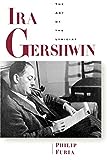 Philip Furia
Ira Gershwin: The Art of the Lyricist
Oxford University Press; Reprint edition
Paperback: 308 pages
(3 pages including the following types of information: history and lyric analysis.)
|
|
|
|
|
 Robert Gottlieb, Robert Kimball
Reading Lyrics
Pantheon
Hardcover: 736 pages
(Includes the following types of information: song lyrics.)
|
|
|
|
|
 Edward Jablonski
Gershwin: A Biography
Bdd Promotional Book Co
Hardcover
(2 paragraphs including the following types of information: history.)
|
|
|
|
|
“Someone to Watch Over Me” was included in these films:
- Rhapsody in Blue
(1945)
- Young at Heart (1955,
Frank Sinatra)
- Three for the Show
(1955, Marge Champion)
- Beau James (1957,
Vera Miles)
- The Helen Morgan Story
(1957, Gogi Grant dubbing for
Ann Blyth)
- Star! (1968, A
Gertrude Lawrence biography;
sung by Julie Andrews)
- Someone to Watch Over
Me (1987, Sting)
- Cider House Rules
(1999, played by George Gershwin)
And on Broadway:
- Crazy for You (1992,
Jodi Benson)
|
| This section shows the jazz standards written by the same writing team. |
|
|
|
|
Comment Policy
- Your comments are welcome, including why you like
this tune, any musical challenges it presents, or additional background information.
- Jazz musicians, fans, and students of all ages use this website as an educational resource.
As such, off-topic, off-color, unduly negative, and patently promotional comments will be removed.
- Once submitted, all comments become property of JazzStandards.com.
By posting, you give JazzStandards.com permission to republish or otherwise distribute your comments in any format or other medium.
JazzStandards.com reserves the right to edit or remove any comments at its sole discretion.
|
|
| Click on any CD for more details at Amazon.com |
 Ella Fitzgerald
Pure Ella
Verve
Original Recording 1954
|
|
Fitzgerald made a name for herself singing with large ensembles and swinging combos, but this duo recording was significant in proving that she did not depend on having that accompaniment. Here she is backed only by the sensitive piano of Ellis Larkins, and that is all she needs as she gives a lovely, assured performance of “Someone to Watch Over Me.”
|
|
 Blossom Dearie
My Gentleman Friend
2003, Verve
Original recording, 1959
|
|
This rendition may just be the definitive vocal version. Dearie's wistful delivery leaves listeners feeling as if they are eavesdropping on her deepest desires.
|
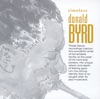
Donald Byrd
Timeless
2002, Savoy
Original recording, 1955
|
|
Trumpeter Byrd is at the top of his game on this rendition with warm rich tone and flawless technique.
|
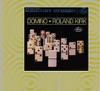
 Rahsaan Roland Kirk
Domino
2000 Verve 833
Original recording 1962
|
|
Multi-reed player Kirk was widely known for his brash and often experimental music, but he could lay back and play a ballad with the best of them. Here, backed by such stellar accompanists as Wynton Kelly and Roy Hayes, he does just that.
|
 Stephane Grappelli
Improvisations
2001, Universal
Original recording, 1956, Verve
|
|
Violinist Grappelli departs from his trademark gypsy swing and explores the realm of the intimate jazz trio. The song allows him to step to the forefront and exercise musical chops that had previously been overshadowed by Django Reinhardt.
|
 Dave Brubeck
One Alone
2000, Telarc
|
|
Late in a long and illustrious career pianist Brubeck continues to astound. His solo take on the song is distinguished by its wit, elegance and taste.
|
|
|
|