|
|
|
| “A highlight of this recording is the playing of her musical soulmate, Lester Young, and sometime Bing Crosby accompanist Joe Sullivan on piano.” |
|
 |
|
- Chris Tyle
|
|
| |
Sometimes a song manages to succeed against all odds. As the sheet music for “The Man I Love” was on its way to production, it was unceremoniously dropped from the 1924 Broadway musical Lady, Be Good! The song was then included in Strike Up the Band (1927), which closed during its out-of-town tryouts. It was then slated for the Ziegfeld hit Rosalie (1928), a team effort by Sigmund Romberg, the Gershwins, and P.G. Wodehouse. Yet again the song was dropped before the show opened. Even a modestly successful 1930 revival of Strike Up the Band could not end the song’s streak of bad luck as the Gershwins agreed to drop it before the show opened.
Despite such endless setbacks, the homeless composition had become popular in London and Paris as Lady Mountbatten, a Gershwin friend, had returned to Europe with a copy of the sheet music. Slower to catch on in the United States, the popularity of “The Man I Love” crested in 1928 with five recordings on the pop charts in the same year. A 1927 recording by Marion Harris led the way, entering the charts in March and rising to number four.
- Marion Harris (1928, #4)
- Sophie Tucker (1928 #11)
- Paul Whiteman and His Orchestra (1928, Vaughan DeLeath, vocal, #15)
- Fred Rich and His Orchestra (1928, Vaughan DeLeath, vocal, #19)
- Benny Goodman and His Orchestra (1937, #20)
|
| |
| |
|
| |
|
|
|
| |
|
| |
|
“The Man I Love” was also the signature song for George Gershwin’s weekly CBS radio show, Music by Gershwin, which ran from 1934 to 1935.
|
| |
| |
|
| |
|
|
| |
| |
|
| |
|
The ballad’s checkered past was not due to lack of appeal and it became one of Gershwin’s biggest hits despite the lack of a successful production association. The song’s problem stemmed more from the fact that it just didn’t fit in a lively musical. Standing alone “The Man I Love” was wonderful, but in a show it brought the action to a near standstill.
As improvisational vehicles, many songs could not endure the transition from the loose Dixieland style of the “Roaring Twenties” to the smooth swing sound of the 1930’s. They were dropped from jazz musicians’ catalogs, performances and recordings and relegated to period collections and specialty bands. There are, however, a handful of songs written in the mid-twenties or earlier that have persisted as the topmost jazz standards: W.C. Handy’s “St. Louis Blues” (1914); George and Ira Gershwin’s “The Man I Love” (1924) and “Oh, Lady Be Good” (1924); and the Ken Casey, Maceo Pinkard, Ben Bernie composition “Sweet Georgia Brown” (1925).
|
|
|
|
More information on this tune... |
|
|
 Ira Gershwin
Lyrics on Several Occasions
Limelight Editions
Paperback: 424 pages
(The lyricist himself, over five pages, discusses the song’s history and lyric and tells anecdotes.)
|
|
|
|
See the Reading and Research page for this tune for additional references. |
|
- Jeremy Wilson
|
|
| This section suggests definitive or otherwise significant recordings that will help jazz students get acquainted with
“The Man I Love.” These recordings have been selected from the Jazz History and
CD Recommendations sections.
|
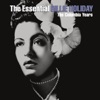
The place to start with “The Man I Love” is Billie Holiday’s compelling 1938 performance ( The Quintessential Billie Holiday, Vol.8: 1939-1940). As for instrumental versions, a landmark moment occurred in 1943 for both the song and for saxophonist Coleman Hawkins. This Hawkins performance of “The Man I Love” ( Ken Burns JAZZ Collection: Coleman Hawkins) features the saxophonist at his peak and is also significant for its role in signaling the arrival of the influential bassist Oscar Pettiford, who plays a short but forward-looking solo here.
Noah Baerman - Jazz Pianist and Educator
|
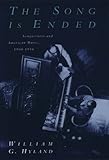
In William G. Hyland’s
The Song Is Ended: Songwriters and American Music,
1900-1950, the author points out that “The
Man I Love” is the best-known Gershwin example of
a song’s metamorphosis. “It began as a verse to
another song, which was never completed. Ira liked
it and suggested changing it to a refrain, rather
than a verse.”
Written in what amounts to an A1-A2-B-A3 form
(the second and fourth sections are slightly different
from the first) “The Man I Love” has always been
attractive to jazz musicians. The melody is catchy,
the departure in the bridge is surprising, and the
repetition of its four-bar melodic phrases, coupled
with the steadily descending harmony, provides a
predictable basis for improvisational tangents.
-JW
|
Musical analysis of
“The Man I Love”
|
| Original
Key |
Eb major,
turning to C minor during the bridge |
| Form |
A1 – A2 –
B – A3 |
| Tonality |
“A” is major;
“B” is parallel minor. |
| Movement |
The “A” motif
is a step up and down, ending with a skip
up a third, repeated over different harmonies
and on different pitches. “B” starts out
stepwise and then leaps up a sixth, followed
by a step and a skip down and a step up. |
|
Comments
(assumed
background)
|
|
The initial chord progression descends step-wise
in a unique way. The harmonic catalyst is
when the initial I chord turns minor, becoming
a ii7 of the chord below it (in the original
key, Eb – Ebm7 – Db). The next two chord
changes are common-tone ones, as the melody
note–fifth scale degree–becomes the augmented
fifth of the one that follows. The next
chord changes require only the movement
of the bass to become the “Neapolitan” chord
of V7 (a “Neapolitan,” or N6, is a half-step
higher than the chord it resolves to and
is sometimes used as a substitute for the
V7 chord).
“B” is the old “I – II7– V7” progression,
but in the minor, it is given a haunting,
searching quality. The parallel minor here
uses a common-tone, diminished chord to
lead into the ii-V7 progression, returning
the song to the original key.
|
|
K. J. McElrath - Musicologist for JazzStandards.com |
|
Recorded 15 years after its introduction, vocalist
Billie Holiday’s 1939 version of this tune is
a soulful performance, evoking an after-hours atmosphere.
A highlight of this recording is the playing of
her musical soulmate, Lester Young, and sometime
Bing Crosby accompanist Joe Sullivan on piano.
However, it’s Coleman Hawkins’
unique 1943 treatment that surprised the jazz world.
Normally played as a ballad, Hawkins doubled
the tempo for an extended romp. From the first chorus,
by Eddie Heywood, the players eschew the melody
in favor of improvisation. Hawkins, who had a keen
ear for talent, utilizes young lions Oscar Pettiford
on bass and Shelley Manne on drums to round out
the rhythm section.
Chris Tyle - Jazz Musician and Historian
|
Additional information for "The Man I Love" may be found in:
|
|
|
 David Ewen
Great Men of American Popular Song
Prentice-Hall; Rev. and enl. ed edition
Unknown Binding: 404 pages
(1 paragraph including the following types of information: history.)
|
|
|
|
|
 Thomas S. Hischak
The Tin Pan Alley Song Encyclopedia
Greenwood Press
Hardcover: 552 pages
(1 paragraph including the following types of information: Broadway productions, film productions, history, performers and style discussion.)
|
|
|
|
|
Ira Gershwin
Lyrics on Several Occasions
Limelight Editions
Paperback: 424 pages
(5 pages including the following types of information: anecdotal, history and song lyrics.)
|
|
|
|
|
 Philip Furia
Ira Gershwin: The Art of the Lyricist
Oxford University Press; Reprint edition
Paperback: 308 pages
(4 pages including the following types of information: history and lyric analysis.)
|
|
|
|
|
 Robert Gottlieb, Robert Kimball
Reading Lyrics
Pantheon
Hardcover: 736 pages
(Includes the following types of information: song lyrics.)
|
|
|
|
|
 Edward Jablonski
Gershwin: A Biography
Bdd Promotional Book Co
Hardcover
(3 paragraphs including the following types of information: history.)
|
|
|
|
|
 Gerald Mast
Can't Help Singin'
Overlook Press; Rei edition
Paperback: 400 pages
(1 paragraph including the following types of information: lyric analysis and music analysis.)
|
|
|
|
|
“The Man I Love” was included in these films:
- Rhapsody in Blue (1945, Hazel
Scott)
- The Man I Love (1946, Ida
Lupino dubbed by Peg La Centra)
- Young Man with a Horn (1950,
Doris Day, Harry James Orchestra)
- Sincerely Yours (1955, Liberace)
- The Helen Morgan Story (1958,
Ann Blyth dubbed by Gogi Grant)
- Lady Sings the Blues (1972,
Diana Ross)
- New York, New York (1977,
Liza Minnelli, Robert De Niro dubbed on sax
by Georgie Auld)
- Hot Shots! (1991, Valeria
Golino)
- Hero (1992)
- About Adam (2000, Kate Hudson)
- For Love or Country: The Arturo Sandoval
Story (2000, Orquesta Cubana de Musica
Moderna) HBO biopic
And on stage:
- Lady Be Good (1924, Adele
Astaire) withdrawn
- Strike Up the Band (1927,
Vivian Hart, Roger Pryor, reprised as "The Girl
I Love" by Morton Downey) Broadway musical
- Rosalie (1928) (Outtake)
- Who Cares? (1970, New York
City Ballet)
And on television:
- Who Cares? (2004, New York
City Ballet) PBS
|
| This section shows the jazz standards written by the same writing team. |
|
|
|
|
Comment Policy
- Your comments are welcome, including why you like
this tune, any musical challenges it presents, or additional background information.
- Jazz musicians, fans, and students of all ages use this website as an educational resource.
As such, off-topic, off-color, unduly negative, and patently promotional comments will be removed.
- Once submitted, all comments become property of JazzStandards.com.
By posting, you give JazzStandards.com permission to republish or otherwise distribute your comments in any format or other medium.
JazzStandards.com reserves the right to edit or remove any comments at its sole discretion.
|
|
| Click on any CD for more details at Amazon.com |
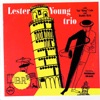
 Lester Young
The Lester Young Trio
Polygram Records 21650
Original recording 1946
|
|
The ideas flow endlessly on this relaxed, swinging performance. Young is accompanied by drummer Buddy Rich and, in a rare sideman appearance, pianist Nat “King” Cole.
|
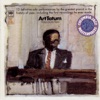
 Art Tatum
Piano Starts Here
Sony 64690
Original recording, 1933
|
|
On this solo piano performance, Tatum takes “The Man I Love” at a medium tempo, and the underlying pulse is relaxed and swinging. Nonetheless, he manages to insert breathtaking runs that sound as if there are at least two pianists there.
|
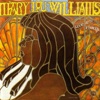
 Mary Lou Williams
Live at the Cookery
1994 Chiaroscuro 146
Original recording 1975
|
|
This track should be enlightening for those unaware of how modern Williams’ playing was. Her take on “The Man I Love” is striking in its harmonic richness.
|
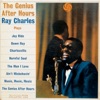
 Ray Charles
Genius After Hours
2001 Rhino 2735232
Original recording 1956
|
|
On this slow-tempo performance we can hear Charles’ influential, soulful sound as well as his underrated straight-ahead jazz skills. His trio here includes the great bassist Oscar Pettiford.
|
|
 Don Shirley
...Plays Love Songs/Don Shirley Trio
1999 Collectables 2758
Original recording
|
|
Pianist Shirley is impossible to categorize because he incorporates classical, jazz, spiritual, and folk styles into his playing. At last his work is being reissued on CD. Here he takes “The Man I Love” around the block with a solo opening and a duo with cello. Then he picks up the tempo with bass and finally gives it a full concert reading at breakneck speed with cello and bass.
|
|
 Ella Fitzgerald
Oh, Lady, Be Good! Best of the Gershwin Songbook
1996 Polygram 529581
Original Recording 1959
|
|
With Nelson Riddle’s arrangement, this rendition of the song is as close to perfection as one can get. Fitzgerald’s elegance does “The Man I Love”’ justice.
|
 Betty Carter
Look What I Got
1990, Polygram 835661
Original recording, 1988
|
|
Carter was a vocalist in a realm of her own when interpreting standards. She makes a narrative of “The Man I Love,”’ disregarding the melody at times and dragging out phrases to emphasize their story qualities. Several young musicians went through “The Carter School of Music,”’ and some of the graduates appear here: Benny Green (p), Winard Harper (d), Michael Bowie (b), with tenor saxophonist Don Braden.
|
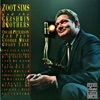
 Zoot Sims
Zoot Sims and the Gershwin Brothers
1991, Original Jazz Classics 444
Original recording, 1975
|
|
On an album which the Penguin Guide to Jazz on CD calls a “glorious sparring match with (Oscar) Peterson,”’ Sims proves again his limitless understanding of the Gershwin’s music. He revisits “The Man I Love”’ twenty years after making a recording of it that stood the jazz world on its ear.
|
|
|
|