|
|
|
| “It’s Bobby Hackett’s 1939 big band recording that made musicians aware of the virtues of this tune.” |
|
 |
|
- Chris Tyle
|
|
| |
Ginger Rogers and Allen Kearns introduced an Alvin Theatre audience to “Embraceable You” during the first performance of Girl Crazy, on October 14, 1930. Although the Broadway musical marked Rogers’ debut as a leading lady, she lost the limelight to newcomer Ethel Merman who brought down the house with her introduction of “I Got Rhythm.”
|
| |
| |
|
| |
|
|
| |
| |
|
| |
|
Girl Crazy was originally written as a vehicle for Bert Lahr, but when he turned down the part for legal reasons, master of accents, Willie Howard, was brought in to take his place. The orchestra for the performance was the Red Nichols Band which included Benny Goodman, Glenn Miller, Jack Teagarden, Jimmy Dorsey, and Gene Krupa. The star-studded orchestra thrilled the audiences with jam sessions during the intermissions. George Gershwin conducted the music at the premier before handing the baton over to Earl Busby. Girl Crazy would run for 272 performances.
The Girl Crazy score also included “Bidin’ My Time,” “Sam and Delilah,” “I Got Rhythm,” “But Not For Me,” “Treat Me Rough!” and “Boy! What Love Has Done to Me!”
A 1932 RKO film adaptation of Girl Crazy, starring Bert Wheeler and Robert Woolsey, relied on sophomoric comedy and not the original Gershwin score retaining only “Bidin’ My Time,” “I Got Rhythm,” and “But Not For Me.” Variety called it “a weak sister” of the Broadway production.
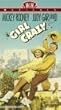 A 1943 release of the film fared much better. MGM’s Girl Crazy was the eighth Mickey Rooney/Judy Garland film and was generally well reviewed. The original story and score were left almost intact and all of the songs were included along with “Fascinating Rhythm” from 1924’s Lady Be Good added. A 1943 release of the film fared much better. MGM’s Girl Crazy was the eighth Mickey Rooney/Judy Garland film and was generally well reviewed. The original story and score were left almost intact and all of the songs were included along with “Fascinating Rhythm” from 1924’s Lady Be Good added.
MGM again visited the well in 1966 with Girl Crazy as the basis for the film, When the Boys Meet the Girls, starring Connie Francis and Harve Presnell. Suffice it to say the highlight of the musical was the songs.
Over sixty years after making its debut, Girl Crazy was once again on Broadway, this time as the basis for the 1992 hit Crazy For You. The musical opened onFebruary 19th and ran for 1622 performances. Seven of the songs from Girl Crazy were included in the score along with 13 other Gershwin songs.
The music for “Embraceable You” was originally written in 1928-29 for a Ziegfeld musical based on the 1918 play East is West. Although the musical was never produced, some of the songs were recycled into another Ziegfeld production, Show Girl, with “Embraceable You” being saved for Girl Crazy. A recent auction included a Gershwin sketchbook containing, among the East is West material, an early version of “Embraceable You,” slightly different and without lyrics but nevertheless the same song.
|
| |
| |
|
| |
|
|
| |
| |
|
| |
|
“Embraceable You” climbed onto the pop charts within weeks of its Broadway introduction with a Red Nichols and His Five Pennies (Dick Robertson, vocal) rendition rising to number two in November, 1930. Over a decade later, in 1941, Jimmy Dorsey and His Orchestra with Helen O’Connell on vocals had a modest hit, rising to number twenty-three.
The flip side of Red Nichols’ recording was another Girl Crazy number, “I Got Rhythm.” Nichols’“I Got Rhythm” only made it to number five, losing out to “Embraceable You.” The two songs’ relative popularity with 1930 consumers is reflected today. “Embraceable You” is recorded by more jazz artists than “I Got Rhythm,” despite the popularity of the “I Got Rhythm” chord progressions that have been used as the basis of literally hundreds of jazz songs.
|
|
| |
|
| |
|
|
|
|
|
More information on this tune... |
|
|
 Allen Forte
Listening to Classic American Popular Songs
Yale University Press; Book & CD edition
Hardcover: 219 pages
(Ten pages of this book are devoted to the song’s history and analyses of the music and lyric, which is included. The book also has a companion CD.)
|
|
|
|
See the Reading and Research page for this tune for additional references. |
|
- Jeremy Wilson
|
|
| This section suggests definitive or otherwise significant recordings that will help jazz students get acquainted with
“Embraceable You.” These recordings have been selected from the Jazz History and
CD Recommendations sections.
|
Bobby Hackett’s big band version of “Embraceable You” ( 1938-40) is a terrific performance and a historical stand-out. The same could be said of Charlie Parker’s rendition ( Complete Dial Sessions), which displays his endless invention and offers a glimpse of how ballad playing changed in the bebop era. To become familiar with the tune, however, the place to start is with Sarah Vaughan’s historic recording of 1954 ( Sarah Vaughan W/ Clifford Brown), one of her crowning moments as an interpreter of ballads.
Noah Baerman - Jazz Pianist and Educator
|
|
Musical analysis
of “Embraceable You”
|
|
Original Key |
G
major, with brief passages in E
minor and D major |
|
Form |
A1
– B – A2 |
|
Tonality |
Primarily
major |
|
Movement |
80%
step-wise, with occasional downward
leaps ranging from a fourth to an
octave. |
|
Comments
(assumed
background)
|
|
The chord progression and initial
melodic figure are similar to “Moonlight Serenade” and “Witchcraft”–three
notes ascending scalewise, beginning
on the 6th, over a I – vii˚7/V7
– V7 progression (while not in Gershwin’s
original version, an embellishing
ii chord is often inserted between
the vii˚7 and the V7)
Challenges to the performer:
occasional wide interval leaps and
chords with unexpected resolutions
(particularly at the end of measure
12 going into 13, and 28 going into
29). Gershwin used many “embellishing”
chords, which is this tune’s blessing
as well as its curse. Mainly these
extra harmonies are decorative and
tasteful substitutions for the otherwise
plain “I -V7 – I” progression. They
can lead the unwary novice performer
astray, however, if s/he does not
remain aware of the harmonic direction.
The best advice is to learn the
head thoroughly with accompaniment
and then begin one’s improvisations
by adding embellishments to the
original melody before striking
out in new directions.
|
|
K. J. McElrath - Musicologist for JazzStandards.com |
|
Although “Embraceable You*” had been
recorded numerous times by various artists
in the 1930s, it’s Bobby Hackett’s 1939
big band recording that made musicians aware
of the virtues of this tune. About this
performance, Richard M. Sudhalter wrote
in his book
Lost Chords: White Musicians and Their Contribution
to Jazz 1915-1945, “The Hackett
charms are in fully early bloom; balanced
phrasing, the melodic essence glowing through
the embellishments; an unerring ability,
as (cornetist) Ruby Braff observed, to select
the most poignant intervals and chordal
voices, all delivered with a heart-warming
tone.” Hackett was a self-proclaimed
Louis Armstrong fan, yet his approach
verged on the cool and in some ways precedes
Miles Davis’ playing, who was a self-proclaimed
Hackett fan.
Chris Tyle - Jazz Musician and Historian
|
Additional information for "Embraceable You" may be found in:
|
|
|
Allen Forte
Listening to Classic American Popular Songs
Yale University Press; Book & CD edition
Hardcover: 219 pages
(10 pages including the following types of information: history, lyric analysis, music analysis and song lyrics. (Book includes CD).)
|
|
|
|
|
 Ira Gershwin
Lyrics on Several Occasions
Limelight Editions
Paperback: 424 pages
(3 pages including the following types of information: anecdotal, history, lyric analysis and song lyrics.)
|
|
|
|
|
 Philip Furia
Ira Gershwin: The Art of the Lyricist
Oxford University Press; Reprint edition
Paperback: 308 pages
(1 paragraph including the following types of information: lyric analysis.)
|
|
|
|
|
 Robert Gottlieb, Robert Kimball
Reading Lyrics
Pantheon
Hardcover: 736 pages
(Includes the following types of information: song lyrics.)
|
|
|
|
|
 Gary Giddins
Visions of Jazz: The First Century
Oxford University Press; New Ed edition
Paperback: 704 pages
(2 pages including the following types of information: music analysis and jazz solo transcription.)
|
|
|
|
|
“Embraceable You” was included in these films:
- Girl Crazy (1930,
Allen Kearns, Ginger Rogers)
- Girl Crazy (1932,
Arline Judge, Eddie Quillan)
- Girl Crazy (1943,
Judy Garland, Tommy Dorsey Orchestra,
MGM Studio Chorus)
- Rhapsody in Blue (1945,
Joan Leslie dubbed by Louanne Hogan)
- Humoresque (1946)
- Nancy Goes to Rio
(1950, Jane Powell)
- An American in Paris
(1951, Leslie Caron)
- With a Song in My Heart
(1952, Susan Hayward dubbed
by Jane Froman, Robert Wagner)
- Sincerely Yours (1955,
Liberace)
- When the Boys Meet the Girls
(1965, Harve Presnell)
- Who Cares? (1970,
New York City Ballet)
- Manhattan (1979, New
York Philharmonic, Zubin Mehta)
- City Heat (1984, Irene
Cara)
- Bicentennial Man (1999,
Paula West)
- Catch Me If You Can
(2002, Judy Garland)
- Taking Sides (2002)
- The Human Stain (2003,
Teddy Wilson)
And on stage:
- Crazy for You (1992,
Jodi Benson, Harry Groener)
And on television:
- I Love Lucy (1955)
Episode 117, "The Fashion Show"
- Jeeves and Wooster
(1990) Granada TV comedy series
- Crazy for You (1999,
Stacey Logan, Jim Walton)
|
| This section shows the jazz standards written by the same writing team. |
|
|
|
|
Comment Policy
- Your comments are welcome, including why you like
this tune, any musical challenges it presents, or additional background information.
- Jazz musicians, fans, and students of all ages use this website as an educational resource.
As such, off-topic, off-color, unduly negative, and patently promotional comments will be removed.
- Once submitted, all comments become property of JazzStandards.com.
By posting, you give JazzStandards.com permission to republish or otherwise distribute your comments in any format or other medium.
JazzStandards.com reserves the right to edit or remove any comments at its sole discretion.
|
|
| Click on any CD for more details at Amazon.com |
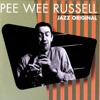
 Pee Wee Russell
Jazz Original
1997 Verve 404
Original recording 1938
|
|
Clarinetist Russell plays brilliantly on this recording with Eddie Condon’s all-star group, also featuring saxophonist Bud Freeman and trombonist Jack Teagarden. Russell would also appear the following year on Bobby Hackett’s recording of the tune.
|
 Charlie Parker
Complete Dial Sessions
2004 Definitive 11152
Original recording 1947
|
|
There are two takes of “Embraceable You” here and each one is a gem. Bird’s playing is lyrical and creative, and having two takes to compare reveals an almost complete absence of repetition or cliches in his improvisation.
|
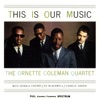
 Ornette Coleman
This Is Our Music
2002 Sepia Tone 2
Original recording 1960
|
|
Coleman made this recording as an answer to those who wondered how he might interpret a standard. The result is a historical landmark, melodic and emotional yet free and unpredictable.
|
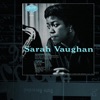
 Sarah Vaughan and Clifford Brown
Sarah Vaughan W/ Clifford Brown
Polygram Records
|
|
Clifford Brown and Sarah Vaughan had a brilliant collaboration on this album, but Brown sits this one out. Vaughan offers an all-time classic rendition of the tune, delivering the lyric gently and creatively while backed only by her trio.
|
 Eric Kloss
About Time
2002 Prestige 24268
Original recording 1965
|
|
The teenaged Kloss plays here with maturity and confidence. Heard here on alto, he interprets “Embraceable You” as an energetic swinger, aided by fellow Philadelphians Pat Martino on guitar and Don Patterson on organ.
|
|
 George Cables
By George
1991, Contemporary 87 Fantasy #14030
Original recording, 1987, Fantasy
|
|
The pianist, whom Art Pepper named “Mr. Beautiful,”’ lovingly interprets six Gershwin beauties. Five of the tunes feature his trio with bassist John Heard and drummer Ralph Penland. “Embraceable You” and “Someone to Watch Over Me” are piano solos, rich with innovation but respectful of the source.
|
|
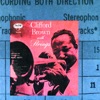
 Clifford Brown
Clifford Brown with Strings
Polygram Records 558078
Original recording, 1955
|
|
Brown’s bright, concise trumpet work in front of a backdrop of exquisite strings conveys the romanticism of a truly romantic song.
|
 Billie Holiday
The Silver Collection
1990, Polygram Records #23449
Original recording, 1956-57
|
|
This CD includes two sessions. On “Embraceable You”’ Billie is joined by “Sweets”’ Edison, Ben Webster, Jimmy Rowles, Barney Kessel, Red Mitchell, and Alvin Stoller. Mitchell said that he adopted the tune as his signature because it laid so nicely on his fifth-tuned bass.
|
 John Stetch
Stetching Out
1996 Terra Nova 9013
Original recording 1996
|
|
Breathtaking innovation is an understatement when describing this solo piano rendition. Sophisticated and daring, Stetch takes “Embraceable You” to a whole new level of improvisation, rearranging the song without losing one ounce of the sentiment behind it.
|
|
|
|