|
|
|
| In addition to Astaire’s wistful rendition of ‘They Can’t Take That Away From Me,’ the score included ‘Shall We Dance,’ ‘(I’ve Got) Beginners Luck,’ ‘They All Laughed,’ and ‘Let’s Call the Whole Thing Off.’” |
|
 |
|
- JW
|
|
| |
After the success of Porgy and Bess, which opened September 30, 1935, George and Ira Gershwin returned to Hollywood to write music exclusively for motion pictures. George was hoping to produce musical scores that would result in hit songs, and his aspirations were realized in the musicals Shall We Dance (1937) and Damsel in Distress (1937). Unfortunately he did not live to see the completion of The Goldwyn Follies (1938) for which he had written two hit songs, “Love is Here to Stay” and “Love Walked In.” George Gershwin died on July 11, 1937.
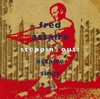
Although its storyline was thin and a bit tedious, Shall We Dance was a box-office success. The Gershwin score and the popularity of its stars, Fred Astaire and Ginger Rogers (their seventh film appearance in four years), overcame what the movie lacked in plot. In addition to Astaire’s wistful rendition of “They Can’t Take That Away From Me,” the score included “Shall We Dance,” “(I’ve Got) Beginners Luck,” “They All Laughed,” and “Let’s Call the Whole Thing Off,” all of which would become best selling recordings by Astaire. (Astaire reprises many of his hits in Steppin’Out, recorded in 1952 with a group of superlative jazz musicians.)
|
| |
| |
|
| |
|
George Gershwin was counting on Shall We Dance to “plug” his songs and was initially disappointed. In his opinion “They Can’t Take That Away From Me” was all but wasted on the film due to the brevity of its performance (only the verse and just one chorus). His fears were unfounded as the song went on to do well on the pop charts:
- Fred Astaire (1937, with Johnny Green and His Orchestra, #1 for 10 weeks)
- Ozzie Nelson and His Orchestra (1937, Ozzie Nelson, vocal, #6)
- Tommy Dorsey and His Orchestra (1937, Jack Leonard, vocal, #11)
- Billie Holiday and Her Orchestra (1937, #12)
|
|
| |
|
| |
|
“They Can’t Take That Away From Me” would be the only Gershwin song to win an Academy Award nomination.
|
| |
| |
|
| |
|
In 1949, Fred Astaire sang “They Can’t Take That Away From Me” to Ginger Rogers again, in their first film together in ten years. MGM’s The Barkleys of Broadway was originally scheduled to star Fred Astaire and Judy Garland, reprising their recent success of Easter Parade. Garland did not show up, however, claiming health problems, and was replaced by Ginger Rogers, making it the tenth and last film for the dancing duo. Some of the Harry Warren score was modified to suit Roger’s voice, and the film’s producer, Arthur Freed, decided it would be a nostalgic touch to include “They Can’t Take That Away From Me.” Harry Warren was not happy about this, saying, “Not that I didn’t like the song, but there isn’t a composer alive who likes having a song by someone else interpolated into his score.”
|
| |
| |
|
| |
|
Ira’s inspiration for those lyrics was reportedly Paulette Goddard, the object of George’s romantic attention at the time, even though she was married to Charlie Chaplin.
In his book Easy to Remember: The Great American Songwriters and Their Songs William Zinsser suggests that “They Can’t Take That Away From Me” fits into the category he calls a “list” song. A list song is one that “used some kind of enumerating device to catalogue affairs of the heart.” He gives as other examples, “These Foolish Things,” “I Wish I Were in Love Again,” and, the king of list songs, “You’re the Top.”
|
|
|
|
More information on this tune... |
|
- Jeremy Wilson
|
|
| This section suggests definitive or otherwise significant recordings that will help jazz students get acquainted with
“They Can't Take That Away from Me.” These recordings have been selected from the Jazz History and
CD Recommendations sections.
|
It seems as though every major vocalist in jazz since the late 1930s has lent his or her skills to “They Can’t Take That Away From Me,” from Billie Holiday’s pathos-laden 1937 version ( The Billie Holiday Collection) to the more lighthearted 1956 recording by Ella Fitzgerald and Louis Armstrong ( Ella and Louis). Perhaps the best place to start exploring this tune, however, is by listening to the man who popularized the tune, Fred Astaire. He revisited the tune in 1952 ( Steppin' Out: Astaire Sings), with the accompaniment of Oscar Peterson’s group adding a layer of jazz authenticity.
Noah Baerman - Jazz Pianist and Educator
|
Much has been written about George
Gershwin’s use of repeated notes
in songs like “I
Got Rhythm,” “Lady
Be Good,” and “A
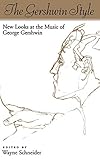
Foggy Day.” In Wayne Schneider’s
The Gershwin Style: New Looks at
the Music of George Gershwin,
contributor C. Andre Barbera says
that this device is compelling for
jazz musicians: “[Repeated notes
build] melodic tension while emphasizing rhythm
and holding the door open for harmonic
ingenuity.”
In the
case of “They Can’t Take That Away
From Me,” the extent of the repeated
notes apparently was not by original
design. According to Edward Jablonski
in
Gershwin: A Biography, the
melody started out as “…a simple
but haunting rhythmic manipulation
of a single tone: three eighth notes
and one quarter note.” Ira, however
suggested two more repeated notes
so he could fit the lyrics, “The
way you wear your hat…”
-JW
|
Musical analysis of
“They Can’t Take That Away from Me”
|
| Original
Key |
Eb major,
going temporarily to G minor in the bridge |
| Form |
A1 – A2 –
B – A2 with two-measure extension |
| Tonality |
“A” is primarily
major; “B” goes to the minor. |
| Movement |
Repeated
tones in “A” section are followed by skips
up and down and then descending pentatonically;
“B” is based on a descending pentatonic
pattern. |
|
Comments
(assumed
background)
|
|
Once again, Gershwin demonstrates his ability
to create a masterpiece with very little
in the way of material. The entire piece
is based on two closely related pentatonic
scales – Eb and Bb (over G minor tonality).
He uses one additional note (Ab) only one
time, going into the two-measure tag at
the end. The sophisticated harmonic progression,
with its ascending embellishment chords
and the use of altered chords, belies the
melodic simplicity but also creates challenges
for the performer.
At many significant points in the song
there is a chord change every beat. For
example, the first sustained note is played
over an ascending I –ii7 - #ii˚7 – I6 (3rd
in the bass), while the penultimate measure
of A, containing the title line, is played
IV – ii7 – iiim7(b5) – VI7(b9) – II7 or
IV – ii7 – V7 – V7 (first inversion) at
the rate of one chord per beat. Functionally,
they are not necessary since they represent
simple three-chord cadences (IV – VI7 –
II7 or IV – V7 – I), but much of this song’s
richness would be lost without them. The
same might be said for the I – V7 sequence
of “B”. Were it not for the addition of
the ii7(b5), it would become tedious very
quickly.
|
|
K. J. McElrath - Musicologist for JazzStandards.com |
|
For a few months during 1937 Count Basie had
vocalist
Billie Holiday with his band. Sadly no commercial
recordings were made with Holiday, but there are
a handful of live broadcast recordings, including
“They Can’t Take That Away from Me,” showing Holiday
in a much more relaxed form than on her April, 1937,
studio recording.
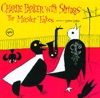
Alto sax wonder Charlie Parker was next to record
the tune, in 1950, on his famous session with strings.
Parker’s frequent colleague, trumpeter
Dizzy Gillespie, would do two versions, in 1952
and 1953.
Fred Astaire, dancer and vocalist who introduced
the tune in 1937, would revisit it (along with other
numbers from his movie career) in a session for
Verve Records, with Oscar Peterson and guest all-stars
in 1952.
Chris Tyle - Jazz Musician and Historian
|
Additional information for "They Can't Take That Away from Me" may be found in:
|
|
|
 Ira Gershwin
Lyrics on Several Occasions
Limelight Editions
Paperback: 424 pages
(2 pages including the following types of information: history, lyric analysis and song lyrics.)
|
|
|
|
|
 Philip Furia
Ira Gershwin: The Art of the Lyricist
Oxford University Press; Reprint edition
Paperback: 308 pages
(2 pages including the following types of information: anecdotal and lyric analysis.)
|
|
|
|
|
 Robert Gottlieb, Robert Kimball
Reading Lyrics
Pantheon
Hardcover: 736 pages
(Includes the following types of information: song lyrics.)
|
|
|
|
|
“They Can't Take That Away from Me” was included in these films:
And in the Broadway musical:
- Crazy for You (1992,
Harry Groener)
|
| This section shows the jazz standards written by the same writing team. |
|
|
|
|
Comment Policy
- Your comments are welcome, including why you like
this tune, any musical challenges it presents, or additional background information.
- Jazz musicians, fans, and students of all ages use this website as an educational resource.
As such, off-topic, off-color, unduly negative, and patently promotional comments will be removed.
- Once submitted, all comments become property of JazzStandards.com.
By posting, you give JazzStandards.com permission to republish or otherwise distribute your comments in any format or other medium.
JazzStandards.com reserves the right to edit or remove any comments at its sole discretion.
|
|
| Click on any CD for more details at Amazon.com |
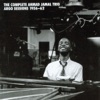
 Ahmad Jamal
The Legendary Okeh and Epic Recordings
2005 Sony 93580
Original recording 1955
|
|
Pianist Jamal is joined here by guitarist Ray Crawford and bassist Israel Crosby. Their performance of “They Can’t Take That Away From Me” is swinging and tightly arranged, showing the characteristics that made this trio so influential, particularly on the musical direction of Miles Davis with his mid-1950s quintet.
|
|
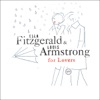
 Ella Fitzgerald, Louis Armstrong
Ella & Louis
Polygram Records
Original Recording 1956
|
|
Fitzgerald's silky voice wraps itself around Armstrong's gruff growl in this rendition, one of the best tracks on a great album.
|
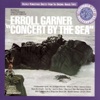
 Erroll Garner
Concert by the Sea
Sony 40589
original recording 1955
|
|
Garner's masterwork contains definitive versions of almost every song on the album. "You Can't Take That Away from Me"' is unforgettable.
|
 Billie Holiday
The Collection
2004 Sony 61538
Original recording 1938
|
|
Holiday, backed by Teddy Wilson’s group, gives “They Can’t Take That Away From Me” a tender, lyrical and highly emotional treatment.
|
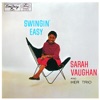
 Sarah Vaughan
Swingin' Easy
1992 Polygram 14072
Original recording 1954
|
|
At a swinging tempo, Vaughan delivers a spunky, infectious performance. Her swinging trio, anchored by drummer Roy Haynes, keeps things moving throughout.
|
Mel Tormé
Mel Tormé Sings Fred Astaire
1994, Bethlehem
Original recording, 1956
|
|
The combination of Marty Paich’s arrangements, stellar jazz musicians, and Torme’s insightful approach to the songs that Astaire introduced makes this a desert island disc.
|
 Duke Jordan
Trio & Quintet
1994, Savoy 149
Original recording, 1955
|
|
Pianist Jordan’s version of the song belies the bop influence of his time with Charlie Parker. Percy Heath and Art Blakey join him for this one.
|
 Joe Pass
Blues for Fred
2004, Pablo
Original recording, 1988
|
|
Pass was the complete soloist on guitar, playing the bass line and the melody while keeping the rhythm going. Here he starts “You Can’t Take That Away from Me” sweetly and then ups the tempo.
|
|
|
|