|
|
|
| “‘A Foggy Day’ has been described as ‘beautiful,’ ‘easy-going,’ ‘atmospheric,’ and, interestingly, ‘timeless,’ considering the brothers are said to have written the song in less than an hour.” |
|
 |
|
- JW
|
|
| |
Fred Astaire introduced “A Foggy Day” in the 1937, RKO musical, A Damsel in Distress. Later that year his recording of the song would rise to number three on the pop charts. “Things Are Looking Up” and “Nice Work If You Can Get It,” two other songs from the Gershwin score, were also charting hits, with the latter rising to number one. “A Foggy Day” was on the charts again early in 1938 when Bob Crosby and His Orchestra, with vocalist Kay Weber, saw their version rise to number 16.
|
| |
| |
|
| |
|
|
|
| |
|
| |
|
Based on a P.G. Wodehouse novel, published in 1919 A Damsel in Distress had proven itself a popular commodity years before George Gershwin had a notion of making it into a musical comedy. It had already been made into a 1920 silent film and then graced the stage as a play in 1928. Gershwin’s attraction to the book was understandable. The central figure in the novel is a character named George who, though successful as a composer, is unsuccessful at finding the right woman to marry.
It is intriguing to consider that even though the book predates the RKO movie by eighteen years, it is conceivable that the fictional George contained elements of (the real) George Gershwin’s personality. Ohio State Professor John Mueller, co-author of the hit musical A Foggy Day (Shaw Festival, Ontario Canada), writes in his background notes, “As it happens, George Gershwin had been a rehearsal pianist for Miss 1917, a musical Kern and Wodehouse had worked on, and the promising young composer may have been in mind when the whimsical novelist got around to dubbing his American songwriter-hero.”
|
| |
| |
|
| |
|
|
| |
| |
|
| |
|
The casting for A Damsel in Distress did not go smoothly. RKO was forced to find another partner for Fred Astaire when, after seven movies together, Ginger Rogers demanded a break from musicals. With Joan Fontaine replacing Rogers, the movie company attempted to compensate by including the comedy team of George Burns and Gracie Allen. While audiences were disappointed with the break in tradition, they were thrilled with the superb Gershwin score.
|
|
|
|
More information on this tune... |
|
|
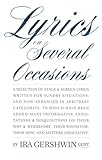 Ira Gershwin
Lyrics on Several Occasions
Limelight Editions
Paperback: 424 pages
(The lyricist himself gives an anecdotal history of the song and discusses his lyric.)
|
|
|
|
See the Reading and Research page for this tune for additional references. |
|
- Jeremy Wilson
|
|
| This section suggests definitive or otherwise significant recordings that will help jazz students get acquainted with
“A Foggy Day.” These recordings have been selected from the Jazz History and
CD Recommendations sections.
|
Ella Fitzgerald and Louis Armstrong’s 1956 recording of “A Foggy Day” ( Ella and Louis) stands out as one of the great vocal renditions of the tune. Among instrumental versions, the swinging 1956 performance by Red Garland’s trio ( A Garland of Red) is a classic example of the tune as a hard-swinging number. Meanwhile, the tune’s applicability as an up-tempo vehicle is well-demonstrated on Art Tatum’s recording from the same year along with the clarinet of Buddy DeFranco ( The Tatum Group Masterpieces, Vol. 7).
Noah Baerman - Jazz Pianist and Educator
|
Ira Gershwin’s beguiling verse almost paraphrases
the chorus. Both verse and chorus open with gloom
and then transition to an uplifting close. The verse
suspends the answer, however, leaving the chorus
to explain what transformed the foggy day into “the
luckiest day I’ve known.” While the verse is not
always included on vocal recordings, it can be heard
by Ella Fitzgerald (The
Complete Songbooks - George and Ira Gershwin),
Louis Armstrong (Ella and Louis), Chris
Connor (Chris Connor Sings The George Gershwin
Almanac of Song), and Rosemary Clooney (Dedicated
to Nelson).
Critical analyses of “A Foggy Day” rarely fail
to comment on the simplicity of the song and George
Gershwin’s use of repeated notes. William Zinsser,
in
Easy to Remember: The Great American Songwriters
and Their Songs, says that “the song is calm
and mature, wise in its understatement” and that
it takes its emotion from “repetitive clusters and
melodic jumps.”
George Gershwin’s use of repeated notes is widely
recognized and found in many of his songs including
“Oh,
Lady Be Good!” (1924), “That Certain Feeling”
(1925), “Someone
to Watch Over Me” (1926), and “They
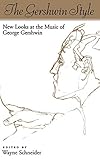
Can’t Take That Away From Me” (1937). In Wayne
Schneider’s The
Gershwin Style: New Looks at the Music of George
Gershwin, contributor C. Andre Barbera says,
“[Repeated notes] build melodic tension while emphasizing
rhythm and holding the door open for harmonic ingenuity…the
ear is simply drawn to the harmonic progressions.”
The opportunity to showcase harmonic ingenuity makes
these songs compelling to many jazz musicians. And
shifting the complexity to the bass line increases
the likelihood the song will be a hit because more
artists can sing it.
Gershwin wasn’t the first or the last to use
the repeated notes device. Examples are common,
ranging from Chopin’s “Prelude in E minor” to
Cole Porter’s “Every
Time We Say Goodbye” (1944). In the October,
1998, issue of Atlantic Monthly, David Schiff
points out in his article “Misunderstanding Gershwin”
that “Gershwin may have taken some of his most distinctive
musical touches from Chopin’s ‘Prelude in E minor’…Chopin’s
melody emphasizes numerous repetitions of the same
pitch…Each time a note is repeated, the harmony
under it changes…making the melodic notes sound
ever more intense.”
- JW
|
Musical analysis of
“A Foggy Day”
|
| Original
Key |
F major |
| Form |
A – B –A
– C |
| Tonality |
Major throughout |
| Movement |
Repeated
notes, followed by an upward skip or an
upward leap; arpeggiated descent with
step-wise embellishment. |
|
Comments
(assumed
background)
|
|
Harmonically speaking, this is one of Gershwin’s
“slicker” compositions. “A” and the second
half of “B” are based on the I – VI7 – II7
– V7 progression (similar to “I
Got Rhythm” as well as the first four
measures of “Just
You, Just Me” and “Sweet
Lorraine”). In fact, the harmonic progression
of the first twelve measures is virtually
identical to “Let’s
Call The Whole Thing Off.” However,
many of the important melodic pitches fall
on color notes and chord extensions (maj7,
b9, b5, 11 and 13) to give this otherwise
simple tune a very sophisticated tonality. |
|
K. J. McElrath - Musicologist for JazzStandards.com |
|
Clarinetist and band leader Artie Shaw loved
numbers written by top songwriters like George Gershwin,
Jerome Kern and
Cole Porter. Always looking ahead, Shaw assembled
a killer big band following World War II that included
jazz great Roy Eldridge on trumpet and young lions
Barney Kessel on guitar and Dodo Marmorosa on piano.
As jazz became more complex during the beginnings
of the bebop era, Shaw quickly embraced the style,
and elements of it crept into his playing, as evidenced
on his record of “A Foggy Day,” which also has solos
by Eldridge, Kessel and Marmorosa.
Chris Tyle - Jazz Musician and Historian
|
Additional information for "A Foggy Day" may be found in:
|
|
|
Ira Gershwin
Lyrics on Several Occasions
Limelight Editions
Paperback: 424 pages
(3 pages including the following types of information: anecdotal, history and song lyrics.)
|
|
|
|
|
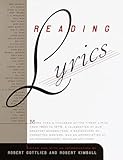 Robert Gottlieb, Robert Kimball
Reading Lyrics
Pantheon
Hardcover: 736 pages
(Includes the following types of information: song lyrics.)
|
|
|
|
|
“A Foggy Day” was included in these films:
-
A Damsel in Distress
(1937, Fred Astaire)
- An American in Paris (1951,
Oscar Levant, piano, not used in film)
|
| This section shows the jazz standards written by the same writing team. |
|
|
|
|
Comment Policy
- Your comments are welcome, including why you like
this tune, any musical challenges it presents, or additional background information.
- Jazz musicians, fans, and students of all ages use this website as an educational resource.
As such, off-topic, off-color, unduly negative, and patently promotional comments will be removed.
- Once submitted, all comments become property of JazzStandards.com.
By posting, you give JazzStandards.com permission to republish or otherwise distribute your comments in any format or other medium.
JazzStandards.com reserves the right to edit or remove any comments at its sole discretion.
|
|
| Click on any CD for more details at Amazon.com |
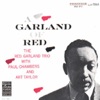
 Red Garland
A Garland of Red
1991 Original Jazz Classics 126
Original recording 1956
|
|
Already featured in the Miles Davis Quintet, Red Garland made his recording debut as a leader here alongside bassist Paul Chambers and drummer Art Taylor. “A Foggy Day” is one of Garland’s most swinging performances, which is really saying something.
|
 Art Tatum/Buddy DeFranco
The Tatum Group Masterpieces, Vol. 7
Pablo 2405430
Original recording 1956
|
|
Here we get to hear two jazz giants pushing each other to dazzling heights. Pianist Tatum burns on this late-career performance, as does clarinetist Buddy DeFranco.
|
 Billie Holiday
All Or Nothing at All
Polygram Records
Original Recording 1956
|
|
One of Holiday’s last small-group recording sessions is documented here. The performance is slow and melancholy as it begins, but revs up to a bright swing before long. Jimmie Rowles’ piano and Barney Kessel’s guitar are particularly sympathetic in tandem with Holiday’s voice, and other soloists include Harry “Sweets” Edison on trumpet and Ben Webster on tenor saxophone.
|
|
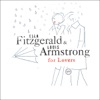
 Ella Fitzgerald, Louis Armstrong
Ella & Louis
Polygram Records
Original Recording 1956
|
|
What better antidote to a foggy day than these infectious sounds? Aside from the ebullient vocals, the rhythm section (anchored by Oscar Peterson) is a major source of the song’s momentum.
|
 Ahmad Jamal
Chamber Music of the New Jazz
2004 GRP
Original recording 1955
|
|
Long out of print, this new reissue features pianist Jamal in the company of Ray Crawford (guitar) and Israel Crosby (bass) savoring "A Foggy Day."' Elsewhere Crawford plinks out the rhythm on his guitar in a most unusual way.
|
 Charles Mingus
Pithecanthropus Erectus
1990, Atlantic Jazz 8809
Original recording, 1956
|
|
The bass player and all-round genius manages to keep a tight rein on the heavy improvisation without hindering creativity. It is one of the most ambitious interpretations of the song.
|
 Wynton Marsalis
Marsalis Standard Time ~ Vol.1
Sony
Original recording 1986
|
|
Trumpeter Marsalis delivers a thoughtful interpretation of the song. Controlled and understated at times, the song is played with technical perfection.
|
Mel Tormé
Mel Tormé Sings Fred Astaire
1994, Bethlehem
Original recording, 1956
|
|
The combination of Marty Paich's arrangements, stellar jazz musicians, and Tormé's insightful approach to the songs that Astaire introduced makes this a desert island disc.
|
 Bireli Lagrene
Blue Eyes
1998, Dreyfus 36591
|
|
Although guitarist Lagrene styled himself after Django Reinhardt early in his career, little of the gypsy peaks through in this set dedicated to Frank Sinatra
|
|
|
|