|
|
|
| “In 1958 Ahmad Jamal took the jazz world by storm with his release of At the Pershing. In addition to ‘Poinciana,’ his unique version of ‘But Not for Me’ became a signature tune for him.” |
|
 |
|
- Sandra Burlingame
|
|
| |
Ginger Rogers introduced an Alvin Theatre audience to “But Not for Me” during the first performance of Girl Crazy on October 14, 1930. Although the role of postmistress marked Rogers’ Broadway debut as a leading lady, she lost the limelight to newcomer Ethel Merman who brought down the house with her introduction of “I Got Rhythm.”
|
| |
| |
|
| |
|
Girl Crazy was originally written as a vehicle for Bert Lahr, but when he turned down the part for legal reasons, Willie Howard, a master of accents, was brought in to take his place. The Red Nichols band was the orchestra for the performance, a talent-laden group that included Benny Goodman, Glenn Miller, Jack Teagarden, Jimmy Dorsey, and Gene Krupa. The star-studded orchestra thrilled audiences during the intermissions with impromptu jam sessions. George Gershwin, himself, conducted the music at the premier before handing over the baton to Earl Busby. Girl Crazy would run for 272 performances in part due to its wonderful score that included “Bidin’ My Time,” “Sam and Delilah,” “I Got Rhythm,” “Embraceable You,” “Treat Me Rough!” and “Boy! What Love Has Done to Me!”
A 1932 RKO film adaptation of Girl Crazy, starring Bert Wheeler and Robert Woolsey, relied on sophomoric comedy rather than the original Gershwin score and retained only “Bidin’ My Time,” “I Got Rhythm,” and “But Not for Me.” Variety called it “a weak sister” of the Broadway production.
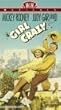 A 1943 release of the film fared much better. MGM’s Girl Crazy was the eighth Mickey Rooney/Judy Garland film and was generally well reviewed. The original story and score were left almost intact and all of the songs were included along with “Fascinating Rhythm” from 1924’s Lady Be Good.
MGM again visited the well in 1966 with Girl Crazy as the basis for the film, When the Boys Meet the Girls, starring Connie Francis and Harve Presnell. Suffice it to say the highlight of the musical was the songs.
Over sixty years after making its debut, Girl Crazy was once again on Broadway, this time as the basis for the 1992 hit Crazy For You. The musical opened onFebruary 19th and ran for 1622 performances. Seven of the songs from Girl Crazy were included in the score along with 13 other Gershwin songs.
Despite the song’s popularity with jazz performers, “But Not for Me” was a pop chart hit only once, rising to number twelve in 1942 for Harry James and His Orchestra with vocalist Helen Forrest.
|
|
| |
|
| |
|
|
| |
| |
|
| |
|
|
| |
| |
|
| |
|
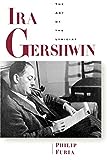
“But Not for Me” has been performed by many instrumentalists and (female) vocalists alike. Philip Furia, in his book, Ira Gershwin: The Art of the Lyricist, comments,
“But Not for Me” and “The Man That Got Away” fall in the category Ira dubbed “Ladies in Lament.”
And, indeed, ladies that have lamented include Billie Holiday, Carmen McRae, Carol Sloane, Chris Connor, Diana Krall, Dinah Washington, Ella Fitzgerald, Etta Jones, and Sarah Vaughan.
|
|
|
|
More information on this tune... |
|
|
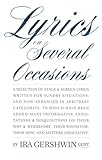 Ira Gershwin
Lyrics on Several Occasions
Limelight Editions
Paperback: 424 pages
(The lyricist himself discusses the song’s history and its lyric.)
|
|
|
|
See the Reading and Research page for this tune for additional references. |
|
- Jeremy Wilson
|
|
| This section suggests definitive or otherwise significant recordings that will help jazz students get acquainted with
“But Not for Me.” These recordings have been selected from the Jazz History and
CD Recommendations sections.
|
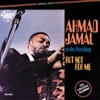
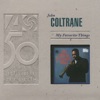
Lee Wiley’s 1939 recording of “But Not for Me” ( Sings the Songs of George & Ira Gershwin & Cole Porter) is one of the tunes most historically significant early jazz recordings and it has withstood the test of time musically as well. Almost twenty years later, Ahmad Jamal recorded an instrumental trio version ( Ahmad Jamal at the Pershing: But Not for Me) that wound up meeting with staggering commercial success. Two years after that, John Coltrane recorded “But Not for Me” ( My Favorite Things) during his first series of recording sessions with his new quartet featuring Elvin Jones and McCoy Tyner. This was a landmark performance of the tune, and the harmonic innovations therein have influenced many musicians in the years since then both in performing this tune and other standards.
Noah Baerman - Jazz Pianist and Educator
|
“But Not for Me” is written with a 4-bar introduction,
a 23-bar verse, and a 32-bar refrain in the A-B-A-B’
form. It is considered a relatively simple song,
requiring a range of a little over an octave. Vocalists
are further encouraged by the relatively even melody,
which, with a few exceptions in the B sections,
is largely stepwise.
While George Gershwin’s restrained composition
is considered a minor masterpiece, Ira Gershwin’s
lyrics are more often discussed and praised. His
verse and clever ending draw the most attention.
The refrain ends the first time through with “I
guess he’s not for me.” On the second pass there
is, “When every happy plot, Ends with a marriage
Knot, And there’s no knot for me.” - JW
|
Musical analysis of
“But Not for Me”
|
| Original
Key |
Eb major |
| Form |
A – B1 –A
– B2 |
| Tonality |
Major throughout |
| Movement |
Primarily
step-wise, descending and ascending gently.
Section “B” contains chromatic alterations
and upward leaps. |
|
Comments
(assumed
background)
|
|
Section “A” opens with a I – vi – ii7 –
V7 – I progression (Gershwin’s original
did not have the vi, but it is often added
today), followed by a II7 – V – I sequence
(due to the melody notes, a ii7actually
follows the II7 here). Section “B” uses
the same IV – iv – I - vi opening as Section
“A” of “Star
Dust,” then returns to ii7 for three
measures before going to the V7 which returns
the progression to the tonic of “A.” (This
simplified analysis does not take into consideration
the “coloristic” harmonies Gershwin used
because of the chromatic embellishments
of his melodic line in this section). Harmonically,
the second “B” differs little from the first,
but the alteration of the melody at this
point tends to distract one’s ear from this
fact. |
|
K. J. McElrath - Musicologist for JazzStandards.com |
|
Gershwin’s 1930 composition was, until the 1950’s,
mainly a vehicle for vocalists. Recordings by Helen
Forest with Harry James’ Orchestra in 1941 and Helen
Ward with
Teddy Wilson in 1940 followed a 1939 session
by Lee Wiley, who may have been responsible for
the song’s resurgence.
Wiley was, in many respects, one of the first
white, female jazz singers. She loved jazz and the
musicians who played it and whenever possible worked
with the best players. Her 1939 tribute to Gershwin’s
music was one of the first such composer theme albums
(followed closely by tributes to
Cole Porter and
Harold Arlen), twenty years before the more
famous genre recordings by Ella Fitzgerald.
Chris Tyle - Jazz Musician and Historian
|
Additional information for "But Not for Me" may be found in:
|
|
|
 Alan Lewens
Popular Song: Soundtrack of the Century
Watson-Guptill Publications
Paperback: 192 pages
(1 page including the following types of information: history, performers, style discussion and song writer discussion.)
|
|
|
|
|
Ira Gershwin
Lyrics on Several Occasions
Limelight Editions
Paperback: 424 pages
(3 pages including the following types of information: history and song lyrics.)
|
|
|
|
|
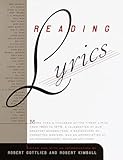 Robert Gottlieb, Robert Kimball
Reading Lyrics
Pantheon
Hardcover: 736 pages
(Includes the following types of information: song lyrics.)
|
|
|
|
|
“But Not for Me” was included in these films:
- Girl Crazy (1932, Arline Judge,
Eddie Quillan, Mitzi Green)
- Girl Crazy (1943, Judy Garland)
- An American in Paris (1951,
Benny Carter and His Orchestra)
- But Not for Me (1959, Ella
Fitzgerald)
- When the Boys Meet the Girls
(1965, Connie Francis, Harve Presnell)
- That’s Entertainment! (1974,
Judy Garland)
- Manhattan (1979, Buffalo Philharmonic,
Michael Tilson Thomas)
- Torch Song Trilogy (1988,
Billie Holiday)
- When Harry Met Sally (1989,
Harry Connick, Jr.)
- Four Weddings and a Funeral
(1994, Elton John)
- L.A. Confidential (1997, Jackie
Gleason)
- Return to Me (2000, Benny
Carter and His Orchestra)
And on stage:
- Girl Crazy (1930, Ginger Rogers,
reprised by Willie Howard)
- Crazy for You (1992, Jodi
Benson)
And on television:
- The Muppet Show (1980, Carol
Burnett) Season 5
- Crazy for You (1999, Stacey
Logan) PBS Great Performances
|
| This section shows the jazz standards written by the same writing team. |
|
|
|
|
Comment Policy
- Your comments are welcome, including why you like
this tune, any musical challenges it presents, or additional background information.
- Jazz musicians, fans, and students of all ages use this website as an educational resource.
As such, off-topic, off-color, unduly negative, and patently promotional comments will be removed.
- Once submitted, all comments become property of JazzStandards.com.
By posting, you give JazzStandards.com permission to republish or otherwise distribute your comments in any format or other medium.
JazzStandards.com reserves the right to edit or remove any comments at its sole discretion.
|
|
| Click on any CD for more details at Amazon.com |
 Ahmad Jamal
Ahmad Jamal at the Pershing: But Not for Me
1990 MCA 9108
Original recording 1958
|
|
Jamal’s trio performs “But Not for Me” at a medium tempo with characteristic swing and sparseness. Aside from the great sounds and Jamal’s influence on other jazz musicians, this recording is also significant because of its immense commercial success, even by pop standards.
|
 John Coltrane
My Favorite Things
1990 Atlantic/WEA 1361
Original recording 1961
|
|
This performance finds Coltrane very much in a state of transition. While he was already beginning to explore the world of modal jazz at this point, here he challengingly reharmonized “But Not for Me” in a manner that relates to the harmonic terrain he had covered with “Giant Steps.”
|
|
 Buddy Defranco
Mr Clarinet (Special Packaging)
Umvd Labels
|
|
Clarinetist DeFranco rips through a fleet and frenetic bop version of the song backed by the superb rhythm section of pianist Kenny Drew, bassist Milt Hinton, and drummer Art Blakey.
|
 Miles Davis
Bags Groove
1991, Orig. Jazz Classics 245
Original recording, 1954, Prestige
|
|
At the top of his game and surrounded by such heavyweights as Horace Silver and Sonny Rollins, trumpeter Davis is bright and energetic on two bop readings of the song.
|
 Billie Holiday
All Or Nothing at All
Polygram Records
Original Recording 1956
|
|
In this infectious performance with the likes of Barney Kessel and Jimmy Rowles, Holiday manages to sound joyfully swinging while still evoking the song’s wistful qualities.
|
 Modern Jazz Quartet
Django
1991 Original Jazz Classics 57
Original recording 1953
|
|
The MJQ’s signature mix of bluesy swing and classically-influenced refinement is in very much in evidence on this performance from early in the group’s life.
|
 Sun Ra
Holiday for Soul Dance
1992 Evidence 22011
Original recording 1960
|
|
Those who associate Sun Ra primarily with the avant-garde may be surprised by this swinging performance. The spotlight here is on Ra’s playful piano and arranging as well as the fiery, creative tenor saxophone of John Gilmore.
|
 Dinah Washington
Swingin' Miss 'D'
Polygram Records
|
|
Vocalist Washington delivers a dynamic and heartfelt performance of the song backed by a swinging, horn-packed, Quincy Jones Orchestra.
|
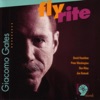
 Giacomo Gates
Fly Rite
1998, Sharp Nine Records 1011
|
|
Gates is in the tradition of vocalese masters Eddie Jefferson and Jon Hendricks. After an up-tempo chorus of the song he sings a scat solo created by Chet Baker’s drummer, Artt Frank, but never sung by Chet Baker. The title of the album, by the way, is Monk’s “Epistrophy,” with lyrics by Gates.
|
 Chris Connor
He Loves Me, He Loves Me Not
1999, Collectables Jazz Classics
Original recording, 1956
|
|
Connor stepped away from her usual small group setting to record with a string orchestra, tastefully arranged by Ralph Burns. Taking the tune at a very slow tempo, Connor sets the scene with the verse and invests “But Not for Me”with wistfulness.
|
|
|
|