|
|
|
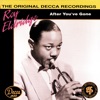
| “In 1946 Lester Young played it in a swinging, improvisational treatment, and that same year, trumpeter Roy Eldridge recorded his big band version.” |
|
 |
|
- Chris Tyle
|
|
| |
Evelyn Herbert introduced “Lover Come Back to Me” on September 19, 1928, at the Imperial Theater. She performed the song (which was reprised by Robert Halliday) as part of the Broadway musical The New Moon.
|
| |
| |
|
| |
|
|
| |
| |
|
| |
|
“Lover Come Back to Me” was recorded numerous times during the show’s run with three recordings making the Top Ten:
Later recordings of “Lover Come Back to Me” to make the pop charts included:
- Perry Askam (1930, The New Moon Company chorus, vocals, #20)
- Nat “King” Cole (1953, with Billy May and His Orchestra, #16)
|
|
| |
|
| |
|
Loosely based on an eighteenth century autobiography, The New Moon tells the story of a French aristocrat with revolutionary sympathies who is arrested by the French authorities for being an enemy of the state. While being returned to France on a ship named “New Moon,” the crew mutinies, and the hero escapes to an island where he lives until his pardon from the newly formed Republican French government.
For its out-of-town tryouts, The New Moon opened in Philadelphia on December 22, 1927, but was closed down for reworking nearly a year before its New York opening. The show was generally well received in the Big Apple and had a healthy run of 509 performances. J. Brooks Atkinson, theater critic for the New York Times, called the show
... an unusually pleasing musical comedy ... bedecked with flowing and brocaded costumes, sung, for the most part, beautifully, and acted with a grandeur that verges upon grandiloquence.
Other hit songs from Romberg/Hammerstein score were “Marianne” (the B-side to “Lover Come Back to Me” by the Arden-Ohman Orchestra), “Stout-Hearted Men” (the B-side to “Lover Come Back to Me” by Perry Askam), and “Softly As in a Morning Sunrise,” and “One Kiss” (both on a recording by Nat Shilkret and His Orchestra). It would seem Romberg was not above borrowing from other composers; the opening bars for the melody for “One Kiss” are virtually identical to Vincent Youmans’ “No, No, Nanette.” “Softly As in a Morning Sunrise” endures as an oft-recorded jazz standard.
Preceding the The New Moon was an unrelated 1919 silent film with the same name, but following the stage musical there were two MGM screen adaptations. The first was the then-successful but now largely forgotten 1930 film starring Grace Moore, Lawrence Tibbett, Adolph Menjou, and Roland Young. The setting was changed to Russia and the similarities to the original stage plot were few, but “Lover, Come Back to Me” was retained and sung by Moore. The second was released in 1940 and starred Jeanette MacDonald and Nelson Eddy. A mostly faithful adaptation, New Moon, as it was titled, is a generally well-reviewed Eddy/Mac Donald vehicle.
In 1989 a videotaped performance of the New York City Opera’s production of The New Moon was aired, this being most faithful to the original libretto of the operetta.
According to David Ewen in his book, All the Years of American Popular Music, “Lover Come Back to Me” was
... one of Romberg’s most beloved melodies, though not his most original, since its middle section makes more than a passing reference to Tchaikovsky’s piano piece June Baracolle.
Beyond his melody, jazz musicians appreciate the “Lover Come Back to Me” chord progressions, which are often used as the basis for improvisations; one example is Art Blakey’s “Quicksilver.”
|
| |
| |
|
| |
|
William Zinsser in Easy to Remember: The Great American Songwriters and Their Songs relates how Hammerstein turned over his lyrics for “Lover Come Back to Me” to Romberg, only to have the composer prop them on the piano, mumble them as he played the corresponding notes, and then declare, “It fits.”
|
| |
| |
|
| |
|
|
|
|
|
More information on this tune... |
|
|
 Robert Gottlieb, Robert Kimball
Reading Lyrics
Pantheon
Hardcover: 736 pages
(This book includes a short biography of Hammerstein and over 20 pages of his lyrics, including those for “Lover Come Back to Me.”)
|
|
|
|
See the Reading and Research page for this tune for additional references. |
|
- Jeremy Wilson
|
|
| This section suggests definitive or otherwise significant recordings that will help jazz students get acquainted with
“Lover Come Back to Me.” These recordings have been selected from the Jazz History and
CD Recommendations sections.
|
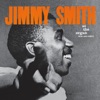
Billie Holiday recorded “Lover, Come Back to Me” on several occasions, beginning with a classic, gently-swinging combo performance in 1944 ( 1944). “Gently swinging” also aptly describes Ben Webster’s wonderful rendition from 1957 ( Soulville (Dig)). Often, though, the tune is interpreted at a much brighter tempo, as demonstrated wonderfully by Jimmy Smith and his trio in 1956 ( At the Organ, Vol. 3).
Noah Baerman - Jazz Pianist and Educator
|
|
Musical analysis of
“Lover Come Back to Me”
|
| Original
Key |
Four flats:
“A” is in Ab major, changing to F minor
in the “B” section |
| Form |
A – A – B
- A |
| Tonality |
Half major,
half minor |
| Movement |
Primarily
step-wise, moving up and down in graceful
arcs; over 50% of the melody consists of
long, sustained pitches. |
|
Comments
(assumed
background)
|
| Originally a slow ballad, this tune is frequently
played “Tempo de Bitch” (quarter note =
250 b.p.m. +) because of its many sustained
pitches and slow harmonic movement. There
is nothing exotic or unusual about the harmonic
progression. Romberg had been trained as
a classical composer and follows all the
“rules” of proper voice leading, making
guide-tone lines particularly easy to hear.
The first eight measures use the basic I
– III7 – vi – II7 with embellishments (half-diminished
and diminished seventh chords), returning
to I by way of a common-tone diminished
chord modulation. Section “A” ends with
not one, but two “turnarounds” that
are so common, they’re nearly cliches: I
– vi – ii7 – V7, followed by I – I (first
inversion, i.e. 3rd in the bass) – IV –
ct˚7 – I (Db – D#˚7 – Ab). Both of these
chordal sequences do, however, use enough
embellishing chords to maintain interest.
Section “B” is another simple harmonic
sequence. At its most basic, when all embellishing
harmonies are discounted, it’s nothing more
than i – iv – i – V7 in the first four measures
and i – iv –i for the next two measures,
after which the iv of the minor key turns
into its parallel major, becoming a II7
and ultimately a ii7 of the song’s initial
major tonic key. |
|
K. J. McElrath - Musicologist for JazzStandards.com |
|
A group of 1940s recording sessions illustrates
the concept of “how many ways can a song be played?”
Billie Holiday’s 1944 version of “Lover Come
Back to Me” is given a vocal ballad performance.
Two years later, Holiday’s sometime musical partner
Lester Young played it in a swinging, improvisational
treatment, and that same year, trumpeter Roy Eldridge
recorded his big band version.
Erroll Garner visited the tune in 1945 in a
solo piano version.
Dizzy Gillespie’s 1948 version has a mixture
of many elements: Latin rhythm and sweet melodic
ballad playing alternating with uptempo bebop improvisation.
A little something for everyone on Diz’s recording!
Chris Tyle - Jazz Musician and Historian
|
Additional information for "Lover Come Back to Me" may be found in:
|
|
|
Robert Gottlieb, Robert Kimball
Reading Lyrics
Pantheon
Hardcover: 736 pages
(Includes the following types of information: song lyrics.)
|
|
|
|
|
“Lover Come Back to Me” was included in these films:
- The New Moon (1930, Grace
Moore, Lawrence Tibbett)
- New Moon (1940, Jeanette MacDonald,
Nelson Eddy)
- Deep in My Heart (1954, Tony
Martin, Joan Weldon)
- That’s Entertainment II (1976,
Jeanette MacDonald, Nelson Eddy from New
Moon, 1940)
- U-571 (1999)
And on stage:
- The New Moon (1928, Robert
Halliday, Evelyn Herbert) Broadway operetta
- The New Moon (2003, Christiane
Noll, Rodney Gilfry) revival
And on television:
- The New Moon: Live from Wolf Trap
(1988, Richard White, Leigh Munro) PBS
Great Performances
|
|
|
|
Comment Policy
- Your comments are welcome, including why you like
this tune, any musical challenges it presents, or additional background information.
- Jazz musicians, fans, and students of all ages use this website as an educational resource.
As such, off-topic, off-color, unduly negative, and patently promotional comments will be removed.
- Once submitted, all comments become property of JazzStandards.com.
By posting, you give JazzStandards.com permission to republish or otherwise distribute your comments in any format or other medium.
JazzStandards.com reserves the right to edit or remove any comments at its sole discretion.
|
|
| Click on any CD for more details at Amazon.com |
 John Coltrane
Black Pearls
1991 Original Jazz Classics 352
Original recording 1958
|
|
Coltrane was at the peak of his “sheets of sound” period and in the midst of his successful tenure with Miles Davis’ group when he went into the studio for this session. His cohorts here are trumpeter Donald Byrd, pianist Red Garland, bassist Paul Chambers and drummer Art Taylor. The tempo is burning, but his band is more than up to the task.
|
 Sun Ra Arkestra
Sound Sun Pleasure
1992 Evidence 22014
Original recording 1957
|
|
Sun Ra was starting to establish himself as a composer and bandleader at the time that this live performance was recorded. The appealing vocals of Hattie Randolph are accompanied here only by bass, congas and Sun Ra himself, who takes a surprisingly straight-ahead piano solo as well.
|
|
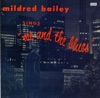
 Mildred Bailey
Me & the Blues
2000, Savoy
Original recording, 1946
|
|
The sweet voice of Mildred Bailey lends elegance to this airy version of “Lover Come Back to Me.”’ Trombonist Henderson Chambers adds a little heat.
|
 Ben Webster
Soulville
2003 Verve 314521449
Original recording 1957
|
|
Ben Webster blows a breathy, romantic tenor sax on this mid-tempo, swing version of the song. Pianist Oscar Peterson, guitarist Herb Ellis, bassist Ray Brown and drummer Stan Levey make up the perfect rhythm section.
|
 Jimmy Smith
At the Organ, Vol. 3
2005 Blue Note 63811
Original recording 1956
|
|
This romping performance is a good example of the breadth of Smith’s organ skills. While he became famous largely for soulful blues, his bop abilities were substantial, as shown here.
|
 Hampton Hawes
Everybody Likes Hampton Hawes: Vol. 3, The Trio
1991 Original Jazz Classics 421
Original recording 1956
|
|
This charming performance begins with over two minutes of rhapsodic piano, making it all the more effective when the trio launches unexpectedly into an infectious swing groove. Hawes’ playing is consistently creative throughout.
|
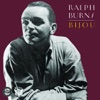
 Ralph Burns
Bijou
1999, Original Jazz Classics
Original recording, 1955
|
|
Pianist Burns trades some snappy solos with guitarist Tal Farlow on this high-energy rendition of the song. Bassist Clyde Lombardi and drummer Osie Johnson keep the furnace stoked.
|
 Arnett Cobb
More Party Time
1998, Original Jazz Classics 979
Original recording, 1960
|
|
Tenor saxophonist Cobb leads his group through a hip, swinging interpretation of the song that reads slightly off-tempo due, in part, to the intriguing drumming of Arthur Taylor.
|
|
|
|