|
|
|
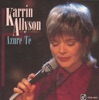
| “The vocalist takes the tune through its paces, swinging it gently, scatting a chorus, and percolating over the band’s double time.” |
|
 |
|
- Sandra Burlingame
|
|
| |
By the time twenty-five-year-old Edgar Sampson joined Chick Webb and His Orchestra, he had been playing professionally for seven years, including with the soon-to-be greats Duke Ellington and Fletcher Henderson. But it was while performing as an alto saxophonist with Webb that Sampson came into his own as a composer and arranger. Success arrived in the form of “Blue Lou” (1933) and an arrangement of an instrumental he had previously written, “Stompin’ at the Savoy,” which became Webb’s second major hit after “I Can’t Dance (I Got Ants in My Pants),” a song with little endurance.
|
| |
| |
|
| |
|
|
| |
| |
|
| |
|
Benny Goodman is nearly always given credit for popularizing the song, but Goodman’s was not the first or second but the third recording to make the pop charts.
|
| |
| |
|
| |
|
Chick Webb was first in 1934, and Ozzie Nelson was second, six weeks ahead of Benny Goodman.
- Chick Webb and His Orchestra (1934, #10)
- Ozzie Nelson and His Orchestra (1936, #12)
- Benny Goodman and His Orchestra (1936, #11)
- Chick Webb and His Orchestra (1936, reissue of his 1934 hit, #18)
- Benny Goodman Quartet (1937, #4)
All of the recordings were instrumentals.
|
|
| |
|
| |
|
The title “Stompin’ at the Savoy” refers to the Savoy Ballroom in the Harlem neighborhood of New York City. It was originally located at 596 Lenox Avenue, between West 140th and 141st Streets. The Savoy opened in 1926 and featured a large 10,000 square foot dance floor which began to attract the best dancers in New York. In 1927 the Savoy began sponsoring jazz band competitions. Chick Webb’s Harlem Stompers participated in the first of these cutting sessions which was called the “Battle of Jazz.” Over the next several years, Chick Webb and His Orchestra would become the Savoy house band and with his triumphs over the likes of the Count Basie, Fletcher Henderson, and Benny Goodman bands, he would be crowned “The King of the Savoy.”
A number of dance crazes began or at least were initially popularized at the Savoy, most notably the Lindy Hop, a partnered jazz dance that evolved into the “jitterbug” and subsequently East Coast Swing.
The Savoy Ballroom was torn down in 1958 to make way for a housing project. In its place today is a commemorative plaque with the text,
Here once stood the legendary Savoy Ballroom, a hothouse for the development of jazz in the Swing era. Visually dazzling and spacious, the Savoy nightly featured the finest jazz bands in the nation, and its house bands included such famous orchestras as those of Fess Williams, Chick Webb, and Teddy Hill. The great jazz dancers who appeared on its block-long floor ranged from professionals like Whitey’s Lindy Hoppers to everyday Harlemites. During a time of racial segregation and strife, the Savoy was one of the most culturally and racially integrated of institutions, and its fame was international. It was the heartbeat of Harlem’s community and a testament to the indomitable spirit and creative impulse of African-Americans. It was a catalyst for innovation where dancers and musicians blended influences to forge new, wide-spread, and long-lasting traditions in music and dance. Whether they attended or not, all Americans knew the meaning of ”Stompin’ at the Savoy.”
|
| |
| |
|
| |
|
|
|
|
|
More information on this tune... |
|
|
 Robert Gottlieb, Robert Kimball
Reading Lyrics
Pantheon
Hardcover: 736 pages
(This book includes a short biography of Razaf and 10 pages of his lyrics, including those for “Stompin’ at the Savoy.”)
|
|
|
|
See the Reading and Research page for this tune for additional references. |
|
- Jeremy Wilson
|
|
| This section suggests definitive or otherwise significant recordings that will help jazz students get acquainted with
“Stompin' At the Savoy.” These recordings have been selected from the Jazz History and
CD Recommendations sections.
|
The original 1934 Chick Webb recording of “Stompin’ At the Savoy” ( Stompin' at the Savoy) is still the jumping-off point for anyone learning the tune. Many swing-era players recorded great solos on the tune in the 1930s and 1940s, but the standout may well be a bootleg recording that captured the brilliant guitarist Charlie Christian in a 1941 jam session in Harlem ( Selected Broadcasts & Jam Sessions). Among the numerous swinging vocal versions, none can top the infectious 1957 recording by Ella Fitzgerald and Louis Armstrong ( Ella & Louis Again (Dig)).
Noah Baerman - Jazz Pianist and Educator
|
“Stompin’ at the Savoy” is usually recorded as
an instrumental although Ella Fitzgerald’s scat
versions are legendary. Nonetheless, Andy Razaf’s
lyrics are interesting: his approach switches the
subject as the song progresses through its A-A-B-A
form.
In the first A section the subject addressed
is the Savoy Ballroom. Each of the three lines begins
with “Savoy,” and ends with a complimentary description
such as “the home of sweet romance.”
The second A section changes the subject, beginning
each line with “Your.” Again the lines are completed
with compliments, as “lips so warm and sweet as
wine.”
The bridge switches to first person, “How my
heart is singing…,” and the final A section combines
all three ending with, “Savoy, let me stomp away
with you.” -JW
|
Musical analysis of
“Stompin’ At the Savoy”
|
| Original
Key |
C major |
| Form |
A – A – B
– A |
| Tonality |
Major throughout |
| Movement |
“A” uses
primarily skips; an upward third is followed
by a six-note motif that leaps up a fifth,
springs from a lower neighbor tone, then
falls back to the decorated sixth scale
degree. “B” is a series of downward seconds
with interspersed skips upward, followed
by a descending tetra chord (four-note scale
run). |
|
Comments
(assumed
background)
|
|
This is a classic “call-and-response” tune
with slow harmonic movement over sustained
tones with periodic bursts of exuberant,
quick-moving, wide-ranging motifs. The “A”
section never strays far from “I –V7 – I,”
while the “B” section is a basic cycle of
fifths starting on the IV chord, decorated
with chromatic embellishment. The cycle
continues until the fourth key change. Dropping
a half step from this point brings the progression
back to the V7 and an easy return to the
original key. Challenges in learning this
tune lie in mastering the quick, leaping
motifs, which require a bit of practice.
From an improvisational standpoint, the
“B” is more difficult because of the upper
chromatic neighboring tones, which land
on chords less familiar to the novice (in
the original key, Gb, B and E). |
|
K. J. McElrath - Musicologist for JazzStandards.com |
|
In some respects this number could be considered
the anthem of the swing era, recorded by big and
small groups. Although the Chick Webb Orchestra’s
1934 recording is the first, it is Art Tatum’s small
band recording from 1941 that has a special quality.
Tatum rarely recorded with bands, quite possibly
because his playing was so full that he was better
off on his own or with just a rhythm section. But
he was a marvelous band pianist, as he demonstrates
on “Stompin’ at the Savoy.” Also featured on Tatum’s
record are the pitifully under-recorded trumpeter
Joe Thomas and the superb New Orleans clarinetist
Edmond Hall (whom Benny Goodman regarded as his
favorite jazz clarinetist).
Chris Tyle - Jazz Musician and Historian
|
Additional information for "Stompin' At the Savoy" may be found in:
|
|
|
 Thomas S. Hischak
The Tin Pan Alley Song Encyclopedia
Greenwood Press
Hardcover: 552 pages
(1 paragraph including the following types of information: film productions, history and performers.)
|
|
|
|
|
Robert Gottlieb, Robert Kimball
Reading Lyrics
Pantheon
Hardcover: 736 pages
(Includes the following types of information: song lyrics.)
|
|
|
|
|
“Stompin' At the Savoy” was included in these films:
- The Benny Goodman Story (1955,
Benny Goodman and His Orchestra) biopic
- Save the Tiger (1973)
- In the Mood aka The Woo Woo Kid
(1987)
- When Harry Met Sally (1989,
Harry Connick, Jr. Trio)
- The Grass Harp (1995, Benny
Goodman)
And on stage:
- Bubbling Brown Sugar (1976,
instrumental) Broadway musical
- Blues in the Night (1987,
Debbie Bishop) London revue
- Black and Blue (1989, Jimmy
Slyde) Broadway musical
- Swing! (1999, Ann Hampton
Calloway) Broadway musical
And on television:
- I Love Lucy (1953) Season
3, Episode 77 "Lucy Has Her Eyes Examined"
|
|
|
|
Comment Policy
- Your comments are welcome, including why you like
this tune, any musical challenges it presents, or additional background information.
- Jazz musicians, fans, and students of all ages use this website as an educational resource.
As such, off-topic, off-color, unduly negative, and patently promotional comments will be removed.
- Once submitted, all comments become property of JazzStandards.com.
By posting, you give JazzStandards.com permission to republish or otherwise distribute your comments in any format or other medium.
JazzStandards.com reserves the right to edit or remove any comments at its sole discretion.
|
|
| Click on any CD for more details at Amazon.com |
 Chick Webb
Stompin' at the Savoy
Asv Living Era
Original recording 1934
|
|
The original recording of this tune shows a high level of sophistication for this early juncture in the history of the swing era. The band, which features a young Mario Bauza on trumpet, swings assuredly.
|
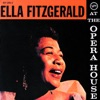
 Ella Fitzgerald
At the Opera House
1990 Polygram 31629
Original recording 1957
|
|
No vocal versions of “Stompin’ At the Savoy” can beat those performed by Chick Webb’s most famous protege, Ella Fitzgerald. This album boasts two contrasting versions of the tune, and Ella’s voice, scatting and sense of swing are in peak form.
|
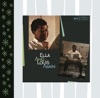
 Ella Fitzgerald, Louis Armstrong
Ella & Louis Again (Dig)
Umvd Labels
Original Recording 1956
|
|
The irrepressible joy that Fitzgerald brought to singing was only augmented by her collaborations with the comparably joyous Louis Armstrong. Their ebullient performance here draws particular attention to the warmth and brightness of the song.
|
|
 Art Farmer
To Sweden With Love/Live at the Half Note
2004 Collectibles 7654
Original recording 1963
|
|
Art Farmer, heard here on flugelhorn, possessed a cool tone, a wonderful sense of swing and a soloing style that was at once lyrical and complex. The same things could be said of guitarist Jim Hall, and this performance is one of the crowning moments in their brief but fruitful collaboration. Hall in particular lets loose with a truly stunning guitar solo.
|
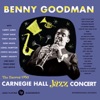
 Benny Goodman
Carnegie Hall Jazz Concert
Sony 65143
Original recording 1938
|
|
This is a wonderful live recording of Benny Goodman and an orchestra of the who's who of jazz including Count Basie, Gene Krupa, Lester Young, and Johnny Hodges. The group delivers a crisp, swinging version of the song with a superb solo from vibraphonist Lionel Hampton. Two-CD set.
|
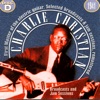
 Charlie Christian
Selected Broadcasts and Jam Sessions
2002 JSP 909
Original recording 1941
|
|
Charlie Christian was one of the trailblazers of the advanced soloing techniques that would form the foundation of bebop, though he tragically died before that style fully came to fruition. This wonderful performance, featuring Christian in a New York jam session with future bop pioneers Thelonious Monk and Kenny Clarke, is a great example of Christian’s trailblazing improvisations.
|
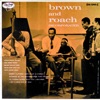
 Clifford Brown/Max Roach
Brown and Roach Inc
1990 Emarcy 814644
Original recording 1954
|
|
This recording documents the early days of the quintet co-led by Clifford Brown and Max Roach. Both Brown and Roach shine here, as does tenor saxophonist Harold Land.
|
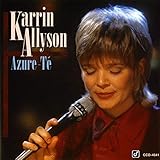
 Karrin Allyson
Azure Te
Music
|
|
The vocalist takes the tune through its paces, swinging it gently, scatting a chorus, and percolating over the band's double time. Great solos from the band.
|
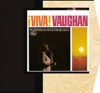
 Sarah Vaughan
Viva! Vaughan
2001, Polygram
Original recording, 1964
|
|
Vocalist Vaughan delivers a dynamic performance on this Quincy Jones-produced album. With Frank Foster conducting the orchestra and laying down a spicy cha-cha, the singer raises the temperature with a wailing scat.
|
 Steve Turre
TNT (Trombone-N-Tenor)
2001, Telarc 83529
|
|
Steve Turre slows the song down for this mid-tempo rendition that features the trombonist trading licks with tenor saxophonist Dewey Redman.
|
|
|
|