Jazz Standards.com : Jazz Standards : Songs : History : Biographies

Home

Overview

Songs

Biographies

History

Search

Bookstore

About

Blue Lou (1935)

Origin and Chart Information
“Trumpeter Charlie Shavers let loose in ‘44 on a fine version of ‘Blue Lou which includes a nice segment of ‘trading fours by bassist Milt Hinton and drummer J. C. Heard

- Chris Tyle

Rank 198
Words and Music Irving Mills
Edgar Sampson

Edgar Sampson’s composition was introduced by alto saxophonist/trumpeter Benny Carter on his October 16, 1933, session for Columbia Records.


More on Edgar Sampson at JazzBiographies.com


More on Irving Mills at JazzBiographies.com
 

1934 was a banner year for alto saxophonist/arranger Sampson. He wrote two tunes that became big hits, “Don’t Be That Way” and “Stompin’ at the Savoy,” and two others that became standards of the swing era, “If Dreams Come True” and “Blue Lou.”

Drummer Chick Webb made a wise decision when hiring Sampson in 1934. Although Sampson had been in the bands of Duke Ellington and Fletcher Henderson, both leaders did most of their own arrangements and his talent in that field was not taken advantage of. At the time Webb didn’t have a band member writing for him, and his band’s early success is due in part to Sampson’s arrangements and compositions.

Interestingly, Carter’s career path interconnects with Sampson’s. Both men had played together with Charlie Johnson’s Paradise Ten when Carter began his study of arranging. Carter then worked with Fletcher Henderson until 1931 when he worked briefly for Chick Webb. Sampson joined Henderson in 1931, a few months after Carter’s departure.

The recordings by Carter and Webb of “Blue Lou” make an interesting comparison of the styles of the two arrangers, Sampson and Carter. Carter’s approach is closer to that of a dance band, including a “sweet” trumpet solo exposing the rather sparse melody. The high point of his record is Teddy Wilson’s piano solo, although it heats up towards the end with some of Carter’s double-time writing for the sax section, his forte. On the other hand, Sampson’s arrangement for Webb starts out like “gangbusters,” at a brisker tempo, with swinging solos by trumpeter Taft Jordan and Sampson on alto. Like Carter’s version, there’s a whole chorus piano solo, this time by Don Kirkpatrick. And although Carter’s record has the great Sid Catlett on drums, Chick drives his band with more force, aided by some great rhythm guitar work by John Truehart.

“Blue Lou” is rarely ever sung, as it is more a composition for “blowing” than singing. However, Ella Fitzgerald recorded it in the 1950s, the lyrics telling the story of a woman who is sad because her love has left her.

Chris Tyle - Jazz Musician and Historian

Musician's Comments

Are you a published Vocalist or Instrumentalist?

Add a comment and we'll credit you with a link to your site. (more...)

Also on This Page...

Musician's Comments

Jazz History Notes
Also by the Same Writers...

CD Recommendations for This Tune
Click on a CD for more details at Amazon.com
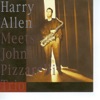
Harry Allen/John Pizzarelli Trio

Harry Allen Meets the John Pizzarelli Trio
1999 RCA Victor 37397
Original recording 1999
Utter exuberance and searing solos make this a standout version of the song. From the outset saxophonist Allen seems to be issuing a challenge that guitarist Pizzarelli and pianist Ray Kennedy are only too happy to take up.

Eddie ‘Lockjaw’ Davis

Smokin’
1992 Original Jazz Classics 705
Original recording 1958
The rhythm section sets a blistering pace, but saxophonist Davis keeps up, filling the recording with thick, round notes. Organist Shirley Scott lays down a plush carpet of chords.

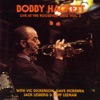
Bobby Hackett

Live at the Roosevelt Grill Vol.2
1996 Chiaroscuro 138
Original recording 1975
Cornetist Hackett and regular band mate trombonist Vic Dickensen create a joyous New Orleans rag on this live date that features some exceptional work at the piano by Dave McKenna.

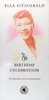
Ella Fitzgerald

75th Birthday Celebration
1993 Verve 619
Compilation
Fitzgerald recorded “Blue Lou” several times over her career. It’s a swinging tune, but it never became popular among vocalists.
Jazz History

Fletcher Henderson’s 1936 band was a tremendously swinging ensemble, enlivened by fiery trumpeter Roy Eldridge, who rips it up on Horace Henderson’s arrangement of “Blue Lou.” Tenor saxophonist Chu Berry is also spotlighted.

Pianist Eddie Heywood’s combo was hot in 1944, performing nightly at New York’s Cafe Society. A recording for Commodore Records features Heywood’s tight arrangement of “Blue Lou” and his fine piano playing, sleek trumpet by Doc Cheatham, the clever trombonist Vic Dickenson, and lithe altoist Lem Davis.

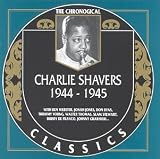
Keynote Records, like indie Commodore, was dedicated to recording all-star combos in a relaxed, loose format. Trumpeter Charlie Shavers, who was with the sedate John Kirby Orchestra from 1937 to 1944, let loose in ‘44 on a fine version of “Blue Lou” which includes a nice segment of “trading fours” by bassist Milt Hinton and drummer J. C. Heard.

Chris Tyle - Jazz Musician and Historian


Fletcher Henderson

Jazz After Hours
Jazz After Hours 200011

Eddie Heywood

Begin the Beguine, 1939-1946
EPM Musique 156032

Charlie Shavers

1944-1945
Classics 944
Written by the Same Composer or Team...
This section shows the jazz standards written by the same writing team. Click on a name to see all of a writer's jazz standards.

Irving Mills and Edgar Sampson

Year Rank Title
1935 198 Blue Lou

Benny Goodman, Irving Mills and Edgar Sampson

Year Rank Title
1934 491 If Dreams Come True

Copyright 2005-2008 - JazzStandards.com - All Rights Reserved      Permission & contact information

Home | Overview | Songs | Biographies | History | Search | Bookstore | About