|
|
|
| “... the jam sessions feature greats Oscar Peterson, Barney Kessel, Johnny Hodges and Benny Carter. This is an inspired version of a song Parker would revisit regularly.” |
|
 |
|
- Ben Maycock
|
|
| |
Britain’s “Radio Sweetheart Number One,” singer Elsie Carlisle, introduced “What Is This Thing Called Love?” to the London Pavilion on March 27th, 1929. The song was performed as part of Wake Up and Dream, a musical revue with words and music composed by Cole Porter and the book by John Hastings Turner.
The Wake Up and Dream score comprised over a dozen Porter songs, including “Let’s Do It, Let’s Fall in Love,” which was introduced the previous year in the musical Paris.
|
| |
| |
|
| |
|
In addition to Elsie Carlisle, the revue also starred a young Jessie Matthews, (later to become one of Britain’s top musical comedy stage and screen stars), her husband and manager Sonnie Hale, and dancer-actress Tilly Losch. Wake Up and Dream ran on the London stage for 263 performances.
In the United States the Broadway production of Wake Up and Dream was met with mixed reviews. It opened on December 30, 1929, at the Selwyn Theatre and starred Jessie Matthews, Jack Buchanan, and Tilly Losch, with Frances Shelley singing “What Is This Thing Called Love.” The revue was cut short after only 136 performances.
The title Wake Up and Dream would later be used for films in 1934, 1942 (the British title for the American film What’s Cookin’), and 1947, the movies sharing nothing more than the title with the Cole Porter revue.
Leo Reisman and His Orchestra (Lew Conrad, vocal) would be the first artist to place “What Is This Thing Called Love” on the pop charts. On February 15, 1930, 11 months after its introduction, the song made its chart debut rising to number five.
Also making it onto the charts with “What Is This Thing Called Love?” were:
- Ben Bernie and His Orchestra (1930, #10)
- Fred Rich and His Orchestra (1930, #19)
- Artie Shaw and His Orchestra (1939, #15)
- Tommy Dorsey and His Orchestra (Connie Haines, vocal, 1942, #13)
- Les Paul (electric guitar, 1948, #11)
|
|
| |
|
| |
|
Cole Porter claimed that “What Is This Thing Called Love?” with its innovative alternating major and minor key changes, was inspired by a Moroccan native dance. In the biography Cole: A Biographical Essay by Robert Kimball and Brendan Gill, the lyrics of the song are placed next to a picture of Tilly Losch and Toni Birkmayer in dance pose. Towering over them is William Cavanagh dressed as an African idol. This exotic costuming and dramatization would seem to reflect the supposed origin of the piece.
|
| |
| |
|
| |
|
|
|
|
|
More information on this tune... |
|
|
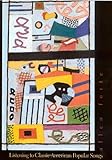 Allen Forte
Listening to Classic American Popular Songs
Yale University Press; Book & CD edition
Hardcover: 219 pages
(Author/educator Forte devotes five pages to the song, including its history and analyses of both the music and lyric. There is also a companion CD.)
|
|
|
|
- Jeremy Wilson
|
|
| This section suggests definitive or otherwise significant recordings that will help jazz students get acquainted with
“What Is This Thing Called Love?.” These recordings have been selected from the Jazz History and
CD Recommendations sections.
|
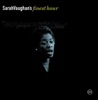
“What Is This Thing Called Love” has become most commonly heard at a fast tempo, and no up-tempo version stands out more than the one by Clifford Brown and Max Roach with Sonny Rollins ( At Basin Street). Sarah Vaughan, meanwhile, offers a definitive vocal rendition of the tune ( Sarah Vaughan’s Finest Hour), showing off both the tune itself and its potential for improvisation.
Noah Baerman - Jazz Pianist and Educator
|
Musicologists often praise the construction of both the song’s melody and harmony. The strength and beauty of each combine to create one of the most played and arranged of Cole Porter’s compositions. The song continues to challenge new generations of jazz musicians, inspiring improvisations that may stray from the standard but are intrinsically linked with the original. A notable example is John Coltrane’s “Fifth House” which is based on Tadd Dameron’s “Hot House” which in turn is based upon “What Is This Thing Called Love?”
While critical analysis of “What Is This Thing Called Love?” usually focuses on the exotic nature of the music, the lyrics are also well crafted. In contrast to the inventive harmony, the words tell a rather conventional love tale with no references to idols or Moroccan dances. From the opening line “I was a humdrum person,” through the lament of love both found and then lost, the refrain asks the listener “What Is This Thing Called Love?”
Porter undoubtedly had a feeling for the relative merits of both his words and his music. In “What Is This Thing Called Love?” the charming and well-suited lyrics are restrained so as not to upstage the musical composition. As the song is most often performed as an instrumental it would appear that his instinct was correct. -JW
|
Musical analysis of
“What Is This Thing Called Love?”
|
| Original
Key |
C major;
false key change to Bb major in “B” section |
| Form |
A1 – A2 –
B – A3 |
| Tonality |
Alternating
between major and minor |
| Movement |
There are
mainly steps and skips downward and leaps
upward. It is 40% long, sustained pitches. |
|
Comments
(assumed
background)
|
|
The harmonic progression of “A,” a simple
I – iv – V7 – I (the diminished chords in
this piece are decorative substitution for
the tonic in its secondary dominant or V7/iv
function), owes as much to the blues as
to North African folk song. “B” begins in
the key Bb (established by use of F7 as
secondary dominant) and then drops to Ab
and G7, giving the piece an almost Eastern
feeling, if only briefly. |
|
K. J. McElrath - Musicologist for JazzStandards.com |
|
Additional information for "What Is This Thing Called Love?" may be found in:
|
|
|
Allen Forte
Listening to Classic American Popular Songs
Yale University Press; Book & CD edition
Hardcover: 219 pages
(5 pages including the following types of information: history, lyric analysis, music analysis and song lyrics. (Book includes CD).)
|
|
|
|
|
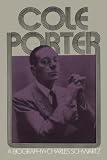 Charles Schwartz
Cole Porter: A Biography
Da Capo Press; 1st Pbk edition
Paperback: 365 pages
(1 paragraph including the following types of information: lyric analysis and song lyrics.)
|
|
|
|
|
 Robert Gottlieb, Robert Kimball
Reading Lyrics
Pantheon
Hardcover: 736 pages
(Includes the following types of information: song lyrics.)
|
|
|
|
|
“What Is This Thing Called Love?” was included in these films:
- You’re a Lucky Fellow,
Mr. Smith (1943)
- The More the Merrier
(1943)
- Night and Day (1946,
Cole Porter biography,
Ginny Simms, vocal)
- Young Man with a Horn
(1950)
- Starlift (1951)
- The Eddie Duchin Story
(1956)
- New York Stories
(1989)
- The Russia House
(1991)
- Husbands and Wives
(1992)
- De-Lovely (2004,
Lemar, vocal)
|
|
|
|
Comment Policy
- Your comments are welcome, including why you like
this tune, any musical challenges it presents, or additional background information.
- Jazz musicians, fans, and students of all ages use this website as an educational resource.
As such, off-topic, off-color, unduly negative, and patently promotional comments will be removed.
- Once submitted, all comments become property of JazzStandards.com.
By posting, you give JazzStandards.com permission to republish or otherwise distribute your comments in any format or other medium.
JazzStandards.com reserves the right to edit or remove any comments at its sole discretion.
|
|
| Click on any CD for more details at Amazon.com |
 Clifford Brown/ Max Roach
At Basin Street
1990, Polygram 814648
Original recording, 1956
|
|
This burning recording shows the Brown-Roach band at its peak and demonstrates the up-tempo approach that would subsequently become a frequently-taken approach to this song. This recording also documents the important addition of saxophonist Sonny Rollins to the band.
|
 Bill Evans
Portrait in Jazz
Original Jazz Classics/Riverside 1162
Original recording 1959
|
|
Many people think of Bill Evans for his more introspective ballad playing, but he could cook too. This extremely exciting rendition features his definitive trio (with Scott LaFaro and Paul Motian) in their first recording session.
|
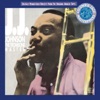
 J.J. Johnson
Trombone Master
Sony
Original recording, 1957, Columbia
|
|
This exciting arrangement also features the talents of Nat Adderley on cornet and Tommy Flanagan on piano.
|
|
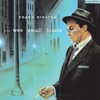
 Frank Sinatra
In the Wee Small Hours
1998, Capitol 94755
Original recording, 1955
|
|
This is the first of many collaborations between Sinatra and arranger Nelson Riddle. Sinatra’s voice and the Riddle clarinet theme create a haunting interpretation of the song.
|
 Charlie Parker
Legendary Jam Sessions
2004, Definitive Classics
Original recording, 1952
|
|
Recorded in Hollywood, California, and Washington, D.C., the jam sessions feature greats Oscar Peterson, Barney Kessel, Johnny Hodges and Benny Carter. This is an inspired version of a song Parker would revisit regularly.
|
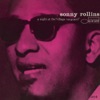
 Sonny Rollins
Night at the Village Vanguard
Blue Note Records
Original Recording 1957
|
|
Rollins is heard at his most inventive here as he swoops through a fourteen minute exploration of this song.
|
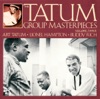
 Art Tatum/Lionel Hampton
The Tatum Group Masterpieces, Vol. 3
Pablo 2405426
Original recording 1955
|
|
Tatum swings through this tune in the company of two of the musicians capable of holding their own with him, drummer Buddy Rich and vibraphonist Lionel Hampton.
|
 Kenny Garrett
Standard of Language
2003, Warner Bros. 48404
|
|
Saxophonist Garrett kicks off his CD with a soulful, technically perfect rendition of the song. The phrasing only proves critics right when they suggest he is the second coming of John Coltrane.
|
|
|
|