|
|
|
| |
Charlie Parker’s F major blues, “Billie’s Bounce,” was recorded in November, 1945, for Savoy Records. His quintet included a young Miles Davis, Curley Russell on bass, Max Roach on drums, and Dizzy Gillespie (who doubled on piano). While many associate the title with Billie Holiday, Brian Priestley in Chasin’ the Bird: The Life and Legacy of Charlie Parker says that the title refers to Billie, the secretary of Dizzy’s agent Billy Shaw (the former trumpeter for whom Gillespie named his composition “Shaw ‘Nuff”).
|
| |
| |
|
| |
|
In his analysis of Parker’s style and his contribution to bop, Priestley says, “In fact, it is the absolute primacy of rhythmic variety in his playing which is now totally accepted--in theory, at any rate--as being one of his key achievements.” Priestley later points out that Parker’s music is highly compatible with Afro-Latin rhythm sections. “‘Billie’s Bounce’ or ‘Moose the Mooche’ can be played in Latin (or its soul and funk derivatives), without altering the melody line or the accentuation.”
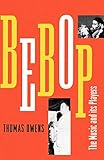
Of Parker’s debut as a leader, author Thomas Owens in his book Bebop: The Music and the Players says, “[‘Billie’s Bounce’] follows the typical bebop blues plan of piano introduction, two unison theme choruses, solo choruses, and two more unison theme choruses. Parker plays a fine four-chorus solo as expected, Davis is adequate, and Max Roach’s fully idiomatic bebop percussion work is recorded well....” “Billie’s Bounce” entered the jazz repertoire almost immediately. This 12-bar blues is often cited as an example of Parker’s familiarity with early blues singers and horn men.
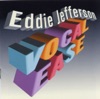
Eddie Jefferson added lyrics to the head and vocalized over a Parker solo on his recording Vocal Ease:
I’ve overlooked so many things
Through the years
Through my tears
Through the years
Then I went and opened my eyes,
You were my idea
Heaven with open arms.
|
| |
| |

|
More on Eddie Jefferson
|
|
| |
|
Jon Hendricks also wrote lyrics to the tune and performs it with his daughter Michele on the DVD Tribute to Charlie Parker. Hendricks’ lyrics are a commentary on Parker’s composition. He differentiates between sad blues and upbeat blues and puts “Billie’s Bounce” in the uplifting category:
The blues are generally known to be very sad
Quite a drag
Never glad
Really in a sorrowful bag
But this one’s different
It’s a real happy tune.
|
| |
| |
|
| |
|
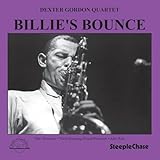
Instrumentalists who have recorded “Billie’s Bounce” include guitarists Jim Hall and Martin Taylor; saxophonists John Coltrane, Charles Lloyd, Dexter Gordon, and free jazz player Albert Ayler; pianists Michel Petrucciani, Keith Jarrett, Kirk Lightsey, and Denny Zeitlin; violinist Claude “Fiddler” Williams and drummers Jerry Granelli and Shelly Manne. The CD Stan Getz and J.J. Johnson at the Opera House contains two versions of the tune. Vocalists who have recorded “Billie’s Bounce” include Ella Fitzgerald, Bobby McFerrin, and Betty Roche. |
|
|
|
| This section suggests definitive or otherwise significant recordings that will help jazz students get acquainted with
“Billie's Bounce.” These recordings have been selected from the Jazz History and
CD Recommendations sections.
|
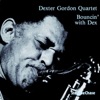
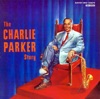
Charlie Parker’s original 1945 recording of “Billie’s Bounce” (The Charlie Parker Story) is not only the definitive recording of this tune but one of the definitive recordings of the entire bebop movement. A thorough study of this song largely begins and ends with Parker’s recording -Take 5 is the one that rocked the jazz world, though hearing his solos on the alternate takes is illuminating. Among the other interpretations of the tune, Dexter Gordon (Bouncin’ With Dex) and Ella Fitzgerald (Montreux ’77) both demonstrate quite well the way in which this song has been integrated into the jazz repertoire.
Noah Baerman - Jazz Pianist and Educator
|
|
Musical analysis of “Billie’s Bounce”
|
|
Original Key
|
F major
|
|
Form
|
Through-composed; 12-bar blues
|
|
Tonality
|
Major throughout
|
|
Movement
|
Highly arpeggiated in both directions; some stepwise movement.
|
|
Comments (assumed background)
|
|
A “be-bop” head over a variation of the 12-measure blues progression in which a I - VI - II - V7 substitutes for V7 -V7 - IV7 - IV in the last six measures.
Editor’s note: See the Musicians’ Comment section on this page.
|
|
K. J. McElrath - Musicologist for JazzStandards.com
|
|
With the advent of long-playing records and then compact discs, record companies began to release unissued “out-takes” from historic sessions---versions that some musicians (like Duke Ellington) felt shouldn’t be released. But these recordings are priceless to jazz history and to students of the music. There are now five versions available of Charlie Parker’s premier of “Billie’s Bounce” for Savoy Records in 1945. The sum total adds up to one undeniable conclusion: Charlie Parker was an endlessly creative jazz musician. Whereas some musicians carefully honed their solos to get a “perfect” one, Parker’s solos are unique expositions. Ben Webster, the swing-era tenor saxophone giant who made his mark with the Duke Ellington Orchestra, was by 1953 a solo artist working with a variety of different groups. The pairing of him with the early Modern Jazz Quartet was both fortuitous and triumphant; they worked together like hand in glove, as is evident on “Billie’s Bounce.”
Chris Tyle - Jazz Musician and Historian
|
Additional information for "Billie's Bounce" may be found in:
|
|
|
| This section shows the jazz standards written by the same writing team. |
|
|
|
|
Comment Policy
- Your comments are welcome, including why you like
this tune, any musical challenges it presents, or additional background information.
- Jazz musicians, fans, and students of all ages use this website as an educational resource.
As such, off-topic, off-color, unduly negative, and patently promotional comments will be removed.
- Once submitted, all comments become property of JazzStandards.com.
By posting, you give JazzStandards.com permission to republish or otherwise distribute your comments in any format or other medium.
JazzStandards.com reserves the right to edit or remove any comments at its sole discretion.
|
|
|