|
|
|
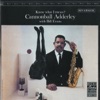
“Trumpeter/vocalist Chet Baker recorded a stunningly sparse version of ‘Goodbye’ in 1953.” |
|
 |
|
- Chris Tyle
|
|
| |
Benny Goodman and His Orchestra introduced Gordon Jenkins’composition “Goodbye” on the NBC radio program “Let’s Dance,” which began December 1, 1934. Goodman’s September, 1935, recording for RCA Victor hit the charts the following year and rose to #20.
|
|
| |
|
| |
|
A young Gordon Jenkins, fresh from working gigs on banjo in St. Louis joints, was hired by the Isham Jones Orchestra in 1932 as staff arranger. Jones’ band, begun in 1920, had become a well-respected, sophisticated dance orchestra by the early 1930s. Saxophonist Joe Bishop had written a composition entitled “Blue Prelude,” and the Casa Loma Orchestra scooped Isham Jones and recorded it in early 1933. The Casa Loma record started getting attention, and Jones was not happy that another band had found success with a tune written by one of his sidemen, so he quickly recorded his own version. But before the music could be published it needed lyrics, and Jones wanted them ASAP. Jenkins volunteered, even though Bishop was dubious about his skill as a lyricist. Nevertheless, once the music was published it scored big, and Bing Crosby’s version hit the charts.
|
| |
| |
|
| |
|
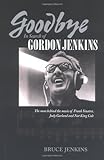
The music and lyrics to “Blue Prelude” are in some respects a prelude to “Goodbye”; in fact Jenkins uses the word at the end of his lyrics to “Blue Prelude.” Both songs relate to a personal tragedy in the life of composer Jenkins, and the incident is related in detail in Bruce Jenkins’ biography of his father, Goodbye: In Search of Gordon Jenkins.
Although Jenkins had written “Goodbye” in 1934, he hadn’t pursued publishing it or writing an arrangement. While working with the Jones band in New York he had become friendly with clarinetist Benny Goodman. When Goodman’s band was hired by NBC in 1934 to perform on the “Let’s Dance” radio program, Benny needed a closing theme. While with Jenkins one day, he mentioned this, asking if Gordon might have a composition he could use. Jenkins sat down at the piano and played a few bars of “Goodbye.” Goodman was ecstatic, remarking, “That’s it!” Jenkins scored an arrangement for Benny, and it was introduced on the first “Let’s Dance” program. Much to Jenkins’ surprise it made the hit parade in 1936, his first composition to do so.
|
| |
| |
|
| |
|
A visitor to JazzStandards.com, disc jockey Sandy Singer, has contributed some additional background for “Goodbye”:
I was a long time friend of Gordon’s. He originally wrote “Goodbye” to his first wife who died on the operating table giving birth to his first child. The baby also died. It was published 4 years later when he gave it to Benny Goodman, one of his tennis partners. One day, after playing, Benny asked Gordy if he had anything he, Benny, could use as a theme--the rest, as they say, is musical history.
Regarding “Blue Prelude,” Gordy told me the story of this song -- Jack Bishop wrote the melody--Walter Winchell wrote a one-liner in his column--they were going to rush into the studio and record it without words. Gordy said he would write some lyrics, and was told he had overnight to do so, as they wanted to take advantage of Winchell’s publicity. Gordy came in the next day with his lyric. His very first music credit was as a lyricist not melody writer. The chord structure is almost identical to that of “Goodbye.”
Another visitor points out that according to the biography mentioned above (Goodbye: In Search of Gordon Jenkins), the woman who died was not his first wife but a woman with whom he had formed a relationship, presumably before his first marriage.
For the remainder of his career, Goodman would end every performance with the number, but always as an instrumental. The first vocal rendition was recorded by the band of Andy Kirk in 1938 with Pha Terrell taking the vocal honors. Goodman wouldn’t record a vocal version until 1955 with Rosemary Clooney.
A testimony to the sentimental punch carried by this tune is given by another visitor to JazzStandards.com, well-known disc jockey Dale Young:
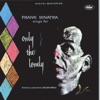
As a DJ in Detroit in ‘59, I played a promo copy of Sinatra’s ”Only The Lonely” while waiting for my wife to get dressed to go out. By the time she hit the living room, “Goodbye” was finishing, and she found me absolutely blubbering. Several years later on my own TV show in Cleveland I got to meet and interview Gordon Jenkins. When I asked him if he was truly as sentimental as some of his compositions would suggest, he replied, “Are you kidding? I cry at weather reports!
|
|
|
|
|
Musical analysis
of “Goodbye”
|
|
Original Key |
A
minor |
|
Form |
A
- B - A |
|
Tonality |
Generally
minor, except for “B” which is in
the parallel major key then modulates
to the relative major before returning
to the original key. Additionally,
the “A” sections end with a “picardy
third,” turning to parallel major. |
|
Movement |
Generally
ascending by skips and leaps, descending
by steps. Some chromatic embellishment. |
|
Comments
(assumed
background)
|
| Harmonically, the song begins with
an augmented sixth chord (F7 in
the key of A major), resolving properly
to V7 - i. This sequence repeats,
then “A” ends with a iiø7
-V7 - i cadence.
This same cadential sequence,
in two different related keys, makes
up section “B” as well. The transition
between the two tonalities-A major
and C major-is accomplished through
the common-tone relationship of
Dm7, in which the iv chord of the
former becomes the ii7 of the latter. |
|
K. J. McElrath - Musicologist for JazzStandards.com |
|
Trumpeter/vocalist Chet Baker recorded a stunningly sparse version of “Goodbye” in 1953. It’s a shame he didn’t sing the tune, however.
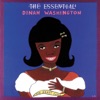
A marvelous version by Dinah Washington from 1955 highlights her powerful voice and packs a deep emotional punch.
Composer Gordon Jenkins was leader and arranger for many of Frank Sinatra’s recording sessions. “Ol’ Blue Eyes” recorded a moving version of Jenkins’ tune, in an arrangement by Nelson Riddle, in 1958.
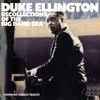
Duke Ellington’s 1962 recording of “Goodbye” was part of a tribute album dedicated to big bands of the 1930s and ‘40s. Alto saxophonist Johnny Hodges takes the Benny Goodman “part” and plays it in his typically sensuous fashion.
A 1985 PBS television special entitled “Let’s Dance” captured Benny Goodman’s final “Goodbye”; the recording received a Grammy Award nomination in 1986.
Chris Tyle - Jazz Musician and Historian
|
Additional information for "Goodbye" may be found in:
|
|
|
 Thomas S. Hischak
The Tin Pan Alley Song Encyclopedia
Greenwood Press
Hardcover: 552 pages
(1 paragraph including the following types of information: film productions, history and performers.)
|
|
|
|
|
| This section shows the jazz standards written by the same writing team. |
|
|
|
|
Comment Policy
- Your comments are welcome, including why you like
this tune, any musical challenges it presents, or additional background information.
- Jazz musicians, fans, and students of all ages use this website as an educational resource.
As such, off-topic, off-color, unduly negative, and patently promotional comments will be removed.
- Once submitted, all comments become property of JazzStandards.com.
By posting, you give JazzStandards.com permission to republish or otherwise distribute your comments in any format or other medium.
JazzStandards.com reserves the right to edit or remove any comments at its sole discretion.
|
|
|