|
|
|
| “If You Could See Me Now” was written specifically for vocalist Sarah Vaughan. |
|
 |
|
- Sandra Burlingame
|
|
| |
Tadd Dameron was one of the most influential composer/arrangers of the bebop era and wrote such standards as “Hot House,” “Good Bait,” “Our Delight,” and “Fontainebleu.” He wrote charts for many of the great bands--Jimmie Lunceford, Count Basie, Billy Eckstine, and Dizzy Gillespie. He was also a pianist, although he considered that a sideline, but he recorded a few albums, including John Coltrane’s 1958 Mating Call for which Dameron wrote all of the compositions.
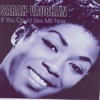
“If You Could See Me Now” was written specifically for vocalist Sarah Vaughan, for whom Dameron had worked as an arranger. She introduced it in 1946 with lyrics by Carl Sigman, and it became one of her signature songs. In 1998 her rendition was inducted into the Grammy Hall of Fame. Mel Torme recorded a memorable version of the tune in 1995 with Canadian trombonist and bandleader Rob McConnell.
|
| |
| |
|
| |
|
|
| |
| |
|
| |
|
Oddly, “If You Could See Me Now” is rarely included in the lists of Sigman’s work because so many of his compositions and lyrics for songs such as “Ebb Tide,” “Ballerina,” “Enjoy Yourself,” “My Heart Cries for You,” and “Where Do I Begin” (from the film Love Story) fell into the popular, chart-busting category. However, his lovelorn lyrics for “If You Could See Me Now” are well-suited to Dameron’s complex melody and poignantly describe the feelings of a ditched lover:
If you could see me now you’d know how blue I’ve been
One look is all you’d need to see the mood I’m in
Perhaps then you’d realize I’m still in love with you.
The song never made the charts, but it was embraced by jazz instrumentalists and vocalists alike. As with most of Dameron’s compositions, “If You Could See Me Now” has been recorded by a wide array of musicians from bop heavyweight Dizzy Gillespie to bop-oriented vocalists Sheila Jordan and Mark Murphy. Dameron himself recorded it in 1962 (The Magic of Tadd Dameron), and pianist Barry Harris included it in his album Barry Harris Plays Tadd Dameron. It was picked up by pianist Randy Weston, saxophonists Phil Woods and Lee Konitz, trombonist Kai Winding, and drummer Paul Motian. More recently artists such as trumpeter Tom Harrell, drummer Winard Harper, saxophonist Joe Lovano, and vocalist Andy Bey have recorded it. |
|
|
|
| This section suggests definitive or otherwise significant recordings that will help jazz students get acquainted with
“If You Could See Me Now.” These recordings have been selected from the Jazz History and
CD Recommendations sections.
|
Sarah Vaughan’s original 1946 recording of “If You Could See Me Now” (Ken Burns Jazz), with an arrangement by composer Tadd Dameron, is considered by many to be the definitive version of the song, and among vocal versions that is almost certainly true. Pianist Bill Evans recorded the song over a dozen times in different configurations; his 1962 recording (Moon Beams) is the first under his own leadership and is a lyrical masterpiece. Meanwhile, the important collaboration between pianist Wynton Kelly and guitarist Wes Montgomery experienced a highlight with their 1965 recording of the song (Smokin’ at the Half Note).
Noah Baerman - Jazz Pianist and Educator
|
Musical analysis of “If You Could See Me Now” | | Original Key | Eb major | | Form | A1 -A2 -B -A2 | | Tonality | Primarily major | | Movement | Section “A” is based on an upward Eb major arpeggio, followed by a descending chromatic scale, then rising toward the end. Section “B” moves primarily by step. | Comments (assumed background) | | The I -IV7 harmonic progression in mm. 1 -4 of section “A” gives this piece a “blues” flavor, although this tune is not a “blues” in the technical sense. The progression in mm. 5-8 of section “A” is noteworthy in its use of the embellishing F#m7 -B7 cadence in m. 5. A simple I -V7(+5)/IV ( Eb -Eb7(+5) in the original) would have worked just as well. The changes Dameron chooses at this point are also heard in the final measures of a later Miles Davis tune, “Four.” It seems as if there should be a false key change in mm. 1-5 of section “B.” The piece never quite settles on a new tonic here, however. The apparent tonal center changes again in m. 5 of “B,” this time actually resolving to Bb major. This is the dominant key of the original tonic, so modulation to that key is a simple matter. | | K. J. McElrath - Musicologist for JazzStandards.com |
|
Pianist/arranger Gil Evans’ all-star session from 1957 included a smooth, lyrical trombone solo by Jimmy Cleveland on “If You Could See Me Now.” A veteran of Lionel Hampton’s Orchestra and of many recording sessions, his playing is clearly influenced by J.J. Johnson yet retains its own character rather than being imitative.
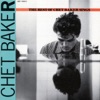
On his last session for Riverside Records in 1958, trumpeter/vocalist Chet Baker performed an engaging, lean rendition of pianist/arranger Tadd Dameron’s tune.
Scott Hamilton, the marvelous anachronistic tenor saxophonist, takes the tune down a different path by playing it at a nice, medium bounce in his recording session from 2000. Pianist John Bunch gets a nice bit of solo space on Scott’s recording.
Chris Tyle - Jazz Musician and Historian
 Chet Baker
Chet
Original Jazz Classics 1135
|
|
|
|
|
|
|
|
Comment Policy
- Your comments are welcome, including why you like
this tune, any musical challenges it presents, or additional background information.
- Jazz musicians, fans, and students of all ages use this website as an educational resource.
As such, off-topic, off-color, unduly negative, and patently promotional comments will be removed.
- Once submitted, all comments become property of JazzStandards.com.
By posting, you give JazzStandards.com permission to republish or otherwise distribute your comments in any format or other medium.
JazzStandards.com reserves the right to edit or remove any comments at its sole discretion.
|
|
|