|
|
|
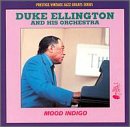
| Duke Ellington’s first vocal version, recorded ten years after the tune’s instrumental premier in 1930, featured the silky voice of Ivie Anderson. |
|
 |
|
- Chris Tyle
|
|
| |
Duke Ellington’s Orchestra introduced “Mood Indigo” at New York’s Cotton Club in 1930. Although composer credit for the tune was Albany Bigard, Duke Ellington, and Irving Mills (Ellington’s manager at the time), the complete story is a bit more complicated. The orchestra’s first recordings of the tune were made in October and December, 1930.
For a short time Ellington had the great Creole clarinetist/soprano saxophonist Sidney Bechet in the band, until he left in 1925. (Bechet was a peripatetic individual and didn’t want a steady job.) Ellington had been looking for a clarinetist to replace Bechet when in December, 1927, just a few days after Duke had started his engagement at the Cotton Club in New York, he hired New Orleans born clarinetist Albany “Barney” Bigard.
|
| |
| |
|
| |
|
|
| |
| |
|
| |
|
|
| |
| |
|
| |
|
Bigard was a perfect choice for the band. Bechet was one of his favorite clarinetists, and as a young man he studied clarinet with one of New Orleans’ finest musicians and an excellent jazz musician, Lorenzo Tio, Jr. Tio was a member of the orchestra led by violinist Armand Piron, a group that played the finest engagements in the Crescent City. In 1923 they made a special appearance in New York at the Roseland Ballroom, and their music caught not only the public’s fancy but that of the top record companies, and they recorded for Victor, Okeh, and Columbia Records.
In 1930 Bigard approached Duke with a composition that he claimed as his own. In his autobiography With Louis and the Duke: The Biography of a Jazz Clarinetist, Barney partially sets the record straight. “My old teacher, Lorenzo Tio (Jr.), had come to New York...with some tunes and parts of tunes he had written. There was one I liked, and I asked him if I could borrow it. He was trying to interest me in recording one or two.... I took it home and kept fooling around with it. I changed some of it around...and got something together that mostly was my own but partly Tio’s.”
Truth was, however, that the tune was the theme song of Piron’s New Orleans Orchestra of which Tio was a member. Its title was “Dreamy Blues” (early recordings by Duke’s band show both “Mood Indigo” and “Dreamy Blues” as the title). Although Bigard claimed that most of the piece was his, we can now never be sure since Tio never copyrighted his original number. Tio’s daughter claimed, “We had this business arrangement with Duke Ellington.”
Over the years, “Mood Indigo” was one of the tunes most closely associated with the early Ellington band, and Duke continued to play it together with “Black and Tan Fantasy” and “Creole Love Call,” calling the piece “a medley of our award-winning compositions.” And, indeed, “Mood Indigo” continued to win awards, even after Ellington’s death. In 1975 the National Academy of Recording Arts and Sciences inducted Duke’s 1930 Brunswick recording into the Grammy Hall of Fame.
|
|
| |
|
| |
|
“Mood Indigo” has charted several times over the years. Ellington’s Cotton Club Orchestra recording for Brunswick was on the charts for ten weeks in 1931, peaking at #3. The Jimmie Lunceford Orchestra’s rendition reached #19 on the charts in 1934.
In 1954 the Norman Petty Trio’s instrumental version hit #14 in the pop charts. That same year, the vocal rendition by the Four Freshman reached #24 on the charts.
|
|
|
|
More information on this tune... |
|
|
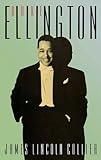 James Lincoln Collier
Duke Ellington
Oxford University Press, USA
Hardcover: 352 pages
(Ellington biographer analyzes the musical content and relates the history of the song.)
|
|
|
|
See the Reading and Research page for this tune for additional references. |
|
Chris Tyle - Jazz Musician and Historian
|
|
| This section suggests definitive or otherwise significant recordings that will help jazz students get acquainted with
“Mood Indigo.” These recordings have been selected from the Jazz History and
CD Recommendations sections.
|
To develop a good understanding of “Mood Indigo,” one need not look beyond Duke Ellington himself. His original 1930 recording (Early Ellington: Complete Brunswick Recordings) is a stellar example of his early years and presents the song in a straightforward yet creative manner. His 1940 recording (Ivie and Duke Vol. 2: All God’s Chillun) is more richly orchestrated for his full big band and is also a definitive vocal treatment, featuring the singing of Ivie Anderson. His 1962 collaboration with Coleman Hawkins (Duke Ellington Meets Coleman Hawkins) features yet another orchestration as well as an extended solo, courtesy of Hawkins.
Noah Baerman - Jazz Pianist and Educator
|
Musical analysis of “Mood Indigo” | | Original Key | Ab major | | Form | A - B - A (“B” could be considered a variation of “A”) | | Tonality | Primarily major | | Movement | Stepwise in both directions, for the most part; chromatic movement, alterations, and neighboring embellishing tones add to the “blues-like” sound. Many sustained pitches | Comments (assumed background) | | Not a “blues” in the strict sense (going I -II - ii7 - V7(#5) rather than I - IV - I -V - IV - I), the altered pitches and embellishing tones certainly function as “blue notes” and give this piece its strong blues flavor. The long, sustained pitches of “A” require a great deal of breath control and should be played and sung with strength throughout their duration. Avoid the temptation to start out strong, allowing the tone to “evaporate.” | | K. J. McElrath - Musicologist for JazzStandards.com |
|
The Boswell Sisters from New Orleans--Vet, Martha and Connee--originated the jazz vocal group sound. Their marvelous harmonies and synergistic jazz feeling, along with all-star accompaniments, make their renditions unique. On “Mood Indigo” from 1933 they are assisted by trombonist Tommy and clarinetist Jimmy Dorsey and guitarist Eddie Lang.
Duke Ellington’s first vocal version, recorded ten years after the tune’s instrumental premier in 1930, featured the silky voice of Ivie Anderson. It continued to be an Ellington staple and was also recorded by ex-Ellingtonians. Alto saxophonist Johnny Hodges, who left the fold in 1951 to return in mid-1955, recorded his combo version of the tune early that year. Hodges is naturally featured but so is the sublime trumpeter Harold “Shorty” Baker. Baker would be spotlighted on the tune two years later as part of Duke’s marvelous Ellington Indigos album.
Chris Tyle - Jazz Musician and Historian
 Duke Ellington
Indigos
Sony
Original recording 1957
|
|
|
|
|
Additional information for "Mood Indigo" may be found in:
|
|
|
 George T. Simon
Big Bands Songbook
Barnes & Noble
Paperback
(4 pages including the following types of information: anecdotal, performers, song writer discussion and sheet music.)
|
|
|
|
|
 Duke Ellington
Music Is My Mistress
Da Capo Press
Paperback
(1 paragraph including the following types of information: anecdotal.)
|
|
|
|
|
 Thomas S. Hischak
The Tin Pan Alley Song Encyclopedia
Greenwood Press
Hardcover: 552 pages
(1 paragraph including the following types of information: film productions, history and performers.)
|
|
|
|
|
James Lincoln Collier
Duke Ellington
Oxford University Press, USA
Hardcover: 352 pages
(2 pages including the following types of information: history and music analysis.)
|
|
|
|
|
 Alyn Shipton
A New History of Jazz
Continuum International Publishing Group
Paperback: 956 pages
(1 paragraph including the following types of information: style discussion. (Page 274).)
|
|
|
|
|
|
|
|
Comment Policy
- Your comments are welcome, including why you like
this tune, any musical challenges it presents, or additional background information.
- Jazz musicians, fans, and students of all ages use this website as an educational resource.
As such, off-topic, off-color, unduly negative, and patently promotional comments will be removed.
- Once submitted, all comments become property of JazzStandards.com.
By posting, you give JazzStandards.com permission to republish or otherwise distribute your comments in any format or other medium.
JazzStandards.com reserves the right to edit or remove any comments at its sole discretion.
|
|
| Click on any CD for more details at Amazon.com |
 Duke Ellington
Early Ellington: Complete Brunswick Recordings
Verve
Original recording 1930
|
|
On the original recording of the song, Ellington creates a lovely three-horn orchestration that sounds both traditional (in large part thanks to the banjo) and progressive. Arthur Whetsol on trumpet, “Tricky Sam” Nanton on trombone and Barney Bigard on clarinet all contribute wonderfully.
|
 Ella Fitzgerald
Ella Fitzgerald Sings the Duke Ellington Songbook
Polygram Records
Original recording 1957
|
|
Fitzgerald’s vocals are masterful yet subtle on this restrained, soulful recording. Oscar Peterson’s elegant interjections add a great deal of flavor as well.
|
 Charles Mingus
Mingus Dynasty
Sony
Original recording 1959
|
|
Mingus, an unabashed Ellington devotee, provides a great orchestration of “Mood Indigo” here. There are soulful melody statements by saxophonists Booker Ervin and John Handy and excellent and often surprising solos by trombonist Jimmy Knepper, pianist Sir Roland Hanna and Mingus himself on bass.
|
 Duke Ellington, Coleman Hawkins
Ellington Meets Hawkins (Reis) (Rstr) (Dig)
Verve
Original recording 1962
|
|
Given his orchestrational mastery, it should not be surprising that Ellington manages to make five horns sound so lush here. The focal point, though, is an extended Coleman Hawkins tenor saxophone solo. Hawkins is soulful and creative, aided significantly by some great piano by the Duke.
|
|
 Jimmy Smith
Dot Com Blues
2001 Blue Thumb Records 543978
|
|
A slow, bluesy rendition of the song (almost nine minutes in length) capitalizes on the fastidious precision of Russell Malone’s fret work and the laid-back funk riffs of Smith’s organ.
|
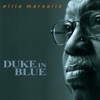
 Ellis Marsalis
Duke in Blue
1999 Columbia 63631
|
|
Marsalis’ sparse, music-box-like introduction opens up into a warm, mid-tempo blues reading on this sincere solo tribute to the composer.
|
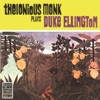
 Thelonious Monk
Plays Duke Ellington
Riverside 201
Original recording 1955
|
|
One genius tips his hat to another on this esoteric yet compelling interpretation of the song. The rhythm section lays out a sauntering swing over which Monk elegantly creates.
|
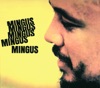
 Charles Mingus
Mingus, Mingus, Mingus, Mingus, Mingus
1995 GRP 170
Original recording 1963
|
|
Bassist Mingus never did anything ordinary, to which this session attests. Part of it was recorded at the same time as his famous “Black Saint” session and includes a similar horn lineup as well as Jaki Byard on piano.
|
|
|
|