|
|
|
| “Moonlight in Vermont” sold two million copies in the first two years following its release in 1944. |
|
 |
|
- Chris Tyle
|
|
| |
Vocalist Margaret Whiting, daughter of songwriter Richard Whiting, introduced this number in 1944, and it was her first big hit. She recorded it again 10 years later, and this version charted as well:
- Billy Butterfield and His Orchestra (1945, Margaret Whiting, vocal, #15)
- Margaret Whiting (1954, vocal, #29)
|
|
| |
|
| |
|
Capitol Records began operation on April 8, 1942. The brainchild of lyricist/vocalist Johnny Mercer, it was intended to be the West Coast competition for big East Coast recording companies like RCA Victor and Columbia. At the time of its formation, the American Federation of Musicians strike loomed, and Capitol quickly recorded and released several sides, two of which (by bandleader/pianist Freddie Slack and Johnny Mercer), became big hits. Once the strike hit, and then the wartime usage of shellac (the material records were made of at the time) made the material scarce, the company put future plans on hold.
|
| |
| |

|
More on Margaret Whiting
|
|
| |
|
Margaret Whiting was one of the vocalists Capitol recorded prior to the ban. Eighteen in 1942, she recorded a session with Freddie Slack and his band and one with a big band under the leadership of trumpeter Billy Butterfield. Although neither produced a huge hit, the records sold well and Capitol president and artists-and-repertory director Johnny Mercer thought Whiting had hit potential.
Because Mercer was operating on a small budget, he needed vocalists and musical groups that were in need of exposure--artists with talent whose careers needed a boost. Trumpeter Billy Butterfield had graced the bands of Bob Crosby, Artie Shaw and Benny Goodman, was a swinging jazz artist, and had the experience to organize and direct a big band. His initial recording session for Capitol with Whiting impressed Mercer. Once the A.F. of M. ban was settled, Mercer hired Butterfield to back Whiting.
|
| |
| |
|
| |
|
|
| |
| |
|
| |
|
Whiting met with Mercer and Capitol musical director Paul Weston to select material to record. One number, by John M. Blackburn and Karl Suessdorf, caught the fancy of the young Whiting, but she didn’t really comprehend Blackburn’s lyrics. Mercer came to the rescue, encouraging her to imagine what Vermont was like in the fall. In her autobiography It Might As Well Be Spring, Whiting explains: “Johnny had worked so hard with me before we came into the studio. Breaking the song into sections, I could feel the sad warmth of fall, the smell of leaves. I began to sing. The band was wonderful. Then, when Billy Butterfield’s trumpet came in, all silver and glittering, it changed my voice. We were like two instruments.” When Mercer heard the playback, he knew he had a hit.
“Moonlight in Vermont” sold two million copies in the first two years following its release in 1944. The number was a special favorite of the troops overseas, since the song so poignantly describes what many longed for back home.
The tune was scheduled to appear in a 1943 motion picture with the same name, but was pulled prior to the picture’s release, proving to be a major error by Universal Studios since the rest of the soundtrack music, with the exception of Rodgers and Hart’s “Lover,” went nowhere.
|
|
|
|
| This section suggests definitive or otherwise significant recordings that will help jazz students get acquainted with
“Moonlight in Vermont.” These recordings have been selected from the Jazz History and
CD Recommendations sections.
|
Nat King Cole’s vocal interpretations of songs are often definitive, but it is his 1947 instrumental trio version of “Moonlight in Vermont” (Nat King Cole Trio: Instrumental Classics) that gives us an early classic jazz reading of the tune. Five years later, guitarist Johnny Smith created a hugely influential recording and a personal signature with his own recording (The Definitive Stan Getz ) featuring Stan Getz on saxophone. Among vocal versions, the 1956 collaboration between Ella Fitzgerald and Louis Armstrong, featured here on trumpet (Ella and Louis), is a classic, buoyed by their exceptional performances and the accompaniment of Oscar Peterson.
Noah Baerman - Jazz Pianist and Educator
|
The lyrics for “Moonlight in Vermont” are unusual in that they don’t rhyme. Yet they work perfectly, picturing fall in New England with the glinting water of streams, ski trails in the snow, falling leaves, and bird song.
In her book The Craft of Lyric Writing, Sheila Davis quotes lyricist John Blackburn as saying, “After completing the first 12 bars of the lyric, I realized there was no rhyme and then said to Karl, ‘Let’s follow the pattern of no rhyme throughout the song. It seemed right.”
Of additional interest is that all of the “A” sections of Moonlight in Vermont are in haiku form. A Japanese Haiku is a three-line poem with a 5/7/5 syllable count.
- Chris Tyle / Jeremy Wilson
|
Musical analysis
of “Moonlight in Vermont”
|
|
Original Key |
Db
major; brief false key change to
F major in “B.” Additionally, the
original sheet music edition contains
a restatement of the melody in two
additional keys (Bb major and Eb
major). |
|
Form |
A
- A - B - A; sometimes a two or
four measure tag is added. |
|
Tonality |
Primarily
major |
|
Movement |
“A”
is a descending pentatonic scale
with one altered tone (Bbb or A
natural) added as an embellishment
at the bottom. “B” consists of a
single pitch repeated, leaping up
an octave and descending a minor
third. This entire phrase is then
repeated a half-step higher. |
|
Comments
(assumed
background)
|
|
The harmonic progression-quite advanced
for its time and heralding the advent
of “cool”--makes sophisticated use
of simple elements. Part of this
lies in the melodic tones that make
up the chord extensions (particularly
the 13th, 11th,
9th and flatted 5th).
The transition at “B” is particularly
interesting in its abrupt jump to
a “distant” key (Db major to F major)
and smooth return to the original
tonic by way of chromatic movement.
From the last tonic chord of “A,”
the harmony leaps up a tri-tone
in a ii7 embellishment of the V7
of the new key (Gm9 - C7(b9b5)
-Fma9) while the melody note
forms the 11th of the
initial chord. The new tonic is
followed by VI (V7/ii) in a brief
turnaround before settling once
more on the F major tonality. The
entire sequence is then repeated
a half-step higher, putting the
tonality into Gb major-closely related
and easily modulated to Db.
Although the original changes
are elegant, the construction of
the melody-particularly “B”-does
contain opportunities to use varying
harmonies and chord substitutions.
|
|
K. J. McElrath - Musicologist for JazzStandards.com |
|
An all-instrumental session in 1947 found
pianist/vocalist Nat “King” Cole and his
trio performing a fine version of “Moonlight
in Vermont,” although it certainly would
have benefited from his vocal talent.
Tenor saxophonist Stan Getz recorded
his initial foray on this tune with talented
guitarist Johnny Smith in 1952. Their version
is a beautiful, easy-going tapestry of sound.
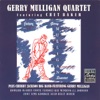
Another version from 1952 is by baritone
saxophonist Gerry Mulligan’s Quartet with
Chet Baker (trumpet). The piano-less group
is the epitome of West Coast-“cool school,”
relaxed with perfectly executed playing.
Record producer/promoter Norman Granz
put together so many wonderful recording
sessions that it boggles the mind. One of
his classic sessions was pairing trumpeter/
vocalist
Louis Armstrong with vocalist Ella Fitzgerald
in 1956. The results were inspiring on every
track. “Moonlight in Vermont” is no exception.
Chris Tyle - Jazz Musician and Historian
 Ella Fitzgerald, Louis Armstrong
Ella & Louis
Polygram Records
Original Recording 1956
|
|
|
|
|
Additional information for "Moonlight in Vermont" may be found in:
|
|
|
|
|
|
Comment Policy
- Your comments are welcome, including why you like
this tune, any musical challenges it presents, or additional background information.
- Jazz musicians, fans, and students of all ages use this website as an educational resource.
As such, off-topic, off-color, unduly negative, and patently promotional comments will be removed.
- Once submitted, all comments become property of JazzStandards.com.
By posting, you give JazzStandards.com permission to republish or otherwise distribute your comments in any format or other medium.
JazzStandards.com reserves the right to edit or remove any comments at its sole discretion.
|
|
|