|
|
|
| “More than any other leader of the big band era, clarinetist Artie Shaw was responsible for introducing Broadway show compositions into the jazz repertoire.” |
|
 |
|
- Chris Tyle
|
|
| |
Sigmund Romberg wrote the music and Oscar Hammerstein II wrote the words for this composition for the musical New Moon, which premiered in New York at the Imperial Theater on September 19, 1928. Actor Robert Halliday introduced the song in the show. Another song from the musical, “Lover, Come Back to Me,” was recorded by a number of artists and had three recordings in the charts for 1929. “Softly...” didn’t fare as well, with only this one recording:
Nat Shilkret and His Orchestra (as The Troubadors) (1929, Franklin Baur, vocal, #5)
|
|
| |
|
| |
|
The presentation of “Softly...” in New Moon was more in the nature of an operatic performance, which seems to have hindered its adaptation by dance orchestras. Oddly enough, neither of the two big hits (“Softly...” and “Lover, Come Back...”) were in the original production that premiered in Cleveland. The show flopped and in the intervening five months the two composers came up with what would be the two big hits.
|
| |
| |
|
| |
|
|
| |
| |
|
| |
|
The ultimate success of New Moon led to an MGM film version in 1931 starring Grace Moore and Lawrence Tibbett, although the setting was changed from late-18th century New Orleans to Russia. MGM redid the film in 1940, changing the locale back to the original. The 1940 version featured the singing team of Nelson Eddy and Jeanette MacDonald.
New Moon was the last operetta that Sigmund Romberg composed. After the productions closed, he, like many other composers, saw the handwriting on the wall that Hollywood was the place to be. But New Moon had incredible staying power and has successfully been revived a number of times on Broadway, the last time in 2004.
|
|
|
|
| This section suggests definitive or otherwise significant recordings that will help jazz students get acquainted with
“Softly As in a Morning Sunrise.” These recordings have been selected from the Jazz History and
CD Recommendations sections.
|
Artie Shaw’s 1938 recording of “Softly As In A Morning Sunrise” (King of the Clarinet 1938-39) is the first noteworthy jazz version of the song and is perhaps the classic pre-bop example of this tune. Abbey Lincoln’s haunting 1958 vocal recording (Abbey Is Blue), meanwhile, is an excellent place to begin when learning the song in a more straightforward manner and a great example of how the song is approached in a small group. In the modern era the song is often approached in a more harmonically adventurous, modal, manner, and that approach can be best traced to John Coltrane’s quartet at the Village Vanguard in 1961 (Live at the Village Vanguard) in a recording that addressed the tune quite differently than Bobby Timmons or Sonny Rollins, who recorded “Softly” at the same club.
Noah Baerman - Jazz Pianist and Educator
|
Hammerstein’s lyrics were written during a time of personal upheaval in his life. It is not unusual that circumstances in lyricists’ lives are reflected in the material they are working on. Such is the case with “Softly...” The song likens the beginning of a love affair to a sunrise, but at the end of each phrase there is a line that implies that the affair will someday end. “The vow that will betray,” “the passions that kill love,” and “the light that gave you glory, will take it all away.”
- Chris Tyle
|
Musical analysis
of “Softly As in a Morning Sunrise”
|
|
Original Key |
D
minor, shifting to the relative
major of F in the “B” section |
|
Form |
A
- A - B - A |
|
Tonality |
“A”
sections are minor; “B” is major |
|
Movement |
Downward
leaps on half notes are followed
by an eighth rest and a motif consisting
of three eighths and two quarters.
Scale-wise movement between sections
ascends into “B” and descends into
the final “A.” Overall, “A” sections
move generally downward while “B”
moves upward. |
|
Comments
(assumed
background)
|
|
The sinuous, strongly rhythmic melodic
line resembles an Argentine tango.
This, in fact, was Romberg’s original
intention; his arrangement was marked
as such and written in 2/4. Use
of repeated rhythmic motif and relative
lack of rhythmic variety may be
considered dull by the standards
of modern jazz players, but this
made the tune quite danceable in
its time. (The tango underwent a
period of popularity in the late
20’s, and the dance which defined
the Jazz Era-the Charleston-is actually
derived from the tango, played four
times as fast).
Harmonically “A” is simply the
minor variation on I -VI- ii -V7.
“B” starts out with this progression
(in the relative major), but a descending
bass line leads to a deceptive cadence
as the viiø7of F major
becomes the iiø7 of D
minor.
|
|
K. J. McElrath - Musicologist for JazzStandards.com |
|
More than any other leader of the big band era, clarinetist Artie Shaw was responsible for introducing Broadway show compositions into the jazz repertoire. Ten years after this tune was written, Shaw had Jerry Gray arrange the tune. (Within a few years Gray would be arranger for Glenn Miller). Shaw’s version was one of his best selling records.
A rare broadcast recording from 1939 captured Benny Goodman (Shaw’s supposed rival) doing a nice rendition with a trio including ace pianist Teddy Wilson.
Vibraharpist Milt Jackson’s Quartet (which would become known as the Modern Jazz Quartet) recorded the tune in 1952. By 1955 drummer Kenny Clarke was replaced by Connie Kay, whose first recording session with the group included “Softly....” The two versions make an interesting comparison, the 1955 version being double the length of the 1952 one.
Chris Tyle - Jazz Musician and Historian
 Modern Jazz Quartet
Concorde
Prestige 7005
|
|
|
|
|
Additional information for "Softly As in a Morning Sunrise" may be found in:
|
|
|
|
|
|
Comment Policy
- Your comments are welcome, including why you like
this tune, any musical challenges it presents, or additional background information.
- Jazz musicians, fans, and students of all ages use this website as an educational resource.
As such, off-topic, off-color, unduly negative, and patently promotional comments will be removed.
- Once submitted, all comments become property of JazzStandards.com.
By posting, you give JazzStandards.com permission to republish or otherwise distribute your comments in any format or other medium.
JazzStandards.com reserves the right to edit or remove any comments at its sole discretion.
|
|
| Click on any CD for more details at Amazon.com |
 Sonny Rollins
Night at the Village Vanguard
Blue Note Records
Original Recording 1957
|
|
Saxophonist Sonny Rollins and a young Elvin Jones are the big names on this wonderful trio recording. Wilbur Ware virtually steals the show, however, with perhaps his most influential work on the bass.
|
 Abbey Lincoln
Abbey Is Blue
Ojc
|
|
Vocalist Lincoln offers a subtle rendition of the tune accompanied primarily by Sam Jones and “Philly” Joe Jones. Kenny Dorham also spends some time in the spotlight
|
 Art Pepper
Essential Standards
Ojc
Original Recording 1960
|
|
Saxophonist Pepper cooks here on a very swinging performance with Miles Davis’ rhythm section at the time, pianist Wynton Kelly, bassist Paul Chambers (who takes a wonderful bowed solo) and drummer Jimmy Cobb.
|
 John Coltrane
Live at the Village Vanguard
Verve
Original Recording 1961
|
|
John Coltrane’s influential 1960s quartet makes “Softly As In A Morning Sunrise” their own, recasting it as a modern, modal piece. Pianist McCoy Tyner and Coltrane himself on soprano saxophone take noteworthy solos.
|
 Larry Young
Unity
Blue Note Records
Original Recording 1965
|
|
Larry Young was primarily responsible for translating the modern harmonies of McCoy Tyner to the organ. Nowhere is this more compellingly demonstrated than on this influential session with fellow modernists Woody Shaw, Joe Henderson and Elvin Jones.
|
 Jim Hall With the Ron Carter Duo
Alone Together
Ojc
Original Recording 1972
|
|
Bassist Ron Carter had recorded this tune several times already, including his trio feature with Bobby Timmons and an important session under his own name featuring Eric Dolphy. This wonderfully interactive duet with guitarist Jim Hall is nonetheless an all-time highlight both for Carter and the song itself.
|
|
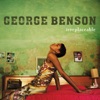
 George Benson
Irreplaceable
2004 GRP Records 59902
Original recording 2004
|
|
In this smooth-as-butter version, guitarist Benson gives the song his trademark mellow treatment. Ethereal at times, the reading is sensual and romantic without becoming maudlin.
|
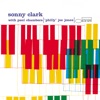
 Sonny Clark
Sonny Clark Trio
2002 Blue Note 33774
Original recording 1957
|
|
Pianist Clark is joined by the ultimate rhythm section--bassist Paul Chambers and drummer Philly Joe Jones--in this quintessential jazz reading. The trio swings through the tune with an air of understated sophistication.
|
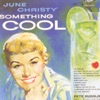
 June Christy
Something Cool
2001 Capitol/EMI Records 34069
Original recording 1955
|
|
Vocalist Christy whispers and belts in this torch song version arranged by Pete Rugolo. She’s backed by an orchestra of the finest jazz musicians of the day.
|
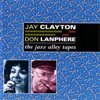
 Jay Clayton and Don Lanphere
The Jazz Alley Tapes
2004 Hep Records 2046
Original Recording 1988
|
|
Vocalist Clayton first sings the song much as the writers intended, but then she takes it to the stratosphere with her improvisation. The sextet is with her all the way in this stunning renovation of a much loved song.
|
|
|
|