Jazz Standards.com : Jazz Standards : Songs : History : Biographies

Home

Overview

Songs

Biographies

History

Search

Bookstore

About

Straight No Chaser (1951)

Origin and Chart Information
“Monk’s tunes have a logic and symmetry all their own. Unlike the tunes of many composers, his are so perfectly structured and concise that they cannot withstand tampering....”

- Mark C. Gridley

Rank 163
Written by Thelonious Monk

Laurent De Wilde, in his book Monk, characterizes Monk’s music with haunting imagery: “Monk’s music can neither be classified nor assimilated. Not because it is revolutionary, which isn’t a reason in itself, but because it’s like a rock thrown into a pond which immediately sinks and disappears. You watch it going down, and you don’t know whether to keep your eye on the sinking mass, or to contemplate the concentric ripples of the tremors.”


More on Thelonious Monk at JazzBiographies.com
 

In his book Jazz Styles: History and Analysis, Mark C. Gridley says more specifically, “Monk’s tunes have a logic and symmetry all their own. Unlike the tunes of many composers, his are so perfectly structured and concise that they cannot withstand tampering.... Monk employed simple compositional devices with very original results. His ‘Straight, No Chaser’ involves basically only one idea played again and again, each time in a different part of the measure and with a different ending. The shifting accents reflect a craftsmanship which can produce depth in simplicity. The melody is an ingenious invention set atop the twelve-bar blues chord progression.”

Monk first recorded “Straight, No Chaser” on July 23, 1951, with a quintet featuring Sahib Shihab on alto sax, Milt Jackson on vibes, Al McKibbon on bass, and Art Blakey on drums. Thomas Owens in his book Bebop: The Music and Its Players says, “But for all their formal simplicity, Monk’s meticulously crafted pieces typically contain one or more surprises for the unwary player. In the blues ‘Straight, No Chaser,’ the surprise is the evolving nature of the main motive; at first it is a five-note motive starting just before beat 1, then it is a seven-note motive starting just before beat 4, elsewhere it is a four-note motive, and so on.”

Gary Giddins in his book Visions of Jazz: The First Century says, “Columbia has also posthumously released unedited editions of albums formerly issued with excised or abridged solos....The CD version of ‘Straight No Chaser’ is more involving than the original, not least because [Charlie] Rouse’s restored solos now make sense (he was in top form at that session).” The recording was made in June, 1959, and the quintet included Thad Jones on cornet, Sam Jones on bass, and Art Taylor on drums.

For her 1990 release Carmen Sings Monk, vocalist Carmen McRae recorded “Straight, No Chaser” and renamed “Get It Straight” with lyrics by Sally Swisher. Vocalist/pianist Karrin Allyson also recorded it as part of a Monk medley which included “Blue Monk” (retitled “Monkery’s The Blues” with lyrics by Abbey Lincoln) and “You Know Who/I Mean You” with lyrics by Jon Hendricks.

Swisher’s lyrics describe Monk’s tenacity in regard to his music:

You gotta be on
You gotta be strong
The time is here
So trust your life to your ear
Don’t wait for no one

In Stuart Troup’s liner notes to the McRae album he explains the title changes: “The reason for these title changes is simply insistence by the music publishers, since the instrumental versions have become part of a separate Monk literature.”

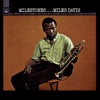
Miles Davis’ 1958 sextet recording Milestones, featuring Cannonball Adderley, contains a marvelous version of “Straight, No Chaser” which went a long way in establishing recognition for the Monk composition, also recorded by Oscar Peterson, Chet Baker, Bill Evans, and Gil Evans. The composition remains a favorite among contemporary musicians. It’s been recorded by pianists Jessica Williams, Kenny Drew, Jr., Chick Corea, and Eddie Higgins; guitarists Charlie Byrd and Larry Coryell; saxophonists Bud Shank and Bennie Wallace; and Bob Florence Limited Edition.

Thelonious Monk: Straight No Chaser is the title of a 1988 film biography of Monk which combines concert and off-stage footage by Christian Blackwood taken in 1967-68, interviews with family and friends, and archive footage of Monk’s contemporaries.

- Sandra Burlingame

Music and Lyrics Analysis

Musical analysis of “Straight No Chaser”

Original KeyEb major
Form12-bar blues
TonalityPredominantly major
MovementAscends mainly chromatically following a pick-up note on the dominant

Comments     (assumed background)

Another simple “blues” tune, Monk adds rhythmic interest by moving the first note of the repetitive motif to different beats in the measure.
K. J. McElrath - Musicologist for JazzStandards.com

Check out K. J. McElrath’s book of Jazz Standards Guide Tone Lines at his web site (www.bardicle.com).
Musician's Comments

Are you a published Vocalist or Instrumentalist?

Add a comment and we'll credit you with a link to your site. (more...)

Also on This Page...

Music & Lyrics Analysis
Musician's Comments

Jazz History Notes
Also by the Same Writers...
Reading & Research

CD Recommendations for This Tune
Click on a CD for more details at Amazon.com
Paul Motian

Monk in Motian
2002 Winter & Winter 919020
Original recording 1998
Drummer Motian leads a stellar group of top improvisers (including the double threat of tenor sax men Joe Lovano and Dewey Redman) through a refreshingly complex and ultimately satisfying reading of the song.

Andy Bey

Shades of Bey
1998 Evidence 22215
Original recording 1998
The rich, hypnotic warmth and dexterity of Bey’s voice is readily apparent as he applies both scat and vocalese impressions to the Monk blueprint.

Elvin Jones Jazz Machine

The Truth
2004 Half Note Records 4519
Original recording 1999
Flashy brass and a driving tempo define this live performance led by drummer Jones and featuring sweet solo slides from trombonist Robin Eubanks.

Kenny Barron

Green Chimneys
1994 Criss Cross 1008
Original recording 1983
Pianist Barron’ masterful touch is matched by bassist Buster Williams and drummer Ben Riley on this feather-light but up-tempo reading.
Jazz History

Thelonious Monk’s composition gets a brilliant treatment from trumpeter Miles Davis on his 1958 Milestones recording. Julian “Cannonball” Adderley solos admirably on alto saxophone, but tenor saxophonist John Coltrane steals the show with an incredible double-time solo.

Although Monk premiered the tune in 1951, on his 1959 recording he slowed the tempo down considerably, and the group gets a fine groove going. Tenor saxophonist Charlie Rouse is in a distinctly mellow mood while cornetist Thad Jones’s playing is moving in a more avant-garde direction; Monk’s solo is impressively sparse.

Fronting his own group after his stint with Miles, “Cannonball” Adderley was recorded live with his quintet in San Francisco, also in 1959. “Cannonball” is in a much bluesier mode than on his recording with Miles, and brother Nat (also a cornetist like Thad Jones) illustrates that he’s on a par with his brother.

Chris Tyle - Jazz Musician and Historian


Miles Davis

Milestones
Sony 85203

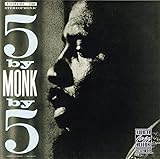
Thelonious Monk

5 by Monk by 5
Original Jazz Classics 362

Julian “Cannonball” Adderley

In San Francisco
Original Jazz Classics 35
Written by the Same Composer or Team...
This section shows the jazz standards written by the same writing team. Click on a name to see all of a writer's jazz standards.

Thelonious Monk

YearRankTitle
1951163Straight No Chaser
1954185Blue Monk
1958347Rhythm-A-Ning
1945355Ruby My Dear
194443352nd Street Theme
1951475Ask Me Now
1959484Misterioso
1958494Pannonica
1948495In Walked Bud
1962497Evidence
1946542Monk’s Mood
1962647Trinkle Tinkle
1952706Reflections
1962798Monk’s Dream
1947876Off Minor

Denzil Best and Thelonious Monk

YearRankTitle
1952321Bemsha Swing

Mike Ferro and Thelonious Monk

YearRankTitle
1944313Well You Needn’t

Coleman Randolph Hawkins and Thelonious Monk

YearRankTitle
1947625I Mean You

Kenneth S Clark, Thelonious Monk and Cootie Williams

YearRankTitle
1942346Epistrophy

Bernie Hanighen, Thelonious Monk and Cootie Williams

YearRankTitle
19444’Round Midnight
Reading and Research
Additional information on “Straight No Chaser” may be found in:

1 paragraph including the following types of information: music analysis.

Copyright 2005-2008 - JazzStandards.com - All Rights Reserved      Permission & contact information

Home | Overview | Songs | Biographies | History | Search | Bookstore | About