|
|
|
“Three Little Words” is a simple yet clever song extolling “that wonderful phrase that simply means I love you.” |
|
 |
|
- Chris Tyle
|
|
| |
Bing Crosby and the Rhythm Boys, accompanied by Duke Ellington’s Orchestra, introduced this standard in the 1930 RKO picture Check and Double Check. Their follow-up recording for Victor Records landed in the charts later that year and became Ellington’s first number one recording:
- Duke Ellington and His Orchestra (1930, #1)
- Jacques Renard and His Orchestra (1930, #3)
- Ipana Troubadors (1930, #10)
- Ethel Waters (1931, #8)
- Claude Hopkins and His Orchestra (1934, Orlando Robeson, vocal, #15)
|
|
| |
|
| |
|
Check and Double Check was the first major film appearance of Duke Ellington and his Orchestra. The band’s first film performance was in the 1929 short feature Black and Tan Fantasy, filmed in New York; Check and Double Check was filmed in Hollywood and was the band’s first visit to the West Coast.
A 1962 radio interview with Ellington, conducted by Canadian broadcaster Jack Cullen, is included in the book the Duke Ellington Reader edited by Mark Tucker. Cullen adroitly asked Duke a number of historically pertinent questions, things that had not been adequately covered in previous interviews or biographies of the bandleader. One of the questions concerned Check and Double Check and “Three Little Words.” Ellington explained that Bert Kalmar and Harry Ruby had written the tune to be sung by Duke’s drummer Sonny Greer. But Greer had an attack of the jitters, forcing Ellington to engage Bing Crosby for the vocal duties. After cutting a test recording, director Melville W. Brown nixed Crosby in favor of all three Rhythm Boys, who performed the number-- but only on the soundtrack. In a long shot of the band, the film shows trumpeters Freddy Jenkins, Cootie Williams, and Arthur Whetsol holding small megaphones, pretending to sing. The Hollywood film industry, ever subservient to the political correctness of the time, couldn’t have a white vocal group with a black orchestra.
|
| |
| |
|
| |
|
|
| |
| |
|
| |
|
A 1950 motion picture entitled Three Little Words, starring Fred Astaire and Red Skelton, was the Hollywood adaptation of the life of the songwriting team of Bert Kalmar and Harry Ruby. Their partnership, begun in 1920, produced a string of hits and lasted until Kalmar’s death in 1947.
|
|
|
|
| This section suggests definitive or otherwise significant recordings that will help jazz students get acquainted with
“Three Little Words.” These recordings have been selected from the Jazz History and
CD Recommendations sections.
|
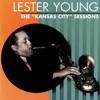
Duke Ellington’s 1930 recording of “Three Little Words” (Ebony Rhapsody: The Great Ellington Vocalists) with the vocals of Bing Crosby is an excellent place to start with this song, whether from a musical or historical standpoint. Saxophonist Lester Young became the jazz musician perhaps most closely associated with the song, and his first recording of the song from 1944 (The Kansas City Sessions) is an excellent jumping-off point in that regard. Among more modern interpretations, Milt Jackson’s 1959 recording with John Coltrane (Bags and Trane) is highly recommended, also displaying the song in a more up-tempo context.
Noah Baerman - Jazz Pianist and Educator
|
Musical analysis of “Three Little Words” | | Original Key | C major | | Form | A1 - A1 - B - A2 | | Tonality | Major throughout | | Movement | Descending by skips, ascending by steps; final upward leap (sixth) toward the end. | Comments (assumed background) | | Melodically jumpy and agitated, especially at the tempos taken today. In leading out of one thematic section and into another, Ruby uses some interesting embellishing chords, such as the augmented sixth (bVI7), N6 (bII7) and the biii chord. While having no real voice-leading purpose, the use of these types of harmonies was not uncommon during the period and reflected an impressionistic influence on music of the Jazz Age, especially through the music of Bix Beiderbecke. | | K. J. McElrath - Musicologist for JazzStandards.com |
|
A 1944 session by tenor saxophonist Lester Young illustrates what would, in a short time, be more common in jazz: creating a new melody (head) with a tune’s original chord changes. There are two takes of “Three Little Words” available on CD, but it’s the originally unissued take 2 that has a groovier feeling and is, in many ways, a more interesting performance. Lester’s tone has a huskiness not heard in his earlier work, leaning toward a Coleman Hawkins sound. Lester was deeply hurt by the death of his Basie section mate, Herschel Evans, who was a Hawkins disciple, and his playing thereafter incorporated aspects of Evans’ style. There are also fine solos by Joe Bushkin (piano), Bill Coleman (trumpet), and Dicky Wells (trombone), whose entrance after Lester’s solo almost sounds like a scream of approval.
Chris Tyle - Jazz Musician and Historian
|
Additional information for "Three Little Words" may be found in:
|
|
|
 Robert Gottlieb, Robert Kimball
Reading Lyrics
Pantheon
Hardcover: 736 pages
(Includes the following types of information: song lyrics.)
|
|
|
|
|
| This section shows the jazz standards written by the same writing team. |
|
|
|
|
Comment Policy
- Your comments are welcome, including why you like
this tune, any musical challenges it presents, or additional background information.
- Jazz musicians, fans, and students of all ages use this website as an educational resource.
As such, off-topic, off-color, unduly negative, and patently promotional comments will be removed.
- Once submitted, all comments become property of JazzStandards.com.
By posting, you give JazzStandards.com permission to republish or otherwise distribute your comments in any format or other medium.
JazzStandards.com reserves the right to edit or remove any comments at its sole discretion.
|
|
| Click on any CD for more details at Amazon.com |
 Duke Ellington
Ebony Rhapsody: The Great Ellington Vocalists
RCA
Original recording 1930
|
|
The status of “Three Little Words” as a jazz standard can be traced back to Duke Ellington’s appealing arrangement and performance, featuring the vocals of Bing Crosby.
|
 Ella Fitzgerald
Early Years 2
Verve
Original recording 1939
|
|
A very young Fitzgerald gives “Three Little Words” a vocally straightforward but infectiously swinging treatment with her big band.
|
 Stan Getz
Stan Getz & The Oscar Peterson Trio: The Silver Collection
Polygram Records
|
|
Accompanied by pianist Peterson’s drummer-less trio, Getz offers up a powerhouse reading of “Three Little Words,” with a muscular solo and even a stunning stop-time chorus. Peterson himself gets in an excellent solo of his own.
|
 Carmen McRae
Here to Stay
Verve
Original recording 1955
|
|
Ernie Wilkins’ swinging big band provides the setting, and vocalist McRae imparts her rhythmically hip sound, approaching the song in a straightforward manner in some places while offering highly creative embellishments elsewhere.
|
 John Coltrane, Milt Jackson
Bags & Trane (Mcup)
Atlantic / Wea
|
|
Vibraphonist Jackson authoritatively interprets the melody to “Three Little Words” at a bright tempo. Solo space is given to saxophonist Coltrane, pianist Hank Jones, drummer Connie Kay and Jackson himself, and they all shine, as does bassist Paul Chambers in a supporting role.
|
|
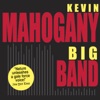
 Kevin Mahogany
Big Band
2005 Lightyear 54675
Original recording 2005
|
|
Mahogany’s rich, velvety voice over a sultry bossa nova may very well make this one of the song’s most romantic interpretations.
|
 Branford Marsalis
Trio Jeepy
1989 Columbia 44199
Original recording 1989
|
|
Saxophonist Marsalis is engaging and inventive as always, but it is veteran bassist Milt Hinton who steals this show with an extended slap-bass solo that has his band mates hooting.
|
Willis Jackson/Jack McDuff
Together Again
2003 Prestige Records 24284
Original recording 1965
|
|
With the heavy hand of Brother McDuff overseeing the proceedings on organ, saxophonist Jackson and guitarist Bill Jennings trade licks on this rousing upbeat romp.
|
 Mel Torme
A&E's Evening with Mel Torme
1996 Concord Records 4736
|
|
The vocalist has great fun with this tune, inserting and scatting through three Benny Goodman lines in the middle of the song. He takes it up tempo with his trio in this live performance.
|
|
|
|