Composer Walter Donaldson had enjoyed many successes with lyricist Gus Kahn before publishing “You’re Driving Me Crazy” in 1930 for which he also wrote the lyric. They scored the 1928 Broadway musical Whoopee! which produced two hits that became jazz standards, “Makin’ Whoopee” and “Love Me or Leave Me.” For the film version of Whoopee! they added another song which became a hit, “My Baby Just Cares for Me.”
|
|
Donaldson’s first success was “The Daughter of Rosie O’’Grady” (1916). He continued to write independent songs, sometimes with other lyricists, and compose for Broadway and film. His hits ran a gamut of styles: “How You Gonna Keep ‘Em Down on the Farm?” (1919), “My Mammy” (popularized by Al Jolson but introduced by William Frawley on Broadway in 1920 with lyric by Sam M. Lewis & Joe Young), “My Buddy” (1922), “Yes, Sir That’s My Baby” (1925), “What Can I Say After I Say I’m Sorry?” (a collaboration with Abe Lyman in 1926), “My Blue Heaven” (lyric by George Whiting, 1927), and “Little White Lies” (1930).
“You’re Driving Me Crazy” charted four times:
- Guy Lombardo and His Royal Canadians (1930, 4 weeks at #1 for a total of 12 weeks)
- Rudy Vallee and His Connecticut Yankees (1931, 9 weeks, peaking at #3)
- Nick Lucas (1931, vocal and guitar, 5 weeks, peaking at #7)
- Buddy Greco (1953, with the Heathertones and the Norman Leyden Orchestra, #26)
|
|
It was Guy Lombardo who introduced the song and contributed to its popularity by playing it nightly on his radio show. Much to the chagrin of Vincent Youmans, who scored the 1930 Broadway show Smiles, producer Florenz Ziegfeld interpolated the song into the show. An early Betty Boop cartoon (1931) featured the song sung by Mae Questal who would become the permanent voice of Betty Boop throughout the cartoon series.
In The American Popular Ballad of the Golden Era, 1924-1950: A Study in Musical Design, author Allen Forte says that “Moten Swing” is a paraphrase of “You’re Driving Me Crazy.” “Moten Swing” was written in 1932 by Bennie Moten, the influential pianist/bandleader who helped establish the Kansas City style in the late 1920s and early 1930s, and Ira A. “Buster” Moten, pianist/accordionist. Upon his death Moten’s band was taken over by Count Basie.
In American Popular Song: The Great Innovators, 1900-1950, Alec Wilder explains that the A sections of the song are simple, making it a perfect vehicle for jazz players. “For a rhythm song it contains a minimum number of notes. Insofar as it does, it’s innovative.... The release is highly unexpected: it is entirely in A major, as opposed to the parent key of F major. And it is considerably busier than the A sections. For 1930s this was a landmark of inventiveness. Even the verse is much more considered and inventive than most pop verses, which usually sound as if they’d been written at top speed and with cynical indifference.”
The verse sets the mood for a song of loss, and in the refrain the abandoned lover expresses desperate confusion:
Yes, you,
You’re driving me crazy!
What did I do? What did I do?
In the end the singer is consoled by friends, and the clever lyric lends itself to two interpretations. Do the friends simply understand the singer’s sorrow or is it implied that they were suspicious all along of the sincerity of the now departed lover?
How true,
Were the friends who were near me to cheer me,
Believe me, they knew!
But you,
Were the kind who would hurt me, desert me,
When I needed you!
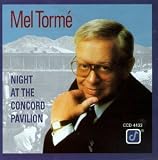
Mel Torme sang and recorded “You’re Driving Me Crazy” many times over several decades. In Singing Jazz: The Singers and Their Styles,authors Bruce Crowther and Mike Pinfold say, “Torme first sang professionally when he was four years old, singing two choruses of “You’re Driving Me Crazy” with the popular Coon-Sanders Nighthawks band at the Blackhawk Restaurant in Chicago in 1930.” Later, when Torme was 25 or 26 years old, he was filmed performing the song, not at its usual jaunty tempo but as a lovely ballad with a group that includes a harpist. His performance is available on DVD as The Vocalists (part of the Jazz Legends series) which also includes Peggy Lee, June Christy, and Sarah Vaughan. The films, from the 1950-51 Snader Telescriptions, were by producer Lou Snader who made some 700 short films (akin to today’s music videos) that were presented on television. Torme recorded the song in 1991 in a gently swinging style as a tribute to Count Basie (Night at the Concord Pavilion).
According to Peter Gammond in The Oxford Companion to Popular Music, the Temperance Seven, a British band formed in 1955 to play tongue-in-cheek renditions of 1920s dance music, had a hit with the song in 1961. The Squirrel Nut Zippers had fun with it (listed as “You’re Drivin’ Me Crazy”) in a 1995 recording, and it’s appeared in the repertoire of saxophonists Lester Young and Art Pepper, trumpeter/vocalist Chet Baker, pianist Dave McKenna, guitarists Joe Pass and Django Reinhardt, and the Blue Wisp Big Band.
|