|
|
|
| “‘Blue Moon’s’ second incarnation was as the title track for Manhattan Melodrama. Before the film’s release, however, the title was changed yet again to ‘The Bad in Every Man.’” |
|
 |
|
- JW
|
|
| |
Rodgers and Hart’s “Blue Moon” was originally written as “Prayer” for Jean Harlow in the MGM film, The Hollywood Revue of 1933. According to Richard Rodgers in his autobiography, Musical Stages: An Autobiography, Harlow’s prayer was to become a movie star, and the lyrics started out as “Oh, Lord, if you’re not busy up there, I ask for help with a prayer/ So Please don’t give me the air...” Unfortunately, because of a series of production personnel changes, the revue was scaled down to a spoof starring Laurel and Hardy, the Three Stooges, and Jimmy Durante. There was no Harlow and no “Prayer.”
The Rodgers and Hart song’s next incarnation was as the title track for the 1934 film, Manhattan Melodrama, starring Clark Gable, William Powell, and Myrna Loy. Before the film’s release, however, the title was changed yet again, this time to “The Bad in Every Man,” and it was sung by Shirley Ross.
It was not long after this that music publisher Jack Robbins offered a “deal” to the songwriting team: If Hart would write a more commercial lyric, Robbins would “plug it from one end of the country to the other.” Robbins suggested the song should be one of those Tin Pan Alley love songs with the words June, moon, and spoon. Just to show he could do it, and with a large measure of cynicism, Hart wrote the lyrics to “Blue Moon.” Although he did not personally like the song, it soon became a number one hit, a million-seller in sheet music sales, and, in the end, his most popular song.
In its final form, “Blue Moon” was for Rodgers and Hart their only hit not associated with a Broadway show or a Hollywood film. While its success and popularity are both irrefutable, because of the simplicity of its construction it is not critically ranked among the top Rodgers and Hart compositions.
|
| |
| |
|
| |
|
|
| |
| |
|
| |
|
Like many other songwriters, Rodgers and Hart moved west to Hollywood as Broadway began to feel the effects of the 1929 depression. Their three-year stay proved an unpleasant experience for Rodgers as he disliked the impersonal Hollywood system and felt unproductive between movies. Hart, on the other hand, reveled in the Hollywood life enjoying the money, the free time, and the parties until dawn. The good life, however, was not without its cost. To appease producers Hart found himself writing the same types of watered-down, sentimental lyrics he had scoffed at years before, and he, too, became disgusted with the assignments.
On the pop charts, “Blue Moon” has had repeated success:
- Glen Gray and the Casa Loma Orchestra (1935, Kenny Sargent, vocal, #1)
- Benny Goodman and His Orchestra (1935, Helen Ward, vocal, #2)
- Ray Noble’s Orchestra (1935, Al Bowlly, vocal, #5)
- Mel Torme (1949, with Pete Rugolo and His Orchestra, #20)
- Billy Eckstine (1949, with Hugo Winterhalter and His Orchestra, #21)
- The Marcels (1961, #1 selling over 2.5 million copies)
|
| |
| |
|
| |
|
|
|
| |
|
| |
|
“Blue Moon” became Mel Torme’s signature song and was also the theme music for the 1930’s radio series Hollywood Hotel.
The phrase “blue moon” originated in the 1800’s. It is a cropped version of “till a blue moon” which basically means “never” or, as it also might be expressed, “until hell freezes over.” Over the past two hundred years the phrase has changed meaning several times but has come to mean two full moons in one month, a phenomenon which occurs about every 32 months.
|
|
|
|
More information on this tune... |
|
|
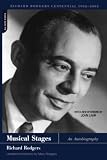 Richard Rodgers, Mary Rodgers
Musical Stages: An Autobiography
Da Capo Press
Paperback: 384 pages
(The composer gives us the history of the song in his autobiography.)
|
|
|
|
See the Reading and Research page for this tune for additional references. |
|
- Jeremy Wilson
|
|
| This section suggests definitive or otherwise significant recordings that will help jazz students get acquainted with
“Blue Moon.” These recordings have been selected from the Jazz History and
CD Recommendations sections.
|
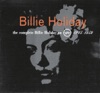
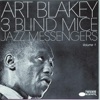
“Blue Moon” ( The Velvet Fog) is closely identified with Mel Torme. He recorded the tune several times, but his original recording from 1949 is still standard-bearer. Billie Holiday’s 1952 performance ( The Complete Verve Studio Master Takes) is also significant both for her own reading of the tune and for the work of her stellar supporting cast. Trumpeter Freddie Hubbard, meanwhile, is responsible for a definitive instrumental rendition of the tune with Art Blakey’s Jazz Messengers ( Three Blind Mice, Vol. 1).
Noah Baerman - Jazz Pianist and Educator
|
Just as there are songs structured
on the chord changes of “I Got Rhythm” (rhythm changes),
there are songs structured on the chord progressions
of “Blue Moon” (“ice cream changes” or “Blue Moon
changes.”) Notable among these are many of the 1950’s
doo-wop ballads, such as “Earth Angel.” Because
so many ‘50s ballads use the same harmonic structure,
oldies groups are able to seamlessly string together
medleys of doo-wop classics.
- JW
|
Musical analysis of
“Blue Moon”
|
| Original
Key |
Eb major;
brief modulations to Gb major and Bb major
in the last half of the bridge |
| Form |
A – A – B
– A |
| Tonality |
Primarily
major |
| Movement |
“A” is essentially
a three-note major arpeggio downward from
the fifth scale degree, each note being
sustained and embellished by upper and lower
neighbor tones; “B” consists of a three-pitch
motif of an upward second, followed by a
downward third, with pitches repeated to
accomodate the lyrics, and ending with an
upward arppegio based on a first-inversion
V chord. |
|
Comments
(assumed
background)
|
|
The harmonic progression here – I – vi –
ii7 – V7—is reminiscent of (“Heart
And Soul,” “Perfidia,”
“These
Foolish Things,” “Shangri-La,” the first
four measures of “I
Got Rhythm,” et. al., etc.) It is one
of the most (ab) used chord progressions
in history (one even hears it in at least
two Mozart symphonies – the first movement
of K.29 in A Major and the fourth movement
of K.36 [“Linz”] in C Major). The beauty
is in the rarely heard verse (which has
a descending minor progression with a modulation
into the relative major that is the epitome
of subtlety) and in the “B” section of the
chorus. The first eight measures of “B”
are simply ii – V7 – I, although the melody
note actually makes the V7 a V13. Then,
the composer surprises us with a iv chord,
moving the progression into another ii –
V7 – I in the bIII key (Gb in the original).
In context, this is quite exotic and refreshing
to hear. Rodgers follows this with a direct
common tone modulation to the V of the original
tonic (this chord is Bb in the original
version), but the listener actually hears
this as a I chord in Bb. This “I chord of
the moment” is followed by its own V7 (F7
in the original), which turns minor and
adds the 11th, thus becoming the pivot chord
for the original tonic key (Eb) at the last
possible moment.
It is at this point that
the Marcels demonstrated a complete lack
of musical sophistication, as their version
completely changes these last eight measures.
Instead of going to iv as Rodgers composed
it, they chose to repeat the ii – V7 – I
progression an additional time, then used
a II7 – V7 turnaround leading into the last
“A”. If one listens to the recording carefully,
one can almost hear the slightest hesitation
at this point –the awkwardness of uncertainty.
This sort of modulation to a distant key
is often difficult for the novice. The best
strategy is to listen carefully for the
harmonic direction and that of the inner
voices – and trust one’s ear. |
|
K. J. McElrath - Musicologist for JazzStandards.com |
|
Frankie Trumbauer was the mentor of tenor saxophonist
Lester Young. Trumbauer played C melody saxophone
(an instrument pitched between the alto and tenor),
enabling the player to read the melody from piano
music without transposing.
A member of the
Paul Whiteman Orchestra with cornetist Bix Beiderbecke,
Trumbauer had a symbiotic relationship with Beiderbecke,
but after Bix’s death in 1931 Trumbauer’s playing
tended to be lackluster. His recording of “Blue
Moon” in 1934 is the tune’s first jazz recording,
and the highpoint of the record is the fine trumpet
playing of Bunny Berigan.
On the other hand, Coleman Hawkins, a saxophonist
whose playing was always superb, recorded a beautiful,
sentimental version of “Blue Moon” in Paris a few
months after Trumbauer’s.
Chris Tyle - Jazz Musician and Historian
|
Additional information for "Blue Moon" may be found in:
|
|
|
 David Ewen
Great Men of American Popular Song
Prentice-Hall; Rev. and enl. ed edition
Unknown Binding: 404 pages
(1 paragraph including the following types of information: history.)
|
|
|
|
|
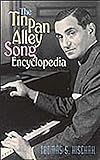 Thomas S. Hischak
The Tin Pan Alley Song Encyclopedia
Greenwood Press
Hardcover: 552 pages
(1 paragraph including the following types of information: film productions, history and performers.)
|
|
|
|
|
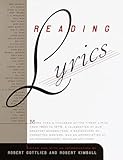 Robert Gottlieb, Robert Kimball
Reading Lyrics
Pantheon
Hardcover: 736 pages
(Includes the following types of information: song lyrics.)
|
|
|
|
|
Richard Rodgers, Mary Rodgers
Musical Stages: An Autobiography
Da Capo Press
Paperback: 384 pages
(3 paragraphs including the following types of information: history.)
|
|
|
|
|
“Blue Moon” was included in these films:
-
The Marx Brothers’
At the Circus (1939, harp solo by Harpo
Marx)
- Words and Music (1948, Mel
Torme)
- Malaya (1950, Valentina Cortesa)
- East Side, West Side (1950)
- With a Song in My Heart (1952,
Susan Hayward dubbed by Jane Froman)
- Beloved Infidel (1959)
- New York, New York (1977,
Robert De Niro and Mary Kay Place)
- Grease (1978, Sha-Na-Na)
- An American Werewolf In London
(1981, Three versions: The Marcels, Bobby Vinton
and Sam Cooke)
- Arthur (1981, Dudley Moore,
Piano)
- The Remains Of The Day (1993)
- Apollo 13 (1995, The Mavericks)
- Babe (1995)
- Cet Amour-La (2001, Billie
Holiday)
|
|
|
|
Comment Policy
- Your comments are welcome, including why you like
this tune, any musical challenges it presents, or additional background information.
- Jazz musicians, fans, and students of all ages use this website as an educational resource.
As such, off-topic, off-color, unduly negative, and patently promotional comments will be removed.
- Once submitted, all comments become property of JazzStandards.com.
By posting, you give JazzStandards.com permission to republish or otherwise distribute your comments in any format or other medium.
JazzStandards.com reserves the right to edit or remove any comments at its sole discretion.
|
|
| Click on any CD for more details at Amazon.com |
 Billie Holiday
The Complete Verve Studio Master Takes
2005 Verve 8030
Original recording 1952
|
|
Holiday sounds unusually joyous on this wonderful and important small-group recording. This is due in no small part to the uplifting playing of the all-star band featuring Charlie Shavers on trumpet, Flip Phillips on tenor saxophone and Oscar Peterson on piano.
|
 Art Blakey
Three Blind Mice, Vol. 1
1990 Blue Note 84451
Original recording 1962
|
|
This performance is a feature for Freddie Hubbard, who was at this point coming into his own as an influential voice on the trumpet. Hubbard’s playing is frequently breathtaking here, deftly finding the balance between extreme lyricism and impressive displays of dexterity and creativity.
|
 Kenny Barron
Live at Bradley's
2002 Sunnyside 3002
Original recording 1997
|
|
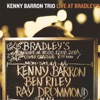
At the time of this 1997 recording, pianist Barron and drummer Ben Riley had been playing together for over twenty years. The two played often at the now-defunct New York club Bradley’s with bassist Ray Drummond rounding out the trio, and this recording documents one of those gigs. Barron’s gift with ballad playing and his trio’s subtle interplay are on full display here.
|
|
 Mel Torme
The Velvet Fog
2000 ASV Living Era 5346
Original recording 1949
|
|
Vocalist Torme offers a classic performance here, singing with great tenderness in front of a large ensemble led by Pete Rugolo.
|
 Clifford Brown
Clifford Brown with Strings
Polygram Records 558078
Original recording, 1955
|
|
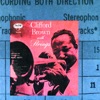
Trumpeter Brown delivers a wonderful, lyrical interpretation of the song. His sharp sound is softened somewhat by the backing string arrangement.
|
 Betty Roche
Singin' and Swingin'
1992 Original Jazz Classics 1718
Original recording 1960
|
|
The former Duke Ellington singer gives the simple lyrics a little more weight with her husky voice and soulful delivery.
|
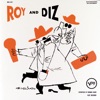
 Roy Eldridge/Dizzy Gillespie
Roy and Diz
1994 Verve 314521647
Original recording 1954
|
|
This rendition is a friendly sparring session between the two trumpeters. While they trade licks on this song, there is an obvious spirit of teamwork.
|
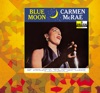
 Carmen McRae
Blue Moon
2000 Polygram 829
Original recording 1956
|
|
McRae swings joyfully through this performance of “Blue Moon,” which documents a little-heralded but fruitful collaboration with arranger and composer Tadd Dameron.
|
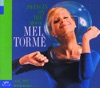
 Mel Torme
Swingin' on the Moon
1998, Polygram #511385
Original recording, 1960
|
|
One of Torme’s best albums sees him at his most mature and limber. His rendition of “Blue Moon” is impeccably smooth and heartfelt. It is no surprise that this song became his calling card.
|
 Don Shirley
...Plays Birdland Lullabies/Show Tunes
2001 Collectables 2790
Original Recording 1955
|
|
This two-for-one CD is another example of the genius of pianist Shirley whose amazing body of work is finally being reissued on CD. “Blue Moon” is given a truly reverential treatment.
|
|
|
|