|
|
|
| “I have been here so long that even the sea gulls must recognize me.” |
|
 |
|
- From Max Miller’s I Cover the Waterfront
|
|
| |
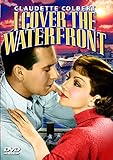
In the early 1930’s the American public was well aware of the phrase, “I Cover the Waterfront.” It was the title of a best-selling novel by Max Miller (1932), a hit recording written by Johnny Green and Edward Heyman (1933), and a Reliance Studios film starring Claudette Colbert (1933).
Both the song and the film were inspired by the Miller book, and while the film was still in production the song became a hit, prompting the producers to re-score the film to include the Green/Heyman composition. Even the sheet music industry jumped aboard the bandwagon. Eager to capitalize on the song’s success, even if it bent the facts, Harms Incorporated published “I Cover the Waterfront” with the cover quote, “Inspired by the United Artist Picture of the same name.”
“I Cover the Waterfront” was immediately popular with both performers and audiences. A short list of 1933 recordings includes Annette Hanshaw, Abe Lyman’s California Ambassador Hotel Orchestra (Grace Barrie vocal), Connie Boswell, and Louis Armstrong and His Orchestra.
Joe Haymes’ Orchestra recorded the first major hit of the song, rising to number seventeen on the pop charts, with Eddy Duchin’s Orchestra charting a week later.
- Joe Haymes and His Orchestra (1933, Cliff Weston, vocal, #17)
- Eddy Duchin and His Orchestra (1933, Lew Sherwood, vocal, #3)
|
| |
| |
|
| |
|
|
| |
| |
|
| |
|
|
|
| |
|
| |
|
The 1933 performance of “I Cover the Waterfront” by Louis Armstrong and His Orchestra may be seen on the documentary At the Jazz Band Ball or on Ken Burn’s Jazz -the full performance is on Episode 2 of the DVD set.
Johnny Green was one of the many to record “I Cover the Waterfront” in 1933. A talented composer and arranger, Johnny Green and His Orchestra recorded over a dozen hit songs from 1934 to 1936. Green had also served as a piano accompanist for Ethel Merman, Gertrude Lawrence and Gertrude Niesen. In a 1933 British session he recorded what has been termed a “brilliant” piano medley of his songs, from his first, “Coquette” (1928), to his then current hit, “I Cover the Waterfront.”
|
| |
| |
|
| |
|
According to a September 27, 2003, Union-Tribune newspaper article by columnist Don Freeman, it was the San Diego waterfront that, at least indirectly, inspired the Green/Heyman song. Freeman points out that author Max Miller (1899-1967) had worked for the old San Diego Sun newspaper. He goes on to say,
Miller, a part of San Diego’s past, had been writing about the waterfront since the mid-1920s. With his seemingly effortless style, he created a book [I Cover the Waterfront] that began as follows: “I have been here so long that even the sea gulls must recognize me.”
Almost overnight, when his first book won extraordinary reviews in New York and elsewhere, Miller became an internationally known author. Soon Miller was turning out a book a year.
In his article, I Cover the Waterfront -- Life Through the Cracks, Poynter Institute Senior Scholar Roy Peter Clark describes Miller’s I Cover the Waterfront as “a series of loosely connected nonfiction yarns ...a vivid account of oceanside life ...fishermen, con artists, publicists, celebrities, smugglers, and spies, a world that Miller explores with an improbable combination of sentimentality and cynicism.”
The film I Cover the Waterfront captures the atmosphere of the book but largely ignores its storylines. Claudette Colbert plays the daughter of smuggling ship captain while her love interest is a reporter (Ben Lyon) who would like to expose her father.
|
| |
| |
|
| |
|
Edward Heyman’s verse for “I Cover the Waterfront” is often omitted but may be heard on Jacqui Naylor’s critically acclaimed debut CD, Jacqui Naylor, 1999, Ruby Records (Ryko) and on Ken Burns Jazz Collection: Billie Holiday, 2000, Polygram Records.
|
|
|
|
More information on this tune... |
|
See the Reading and Research page for this tune for additional references. |
|
- Jeremy Wilson
|
|
| This section suggests definitive or otherwise significant recordings that will help jazz students get acquainted with
“I Cover the Waterfront.” These recordings have been selected from the Jazz History and
CD Recommendations sections.
|
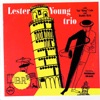
Billie Holiday recorded “I Cover the Waterfront” repeatedly over the course of her storied career. Her 1941 recording ( The Quintessential Billie Holiday, Vol. 9 (1940-1942)) is a terrific place to begin when learning the tune and is a classic example of her style. Her longtime cohort, saxophonist Lester Young, also offered a standout version ( The Lester Young Trio). This 1945 recording with Nat “King” Cole and Buddy Rich is vintage Young. Meanwhile, Art Tatum developed a significant relationship with the tune, first documented on record in 1949 ( The Complete Capitol Recordings) in a brilliant solo piano performance.
Noah Baerman - Jazz Pianist and Educator
|
Edward Heyman’s lyrics tell a story of lost love.
The verse sets the scene, “Away from the city …
by the desolate docks” with a heart “as heavy as
stone.” The refrain is basically in the popular
A-A-B-A form and each of the A sections begins with
the hook phrase, “I Cover the Waterfront.” The story
progresses with hoping, then questioning, and finally
closes with the hopeful claim, “… the one that I
love will soon come back to me.” -JW
|
Musical analysis of
“I Cover the Waterfront”
|
| Original
Key |
G major |
| Form |
A1 – A2 –
B – A2 |
| Tonality |
Primarily
major |
| Movement |
Step-wise
down and up, followed by descending arpeggio
and step-wise movement up during “A.” The
“B” section consists of wide leaps and chromatic
movement upward, followed by descending
thirds, returning to “A.” |
|
Comments
(assumed
background)
|
|
The piece starts out on a “vi” chord, but
this is really a substitution for II7 leading
to V7, lending variety and interest. Some
modern performers start with a II13 on beats
one and two, dropping the 13th a half-step
to form a II7+5 and create the beginning
of a nice descending, chromatic countermelody.
The iii and ct˚7 in measure 4 (B minor and
Bb˚7 in the original key) are more decorative
than functional, but again provide a little
spice to the harmonic progression. The descending
chromatic progressions in mm. 5–6 are again
substitutions for the functional circle
of fifths. I – VI7 – II7 – V7 would work
just as well but would sound rather bland.
“B” is essentially a “call-and-response”
section. The statement – a repeated note
is answered by an ascending chromatic line
an octave lower. This is repeated three
times before the final statement in mm.
7-8 of the bridge. |
|
K. J. McElrath - Musicologist for JazzStandards.com |
|
Pianist Joe Sullivan, a disciple of Earl Hines
and
Fats Waller, had a tasty, small swing band at
New York’s Cafe Society in 1940. Although the band
didn’t have a long engagement, they did record some
memorable sides for Okeh (supervised by John Hammond),
one of which was a splendid rendition of “I Cover
the Waterfront.” The tune was sung by
Benny Goodman’s ex-vocalist, Helen Ward.
In 1945, Lester Young, on the West Coast, had
the good fortune to be hired by promoter Norman
Granz for a session on his Norgran label. His fellow
band members were Nat “King” Cole and drummer Buddy
Rich. The trio’s recording of “I Cover the Waterfront”
is a showcase for Lester’s fine ballad playing.
Chris Tyle - Jazz Musician and Historian
|
Additional information for "I Cover the Waterfront" may be found in:
|
|
|
 Robert Gottlieb, Robert Kimball
Reading Lyrics
Pantheon
Hardcover: 736 pages
(Includes the following types of information: song lyrics.)
|
|
|
|
|
“I Cover the Waterfront” was included in these films:
- I Cover the Waterfront (1933,
instrumental)
- Joe Versus the Volcano (1990,
The Ink Spots)
- Malcolm X (1992, Miki Howard)
- Se7en (1995, Billie Holiday)
|
| This section shows the jazz standards written by the same writing team. |
|
|
|
|
Comment Policy
- Your comments are welcome, including why you like
this tune, any musical challenges it presents, or additional background information.
- Jazz musicians, fans, and students of all ages use this website as an educational resource.
As such, off-topic, off-color, unduly negative, and patently promotional comments will be removed.
- Once submitted, all comments become property of JazzStandards.com.
By posting, you give JazzStandards.com permission to republish or otherwise distribute your comments in any format or other medium.
JazzStandards.com reserves the right to edit or remove any comments at its sole discretion.
|
|
| Click on any CD for more details at Amazon.com |
 Art Tatum
The Complete Capitol Recordings
Blue Note Records
|
|
Tatum's 1949 solo performance here is technically and harmonically stunning, yet relaxed and controlled. He was without a doubt one of this song's definitive interpreters.
|
 Art Tatum
20th Century Piano Genius
1996 Polygram 31763
Original recording 1955
|
|
This 1955 performance, recorded live at a party in California not long before Tatum's untimely death, equals the 1949 performance in inventiveness, but is less inhibited and more energetic. Tatum had clearly lost none of his edge by this point.
|
 Django Reinhardt
Jazz in Paris: Nuages
2003 Wea International 18428
Original recording 1953
|
|
This recording documents the tail end of Reinhardt's career and features noteworthy French jazz musicians Martial Solal and Pierre Michelot early in their careers. Reinhardt plays the electric guitar here, and it is striking to hear the manner in which he exploits the electric guitar's capacity to sustain notes. The results are strikingly melodic and restrained.
|
|
 Billie Holiday
The Quintessential Billie Holiday, Vol. 9
Sony 47031
|
|
This is an exquisite recording of Holiday at her very best. She is soft and seductive without losing that world-weariness that makes "I Cover the Waterfront"' more than a simple song.
|
 Hank Jones
Live at Maybeck 16
Concord Records
Original Recording 1991
|
|
Jones gives the tune a pert but gently swinging reading in this solo piano recital. He also performs it solo on altoist Frank Morgan's1992 CD, You Must Believe in Spring.
|
 Erroll Garner
Complete Savoy Master Takes
Savoy Jazz
Original Recording 1949
|
|
This trio performance offers a striking early example of Garner's unique, florid style. The tempo is slow, but Garner is inventive and playful throughout.
|
 Sarah Vaughan
At Mister Kelly's
1991 Polygram 32791
Original recording 1957
|
|
This performance begins with some particularly light-hearted stage patter from Vaughan. Make no mistake, though, once the song begins, it is performed with Vaughan's typical focus and intensity.
|
 Jackie McLean
A Long Drink of the Blues
1994 Original Jazz Classics 253
Original recording 1957
|
|
McLean was only 25 at the time of this recording, but his gritty yet lyrical ballad style is shown here to be quite mature already. Mal Waldron's accompaniment on piano adds a great deal of depth to the performance as well.
|
 Terence Blanchard
The Billie Holiday Songbook
1994 Columbia 57793
Original recording 1994
|
|
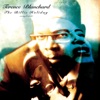
Trumpeter Blanchard’s wonderfully lyrical take on the tune has as much to do with Holiday’s beautiful reading of the song as the song itself. It is undeniably romantic in its heartbreaking melancholia.
|
 Adam Makowicz
A Tribute to Art Tatum
2000, VWC 4108
Original recording, 1997
|
|
Makowicz was inspired to pursue jazz when he heard Tatum on Willis Conover’s radio program, Voice of America, as a child in Poland. Make no mistake, Makowicz has the technique to elevate this tribute to the level of the master.
|
 Shelly Manne & His Friends
Shelly Manne & His Friends, Vol 1
2001, JVC Classics
Original recording, 1956, Contemporary
|
|
Pianist Andre Previn is delicate and deliberate on this highly inventive rendition of the song. Drummer Manne and bassist Leroy Vinegar step lightly. Unfortunately this is only available as a pricey import, but Manne and Friends made several other recordings.
|
|
|
|