|
|
|
| “It’s no wonder that tenor saxophonists shied away from recording numbers Hawkins had done; in fact, there wouldn’t be another tenor player to attempt this tune until Don Byas in 1945.” |
|
 |
|
- Chris Tyle
|
|
| |
In April of 1931, Bing Crosby introduced “Out of Nowhere” on the Brunswick label, the recording that would become his first solo, number one hit. It has since been released on CD in Going Hollywood, Vol. 1: 1930-1936. A month after Crosby’s recording, Leo Reisman and His Orchestra also scored with “Out of Nowhere,” their Victor recording with vocalist Frank Munn rising to number six on the pop charts.
|
| |
| |
|
| |
|
|
|
| |
|
| |
|
Also in 1931, “Out of Nowhere” was introduced on the silver screen in the Paramount western comedy Dude Ranch starring Jack Oakie, Stuart Erwin, Eugene Pallette, Mitzi Green, and June Collyer. Based on a story by Milton Krims, Dude Ranch tells the story of Jack Oakie as the leader of a down-and-out acting troupe who put on a “Wild West” show to keep the customers from leaving a boring dude ranch.
An April 25, 1931, a New York Times review said:
A rollicking farce-comedy, known as “Dude Ranch,” provoked waves of hearty laughter at the Paramount yesterday afternoon. It is a brightly directed film, with witty dialog and clever acting, but the latter stages are not quire as hilarious as the preceding ones.
With an A-B1-A-B2 form, Edward Heyman’s serendipitous lyrics use the first two sections to express appreciation for a lover from out of nowhere. The second A section questions what would happen if, “you go back to your nowhere,” and the final section has the singer declare, “I’ll always wait ...hoping you’ll bring your love to me.”
|
| |
| |
|
| |
|
Johnny Green dedicated “Out of Nowhere” to his first wife, Carol, who encouraged him to abandon his financial career and, against the wishes of his father, pursue a career in music.
|
| |
| |
|
| |
|
|
|
|
|
More information on this tune... |
|
See the Reading and Research page for this tune for additional references. |
|
- Jeremy Wilson
|
|
| This section suggests definitive or otherwise significant recordings that will help jazz students get acquainted with
“Out of Nowhere.” These recordings have been selected from the Jazz History and
CD Recommendations sections.
|
The lightly swinging 1937 performance of “Out of Nowhere” by Coleman Hawkins ( 1937-39) is an early classic jazz rendition. Benny Carter’s arrangement and trumpet and Django Reinhardt’s guitar add even more color to Hawkins’ tour de force on the saxophone. A more modern classic was recorded ten years later in a ballad style by the great Charlie Parker ( Complete Dial Sessions Master Takes). As for vocal versions, a great place to start is with the infectious 1961 performance of the tune by Joe Williams with Harry “Sweets” Edison ( Together).
Noah Baerman - Jazz Pianist and Educator
|
Green’s chord progressions for “Out of Nowhere” are perhaps what is most appealing to jazz musicians and the evidence abounds. The harmonies from “Out of Nowhere” have been recycled again and again, including “Casbah” by Tadd Dameron, “Nostalgia” by “Fats” Navarro, “317 East 32nd Street” by Lennie Tristano, “Wee-Jay” by J.R. Monterose, “‘Into Somewhere” by Bill LeSage, and “Conversion” by Billy Taylor, and “She Rote*” by Charlie Parker, just to name a few.
Part of the attraction lies in the song’s bluesy opening. At the time of its writing in 1931, George Gershwin and other composers of popular music were regularly including jazz elements in their music. One instance was their inclusion of “blue notes,” which were borrowed from African-American blues music, field hollers, and work songs. The “blue notes” allowed a wider expressive range, especially the depiction of loneliness, longing or sadness, and were soon assimilated into the traditional European based harmonies. According to Allen Forte in his book, The American Popular Ballad of the Golden Era, 1924-1950: A Study in Musical Design, the blues-derived chord near the opening of “Out of Nowhere” is,
...a self-standing harmony in its own right, and one that gives the special twist (“the hook”) to the opening music of this ballad.
-JW
* Over the years there has been disagreement regarding the underlying chord progression for Parker’s “She Rote.” A visitor contributes:
Charlie Parker’s “She Rote”, often (ever since the liner notes on the original Verve LP) stated as being based on “Out of Nowhere,” is actually based on the chords of “Beyond the Blue Horizon.” The relative obscurity of that tune as a jazz standard -- no bebopper ever played it to my knowledge-- along with the furious tempo of Bird’s superb performance, has caused it to be generally overlooked as the source for “She Rote,” which careful listening will definitely indicate has no relation to “Out of Nowhere” -- a tune Bird frequently recorded elsewhere though never at this tempo or for that matter, in this key (Bb). As he often did, Bird resurrected a hitherto neglected standard and made brilliant use of it!
Charles Coffman, saxophonist
Discographer, writer, and record producer Bob Porter agrees. In the liner notes for Yardbird Suite: The Ultimate Collection, he says, “...’She Rote’ is a blazer on the seldom used chord pattern of ‘Beyond the Blue Horizon.’ Note also that ‘She Rote’ has an arranged introduction, while the remainder of the tune is pure improvisation.”
In the 1988 edition of Lawrence Koch’s book, Yardbird Suite: A Compendium of the Music and Life of Charlie Parker, Koch maintained the chord base for “She Rote” is in reality “more like a combination of [“Out of Nowhere”] and “Slow Boat To China” (Nowhere 8 (1); Slow Boat 8 (2); Nowhere 8 (3); Slow Boat 8 (4).” However, in the 1999 edition he states the chord base is ‘Beyond the Blue Horizon,’ which seems to leave everyone in agreement.
|
Musical analysis of
“Out of Nowhere”
|
| Original
Key |
G major |
| Form |
A – B1 –
A – B2 |
| Tonality |
Primarily
major |
| Movement |
Section “A”
moves up primarily step-wise with skips
downward. Section “B” contains upward leaps. |
|
Comments
(assumed
background)
|
| Despite the leaping intervals of the “B”
section, this is not a difficult tune and
spans a range of only a ninth. The intriguing
part of this work lies in its opening chord
progression, which contains echoes of French
Impressionism. I is followed by bVI7–in
the original key, Gmaj7 followed by Eb7,
then back to the Gmaj7. Music theorists
call the Eb7 an “augmented sixth,” which
usually resolves to a V7 – I cadence, although
the composer skips this, going directly
back to Gmaj7. Nevertheless, the missing
V7 is implied by return to the tonic. This
progression is found in several songs of
the period, usually in the middle or end
of a song, as a harmonic embellishment.
It does appear in the initial measures of
another piece, “Everything I Have Is Yours,” however. The next
four measures of “A” and the first four
measures of “B” simply play with the iii7(b5)
– VI7 – ii7 sequence. In the fifth measure
of “B1,” however, an augmented sixth chord
returns for two full measures before resolving
to V.
In the second “B,” however, this does
not happen; the ii7 goes to a decorative
iv chord, delaying the final resolution
which comes by way of a two-measure descending
progression which is used fairly frequently:
iii7 – biii˚7 – ii7 – V7 (this is really
a circle of fifths in which the vi or VI7
has been replaced by the iii˚7, which also
functions as a vii˚7/V – the intervening
ii being a decorative delaying mechanism). |
|
K. J. McElrath - Musicologist for JazzStandards.com |
|
A 1937 session in Paris reunited two of jazz’s
top saxophonists, Benny Carter (alto) and Coleman
Hawkins (tenor). The two were joined by a Franco-American
rhythm section including guitarist Django Reinhardt
and American drummer Tommy Benford. The group recorded
four classic sides under Coleman Hawkins’ leadership,
although Carter was the actual musical director.
The group’s rendition of “Out of Nowhere” is
great from the start, with an intro by Reinhardt.
Carter (on trumpet) plays the first chorus, punctuated
by fills from Django. The next two choruses are
Hawkins at his best. It’s no wonder that tenor saxophonists
shied away from recording numbers Hawkins had done;
in fact, there wouldn’t be another tenor player
to attempt this tune until Don Byas in 1945.
Chris Tyle - Jazz Musician and Historian
|
Additional information for "Out of Nowhere" may be found in:
|
|
|
 Thomas S. Hischak
The Tin Pan Alley Song Encyclopedia
Greenwood Press
Hardcover: 552 pages
(1 paragraph including the following types of information: film productions, history and performers.)
|
|
|
|
|
“Out of Nowhere” was included in these films:
- Dude Ranch (1931)
- The Joker Is Wild (1957, Frank
Sinatra) parody lyrics by Harry Harris
- They Shoot Horses, Don’t They?
(1969)
- September (1987, Bert Ambrose
and His Orchestra)
- Manhattan Murder Mystery (1993,
Coleman Hawkins and His All-Star Jam Band)
- Deconstructing Harry (1997,
Django Reinhardt)
- Sweet and Lowdown (1999, Dick
Hyman, Joe Wilder, Kelly Friesen)
|
| This section shows the jazz standards written by the same writing team. |
|
|
|
|
Comment Policy
- Your comments are welcome, including why you like
this tune, any musical challenges it presents, or additional background information.
- Jazz musicians, fans, and students of all ages use this website as an educational resource.
As such, off-topic, off-color, unduly negative, and patently promotional comments will be removed.
- Once submitted, all comments become property of JazzStandards.com.
By posting, you give JazzStandards.com permission to republish or otherwise distribute your comments in any format or other medium.
JazzStandards.com reserves the right to edit or remove any comments at its sole discretion.
|
|
| Click on any CD for more details at Amazon.com |
 Charlie Parker
Complete Dial Sessions Master Takes
Definitive/Disconforme SL
Original recording 1947
|
|
This is one of the classic, early examples of Parker’s passionate, searching approach to ballads. Pianist Duke Jordan and the up-and-coming trumpet player Miles Davis each get short but notable solo turns as well.
|
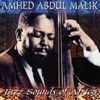
 Ahmed Abdul-Malik
Jazz Sounds of Africa
2003 Prestige 24279
Original recording 1961
|
|
Abdul-Malik, best known for his tenure in Thelonious Monk’s band, foreshadowed fusions of jazz and African music with these sessions, but this swinging and quirky performance leaves out the African elements entirely. Particularly significant is the compelling post-bop drumming of Andrew Cyrille, who would later become one of the dominant drummers of the free jazz movement.
|
 Sonny Stitt
Last Stitt Sessions, Vols. 1 & 2
2003 Savoy Jazz 17254
Original recording 1982
|
|
Stitt made his final recordings in 1982, less than two months before his death. He is heard on this track playing tenor saxophone, accompanied by Junior Mance, George Duvivier and Jimmy Cobb, and the evidence is clear that he was a major keeper of the bebop flame up to the end.
|
|
 Joe Williams & Harry "Sweets" Edison
Together/Have a Good Time
Blue Note Records
|
|
Vocalist Williams and trumpeter Edison swing through this straight-ahead reading of the song. The sophistication of Williams’ voice is matched perfectly by the sweet sounds coming from Edison’s horn.
|
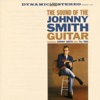
 Johnny Smith
The Sound of the Johnny Smith Guitar
2001, Blue Note
Original recording, 1961, Roulette
|
|
Guitarist Smith’s lightning fretwork makes for some astounding licks and a high energy, upbeat version of the song.
|
 James Moody
James Moody
2004, Verve
Original recording, 1959
|
|
Multi-instrumentalist James Moody (on tenor sax this time round) offers up a swinging version of “Out of Nowhere”’ on this self-titled album. The rhythm section keeps the upbeat feel going with an occasional Latin shuffle tease.
|
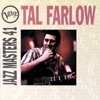
 Tal Farlow
Verve Jazz Masters 41
1995 Polygram Records 27365
Original recordings 1955-58
|
|
Verve has done a great job on their Jazz Masters Series. Each compilation is nicely representative. Guitarist Farlow is heard on a wide swath of standards in various settings, backed on “Out of Nowhere”’ by a great horn section.
|
Charlie Parker
Charlie Parker 1950
2002, Melodie Jazz Classics
|
|
Saxophonist Parker is magnificent on this succinct reading of the song. Over a dreamy string arrangement he weaves a full-bodied and intense tapestry that simply shimmers.
|
|
|
|