|
|
|
| “The Blanton-Webster Band featured what many feel was Ellington’s best ensemble, including young bassist Jimmy Blanton and tenor great Ben Webster...” |
|
 |
|
- JW
|
|
| |
Considered by some as her best performance, “I Got It Bad” was introduced by Ivie Anderson in Jump for Joy. The West Coast musical revue opened on July 10, 1941, at the Mayan Theater in Los Angeles and ran for 101 performances. Although the show’s run was short, in October a Duke Ellington recording, also featuring Anderson and with solos by Ellington and Johnny Hodges, became a hit, rising on the pop charts to number thirteen. A month later, Benny Goodman and His Orchestra would also score with their recording which had the further distinction of being Peggy Lee’s first hit vocal. Ironically, Goodman’s trumpeter Cootie Williams played the Ellington song in the Goodman band after leaving Ellington the previous year.
|
|
| |
|
| |
|
|
| |
| |
|
| |
|
That Duke Ellington wrote the score for Jump for Joy was a reflection of his interest and activity in the Civil Rights Movement. According to Ellington’s long-term publicist Patricia Willard, the all black musical revue “aimed at banishing forever the stereotypical eyerolling, dialect, and shuffling gait” that was prevalent in that period’s movies and plays. Sid Kuller and Paul Francis Webster wrote the majority of the lyrics.
Subtitled “A Sun-Tanned Revu-sical,” Jump for Joy boasted a cast of 60, including the Ellington orchestra, Ivie Anderson, Marie Bryant, Joe Turner, Herb Jeffries, Dorothy Dandridge, and comedian Wonderful Smith. In addition to “I Got It Bad,” the revue included, “Jump for Joy,” “Chocolate Shake” and two songs that have become minor standards, “Rocks In My Bed” and “The Brown Skin Gal in the Calico Gown.”
All of the aforementioned songs are included on Duke Ellington: The Blanton-Webster Band, a three-CD set of 66 tracks recorded from 1939 to 1941. The Blanton-Webster Band featured what many feel was Ellington’s best ensemble, including young bassist Jimmy Blanton and tenor great Ben Webster, with compositions and arrangements by Billy Strayhorn. Other greats included in the spectacular lineup were Johnny Hodges, Cootie Williams (replaced by Ray Nance on some cuts), Rex Stewart, Juan Tizol, and Barney Bigard.
Also in the show but not on the three-CD set were “Uncle Tom’s Cabin Is a Drive-In Now,” “I’ve Got a Passport from Georgia (and I’m Sailing for the U.S.A.)” and a composition by Ellington’s son Mercer, “Stomp Caprice,” which was used for a dance number by Al Guster. Mercer would later note that there was a pronounced militancy in this anti-Uncle Tom musical, a militancy that would result in death threats and the opening of a file on Ellington by the FBI.
Despite mostly good reviews and enthusiastic audiences, the show faced profit concerns and talent losses to the escalating military effort of World War II. Jump for Joy closed on September 27, 1941. Its short run was a great disappointment to Ellington who had hoped the show, and its message, would make it to Broadway.
|
| |
| |
|
| |
|
|
| |
| |
|
| |
|
|
|
|
|
More information on this tune... |
|
See the Reading and Research page for this tune for additional references. |
|
- Jeremy Wilson
|
|
| This section suggests definitive or otherwise significant recordings that will help jazz students get acquainted with
“I Got It Bad (and That Ain't Good).” These recordings have been selected from the Jazz History and
CD Recommendations sections.
|
Duke Ellington’s original “I Got It Bad,” ( Never No Lament: The Blanton-Webster Band) featuring Johnny Hodges and Ivie Anderson, is unarguably the definitive version of this beautiful tune. Thelonious Monk’s 1955 rendition ( Plays Duke Ellington) is a more recent classic, with Monk showing the tune’s appropriateness as a modern jazz vehicle while paying tribute to Ellington, one of his own musical heroes.
Noah Baerman - Jazz Pianist and Educator
|
In his Ellington biography
Beyond Category:
The Life and Genius of Duke Ellington, John
Edward Hasse commented that Paul Francis Webster’s
vernacular lyric, “for a change begins to approach
the quality of Ellington’s music.” Hasse is not
alone in this observation, with others more bluntly
declaring the lyrics of Ellington songs markedly
improved after he terminated his association with
Irving Mills and his associates. Webster and the
quality of his lyrics invoke a certain irony—that
is, the concept of this skillful craftsman assembling
slangy phrases that would make an English teacher
wince. It is also interesting to note that the grammar
violations are restricted to the refrain; the verse,
which is relatively articulate and astute, almost
seems to belong in another song.
Written in the popular 32-bar A-A-B-A form, “I
Got It Bad” takes the first four bars of each A
section to declare a lament, such as “Never treats
me sweet and gentle …” and then uses the remaining
four bars to state the title phrase, “I Got It Bad
and that Ain’t Good!” The refrain is repeated with
a second set of lyrics, the B sections lending an
air of complacence and hopelessness to the already
bleak picture, including the line published with
the sheet music, “I’m glad I’m mad about him I can’t
live without him.” On the original recording, Ivie
Anderson sang it another way, admitting a bit of
complicity, “My man and me we gin’ some and sin
some and then some.”
“I Got It Bad” is a favorite of jazz instrumentalists
and vocalists, the latter usually being female.
It is also a composition that draws praise from
musicologists, particularly its harmonies and its
melodic contour, which includes the jump of a ninth
from d to e in the first measure, a stretch that
is fun for musicians but can be a hurdle for vocalists.
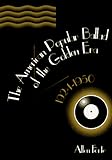
In his book
The American
Popular Ballad of the Golden Era, Allen
Forte disagrees. Pronouncing “I Got It Bad” a splendid
song, he says the claimed difficulty for singers
is “pure nonsense, not only because any professional
singer can easily navigate this interval but also
because the symmetric placement of the notes in
the melody is perfectly clear …” He goes on to say
that it is the octave relation between the d’s preceding
and following the e that is important. -JW
|
Musical analysis of
“I Got It Bad (and That Ain’t Good)”
|
| Original
Key |
G major |
| Form |
A – A – B
– A |
| Tonality |
Primarily
major |
| Movement |
Primarily
chromatic and step-wise; however, there
is one very large upward leap of a ninth
in the first measure and a few skips throughout
the song. |
|
Comments
(assumed
background)
|
|
At an octave and a tri-tone, this song has
one of the widest ranges of any standard.
That, with several chromatic lead-ins, makes
this one of the more difficult pieces for
vocalists. Harmonic rhythm is fairly slow
except in the penultimate measures of the
“A” section, where there is a chord change
on every beat. Technically, it is a member
of the I – vi – II7 – V7 family. But this
song stretches this particular progression
a bit by adding another vi after the II7,
returning it to II7, after which this shifts
to its parallel minor, functioning as a
ii7 of I. Instead of going to V7, however,
it returns to III7, making its way back
to the tonic through the circle of fifths
(here is the one chord change per beat).
Section “B” uses the IV – iv – I progression
of “Star
Dust” and “After
You’ve Gone” for the first four measures,
then does its own circle of fifths using
minor substitutions from iii7 (in the original
key, iii – VI7 = ii7 – V7). |
|
K. J. McElrath - Musicologist for JazzStandards.com |
|
Pianist Joe Sullivan, a graduate of the Chicago
Music Conservatory, was a consummate band player,
yet in later years he worked mostly solo. His career,
which began in the Windy City in the 1920s, included
stints as
Bing Crosby’s accompanist and a short spell
in brother
Bob Crosby’s big band. But because of his musical
company over the years, he was often typecast as
a “Dixieland” player, a term he despised (as do
most players of classic jazz).
Sullivan had a very “barrelhouse” approach to
the piano but also a marvelous, lighter way with
ballads. “I Got it Bad” was a favorite number of
his (he liked to call it “I Got It Good and That
Ain’t Bad”) and his 1944 version is first-rate.
Chris Tyle - Jazz Musician and Historian
|
Additional information for "I Got It Bad (and That Ain't Good)" may be found in:
|
|
|
 Thomas S. Hischak
The Tin Pan Alley Song Encyclopedia
Greenwood Press
Hardcover: 552 pages
(1 paragraph including the following types of information: Broadway productions, film productions, history and performers.)
|
|
|
|
|
 Robert Gottlieb, Robert Kimball
Reading Lyrics
Pantheon
Hardcover: 736 pages
(Includes the following types of information: song lyrics.)
|
|
|
|
|
“I Got It Bad (and That Ain't Good)” was included in these films:
- Jump for Joy (1941, Herb Jeffries)
- The Mouse Comes to Dinner aka Mouse
to Dinner (1945) Tom and Jerry cartoon
- This Could Be the Night (1957,
Julie Wilson)
- Miami Rhapsody (1995, 1st
time Ella Fitzgerald; 2nd time Louis Armstrong)
- The Big Lebowski (1998, Nina
Simone)
- Eyes Wide Shut (1999, The
Oscar Peterson Trio)
- The Human Stain (2003, The
Oscar Peterson Trio)
- The Catcher in the Rye (2004,
The Oscar Peterson Trio)
And on stage:
- Bubbling Brown Sugar (1976,
Ethel Beatty) Broadway musical
- Sophisticated Ladies (1981,
Phyllis Hyman, Terri Klausner) Broadway musical
- Play On! (1997, Carl Anderson)
Broadway musical
And on television:
- Play On! (2000, Raun Ruffin)
PBS Great Performances
|
| This section shows the jazz standards written by the same writing team. |
|
|
|
|
Comment Policy
- Your comments are welcome, including why you like
this tune, any musical challenges it presents, or additional background information.
- Jazz musicians, fans, and students of all ages use this website as an educational resource.
As such, off-topic, off-color, unduly negative, and patently promotional comments will be removed.
- Once submitted, all comments become property of JazzStandards.com.
By posting, you give JazzStandards.com permission to republish or otherwise distribute your comments in any format or other medium.
JazzStandards.com reserves the right to edit or remove any comments at its sole discretion.
|
|
| Click on any CD for more details at Amazon.com |
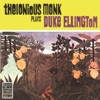
 Thelonious Monk
Plays Duke Ellington
Riverside 201
Original recording 1955
|
|
Monk’s lyrical yet spiky version of “I Got It Bad” first appeared on this landmark album, which helped expose him to a wider audience in the 1950s. He plays an introspective solo piano introduction before introducing bassist Oscar Pettiford and drummer Kenny Clarke for some playful and swinging trio interplay.
|
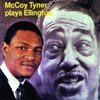
 McCoy Tyner
McCoy Tyner Plays Ellington
1997 GRP Number
Original recording 1964
|
|
Like Thelonious Monk’s Ellington tribute album, this album offers a chance to study Tyner’s playing in a different context. It is fascinating to hear the subtle lyricism of Tyner, bassist and Jimmy Garrison and drummer Elvin Jones, which is particularly striking given that this session occurred only a week before they participated in the recording of John Coltrane’s super-intense A Love Supreme album.
|
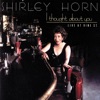
 Shirley Horn
I Thought About You
Polygram Records
Original recording 1987
|
|
This is one of the tenderest moments on Horn’s “comeback” album. Her voice and piano playing both shine here.
|
|
 Duke Ellington
Never No Lament the Blanton-Webster Band
RCA
|
|
This dreamy, romantic reading could be considered the definitive version. Saxophonist Johnny Hodges leads the Ellington band (Duke at piano) with vocals from the wonderful Ivie Anderson.
|
 Oscar Peterson
J.A.T.P. In Tokyo - Live at the Nichigeki Theatre 1953
Pablo 2620104
Original recording 1953
|
|
Ella Fitzgerald is the featured performer here, offering an assured and tender version of “I Got It Bad.” Typical of Fitzgerald, the sound is effortless in spite of the acrobatic melody.
|
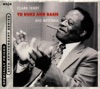
 Clark Terry and Red Mitchell
To Duke and Basie
1997 Enja 5011
Original recording 1986
|
|
Terry’s muted trumpet and Mitchell’s lushly-orchestrated bass engage here in a charming and intimate dialogue, injecting great warmth into this tune.
|
 Keith Jarrett
The Melody at Night With You
1999, ECM
|
|
Quiet and romantic, this beautiful solo piano recording earned Keith Jarrett a nomination for the 2001 Grammy Award for Best Jazz Instrumental Solo.
|
 Benny Goodman Quartet
Together Again
2001, Collectables
Original recording, 1963, Bluebird RCA
|
|
Twenty-five years after dissolving, the Benny Goodman Quartet reunites and delivers this gem. With Goodman on the clarinet, Lionel Hampton at the vibes, Teddy Wilson at the piano, and Gene Krupa behind the drums, the song lingers with a lazy melancholy.
|
 Etta Jones
Hollar!
2001, Original Jazz Classics
Original recording, 1960
|
|
Belting the song out one minute and gently coaxing it the next, vocalist Etta Jones is eloquent and bluesy in her reading. Vibraphonist Lem Winchester figures prominently in keeping the mood upbeat.
|
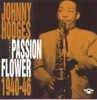
 Johnny Hodges
Passion Flower, 1940-1946
RCA 66616
|
|
This dreamy, romantic reading could be considered the definitive version. Saxophonist Johnny Hodges leads the Ellington band (Duke at piano) with vocals from the wonderful Ivie Anderson.
|
|
|
|