|
|
|
| “I made two records of only versions of Lush Life! Eventually there will be seven records, yeah.” |
|
 |
|
- Tony Scott
|
|
| |
In 1933 a teenage Billy Strayhorn started work on “Lush Life.” He would fine-tune his composition over the next few years and in 1938, at the Stanley Theater in Pittsburgh, Strayhorn played the piano and sang for Duke Ellington. Ellington’s son, Mercer, would later recall that “Lush Life” and “Something to Live For” were responsible for Ellington hiring Strayhorn in early 1939. It would mark the beginning of their legendary collaboration.
|
| |
| |
|
| |
|
In 1939 “Lush Life” could boast lyrics but no title. Strayhorn frequently played the song at parties but it was a pet project and was not intended for publication. On November 13, 1948, however, Billy Strayhorn (piano) with vocalist Kay Davis performed “Lush Life” in the last of seven Ellington Carnegie Hall concerts. The difficult-to-find Duke Ellington-Carnegie Hall, November 13, 1948, released in 1991 on Vintage Jazz Classics, contains the first documented performance of “Lush Life” with Billy Strayhorn on piano and Kay Davis singing.
Recording by other artists began soon after that. An initial Nat “King” Cole B-side, rearranged in a Latin impressionistic style, infuriated Strayhorn. To make matters worse, Cole’s misreading of the lyrics irked the usually unflappable Strayhorn and resulted in an angry phone call.
Strayhorn recorded “Lush Life” on piano without vocal (except for a wordless chorus behind him) in 1961 (The Peaceful Side, 1996 Capitol Records). He recorded solo piano and vocal in 1965 (Lush Life: A Biography of Billy Strayhorn, 1992, Red Baron). Ellington himself never played “Lush Life.”
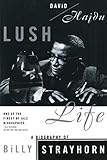
Additional reading on Billy Strayhorn and the origin of “Lush Life” may be found in David Hajdu’s Strayhorn biography Lush Life: A Biography of Billy Strayhorn.
“Lush Life” was also the title for a 1993 made-for-TV film starring Jeff Goldblum, Forest Whitaker, and Kathy Baker.
|
|
|
|
More information on this tune... |
|
|
 Will Friedwald
Stardust Melodies
Pantheon; 1st edition
Hardcover: 416 pages
(Friedwald devotes 23 pages to the song’s history, its composer/lyricist, performers, recordings, and analyses of the music and lyric. Eleven other great American songs also receive in-depth treatment in the book.)
|
|
|
|
See the Reading and Research page for this tune for additional references. |
|
- Jeremy Wilson
|
|
| This section suggests definitive or otherwise significant recordings that will help jazz students get acquainted with
“Lush Life.” These recordings have been selected from the Jazz History and
CD Recommendations sections.
|
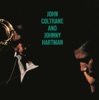
Chris Connor’s version of “Lush Life” ( Sings Lullabys for Lovers) is noteworthy, as is John Coltrane’s extended exploration from 1958 ( Lush Life), but the most significant version of the tune came from Coltrane’s collaboration with crooner Johnny Hartman. Coltrane and Hartman only teamed up for one recording session, but it resulted in a version of “Lush Life” ( John Coltrane and Johnny Hartman) that is unrivaled in beauty and in influence on subsequent generations of musicians. Coltrane and his quartet are at their most lyrical, and Hartman sings Strayhorn’s melody with tenderness and assurance.
Noah Baerman - Jazz Pianist and Educator
|
For a teenager living in Pittsburgh, Strayhorn’s lyrics are remarkably worldly. Their jaded sophistication and inner rhyming sound a bit like Cole Porter though they are not considered derivative and are often praised by both critics and well-known lyricists.
The musical form of “Lush Life” is quite complex. The verse takes an A-A-B form, with the A sections containing seven bars and the B section containing fourteen. As with Hoagy Carmichael’s “Star Dust,” the verse has become an integral part of the composition. The thirty-two bar refrain usually plays just a little longer than the verse and has an A-B-A’-C format.
The years Strayhorn spent fine-tuning his composition are readily apparent. His meandering melody is intricately supported by ingenious chord progressions and, in combination with well-crafted lyrics, creates an unusual but enduring work of art. For fifteen years Strayhorn held this project close, not realizing, and perhaps not wishing, that “Lush Life” would become one of the top jazz standards of all time. -JW
|
Musical analysis of
“Lush Life”
|
| Original
Key |
Db major.
Brief false key changes to Ab major and
D in mm.30-33; otherwise, it does not stray
far from the original tonic. |
| Form |
A – A – B
– C1 – C2
(C1 and C2 designate the refrain) |
| Tonality |
Primarily
major |
| Movement |
Primarily
stepwise, with a few intervals of a third
and fourth. There is a fair amount of chromaticism
mixed with repeated notes. |
|
Comments
(assumed
background)
|
|
The song is extremely sophisticated, both
melodically and harmonically, particularly
in the “C” sections, where Strayhorn uses
variations on a single motif to build interest
while maintaining structural consistency.
Harmonic movement is often chromatic, creating
chord substitutions for functional voice-leading
chords and harmonic extensions in the melody,
particularly in the “C” sections. Also noteworthy
are the irregular phrases; none are eight
measures long. The “A” sections consist
of seven-measure phrases; “B” is fourteen,
and the “C” sections are twelve measures
each. Success in mastering this piece lies
in learning Strayhorn’s melody thoroughly
over the original harmonic progression.
This is not one that can be “faked” easily. |
|
K. J. McElrath - Musicologist for JazzStandards.com |
|
Two early recorded examples of Strayhorn’s composition
provide a very interesting contrast in jazz performance.
Both are from 1953 and feature trumpet players.
The first is by swing-era trumpeter Harry James,
who, following his departure from the powerhouse
Benny Goodman Orchestra, formed his own big
band which he led up until his death in 1983. James
plays the tune with his typical fat tone and heavy
vibrato, hewing close to the melody.
The second version, by the West Coast, cool jazz
group featuring Russ Freeman (piano) and Chet Baker
(trumpet), is the total opposite of James’ big band
performance. Baker, like James, sticks closely to
the melody, but his style is lighter and almost
vibratoless, and Freeman provides the perfect foil
for his clean style.
Chris Tyle - Jazz Musician and Historian
|
Additional information for "Lush Life" may be found in:
|
|
|
 Thomas S. Hischak
The Tin Pan Alley Song Encyclopedia
Greenwood Press
Hardcover: 552 pages
(1 paragraph including the following types of information: history, music analysis and performers.)
|
|
|
|
|
Will Friedwald
Stardust Melodies
Pantheon; 1st edition
Hardcover: 416 pages
(23 pages including the following types of information: history, lyric analysis, music analysis, performers, recordings and song writer discussion.)
|
|
|
|
|
 Robert Gottlieb, Robert Kimball
Reading Lyrics
Pantheon
Hardcover: 736 pages
(Includes the following types of information: song lyrics.)
|
|
|
|
|
“Lush Life” was included in these films:
- Dead Again (1991, Kenneth
Branagh)
- Living Out Loud (1998, Queen
Latifah)
- Sidewalks of New York (2001,
Chet Baker)
|
| This section shows the jazz standards written by the same writing team. |
|
|
|
|
Comment Policy
- Your comments are welcome, including why you like
this tune, any musical challenges it presents, or additional background information.
- Jazz musicians, fans, and students of all ages use this website as an educational resource.
As such, off-topic, off-color, unduly negative, and patently promotional comments will be removed.
- Once submitted, all comments become property of JazzStandards.com.
By posting, you give JazzStandards.com permission to republish or otherwise distribute your comments in any format or other medium.
JazzStandards.com reserves the right to edit or remove any comments at its sole discretion.
|
|
| Click on any CD for more details at Amazon.com |
 John Coltrane and Johnny Hartman
John Coltrane and Johnny Hartman
2004 Impulse! 112606
Original recording 1963
|
|
Take a poll of musicians as to what recording of “Lush Life” has most influenced them, and this performance is the likely winner. Hartman never sounded better than in this tender, faithful interpretation of Strayhorn’s classic, and Coltrane’s quartet plays with sensitivity and great emotional depth.
|
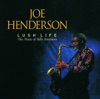
 Joe Henderson
Lush Life: The Music of Billy Strayhorn
1992 Polygram 11779
|
|
Henderson finally achieved widespread commercial success late in his career beginning with this album. His solo rendition of “Lush Life” is lyrical and emotional, showing his sound to have softened somewhat over time.
|
 Phineas Newborn, Jr.
A World of Piano
1991 Original Jazz Classics 175
Original recording 1961
|
|
Newborn’s touch is light and tender here, yet he orchestrates “Lush Life” so skillfully that it sounds as if he has three hands. Newborn begins with an introduction adapted from Maurice Ravel before introducing Paul Chambers and Philly Joe Jones into the mix.
|
 Stan Getz
Captain Marvel
2003 Sony 86086
Original recording 1972
|
|
A modern ensemble with Chick Corea on electric piano is not necessarily the context in which we expect to hear Stan Getz give one of his all-time classic ballad performances. That, however, is exactly what we get here.
|
 Anthony Braxton
What's New In the Tradition
1995 Steeplechase 37003
Original recording 1974
|
|
Braxton is underrated for his ability to interpret standards, and his ballad treatment of “Lush Life” is worth a listen for the way it deftly walks the line between edginess and tenderness.
|
|
 Chris Connor
Complete Bethlehem Recordings
Fresh Sounds Spain
Original recording 1953
|
|
Connor’s work for Bethlehem comes in and out of availability. This 2007 reissue of her 1953 10-inch LP, Lullabys for Lovers, compiles four albums from that period. On “Lush Life” she is backed by bassist Vinnie Burke’s quartet of guitar, accordion and drums with the addition of clarinetist/flutist Ron Odrich. The vocalist opens with just guitar while Odrich’s flute soars in the background before she settles into a gentle rhythmic groove with the quartet. Connor is above all a storyteller, and the way she rushes and slows the lyric lends it emotional impact. A masterful version of this great song.
|
|
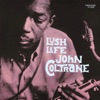
 John Coltrane
Lush Life
Original Jazz Classics 131
Original recording, 1958, Prestige Records
|
|
Saxophonist Coltrane is joined by pianist Red Garland and trumpeter Donald Byrd for a hypnotic 13-minute take on the ballad.
|
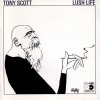
 Tony Scott
Lush Life
1996, Sony
Original recordings, 1981-1984
|
|
Tony Scott devotes the entire album to the song playing it on several reeds, singing and reciting the lyrics, combining it with a blues composition, and also contributing an outstanding solo piano version.
|
|
|
|