|
|
|
| Teddy Wilson & His Orchestra, with vocalist Billie Holiday, saw their rendition on the charts for four weeks. Their version can be heard on Musical Romance (Billie Holiday and Lester Young). |
|
 |
|
- JW
|
|
| |
Ruth Etting introduced this Ahlert/Turk torch song in 1929. “Mean to Me” had on its flip side the B.G. DeSylva/Lew Brown song “Button Up Your Overcoat” (from the 1929 Broadway musical comedy about championship golf, Follow Through).
|
| |
| |
|
| |
|
|
| |
| |
|
| |
|
|
| |
| |
|
| |
|
The record sold over a million copies and both songs hit the charts: “Mean to Me” rising to number three and “Button Up Your Overcoat” peaking at number fifteen. Also in 1929, Helen Morgan’s recording reached number eleven, and in 1937 Teddy Wilson & His Orchestra, with vocalist Billie Holiday, saw their rendition rise to number seven for four weeks. Their version can be heard on The Quintessential Billie Holiday, Vol. 4 or on the compilation CD, Musical Romance (Billie Holiday and Lester Young).
|
|
| |
|
| |
|
Diana Ross sang this and other standards in the film Lady Sings the Blues (1972), and, according to Clive Hirschhorn in Hollywood Musicals, she sounded “more like Motown than Harlem.”
While Ross’s version of the song may have sounded less than genuine to some, “Mean to Me” is far more convincing coming from the person to whom Lady Sings the Blues is a tribute, namely Billie Holiday. It was a staple of Holiday’s repertoire and came to symbolize the personal relationships which she brought to the song.
|
|
|
|
More information on this tune... |
|
|
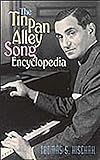 Thomas S. Hischak
The Tin Pan Alley Song Encyclopedia
Greenwood Press
Hardcover: 552 pages
(In his encyclopedia of American song Hischak discusses the style of “Mean to Me” and lists the performers and the films in which the song has appeared.)
|
|
|
|
See the Reading and Research page for this tune for additional references. |
|
- Jeremy Wilson
|
|
| This section suggests definitive or otherwise significant recordings that will help jazz students get acquainted with
“Mean to Me.” These recordings have been selected from the Jazz History and
CD Recommendations sections.
|
Lester Young is a central figure in two definitive recordings of “Mean to Me.” Billie Holiday’s 1937 performance ( The Quintessential Billie Holiday, Vol.4: 1937) features Young and is unrivaled among vocal versions of the tune. Young would later record a brilliant instrumental version of the tune with his own trio ( The Lester Young Trio), featuring the brilliant piano of Nat “King” Cole piano and the understated drumming of Buddy Rich. Sarah Vaughan produced another classic version in 1950 ( Sarah Vaughan in Hi-Fi) with a band featuring Budd Johnson and Miles Davis.
Noah Baerman - Jazz Pianist and Educator
|
“Mean to Me” has stood the test of time well
and might even have been ahead of its time. In
American Popular Song: The Great Innovators, 1900-1950,
Alec Wilder says, “I find the bass line unusually
inventive for 1929.”
And the lyrics are novel, using the phrase “Mean
to Me” first to imply unkindness, “Why must you
be mean to me?” and then concern, “Can’t you see
what you mean to me?” Philip Furia comments in
The Poets of Tin Pan Alley: A History of America’s
Great Lyricists that “Sometimes lyricists
undercut both musical and lyrical repetition by
taking the standard Alley gimmick of repeating the
title phrase at the beginning and end of the chorus
but using it to give the phrase different meaning.”
-JW
|
Musical analysis of
“Mean to Me”
|
| Original
Key |
G major with
some C major and A minor tonaility in the
bridge |
| Form |
A1 – A2 –
B – A3 |
| Tonality |
Primarily
major |
| Movement |
Leap down
and step up through most of the song; everything
else either steps or arpeggiates. |
|
Comments
(assumed
background)
|
|
Section “A” of this piece uses three different
common chord progressions – I – vi7(b9)
– ii7 – V7 (“Sweet
Lorraine”), I –I7(V7/IV) – IV – iv (“I
Got A Gal In Kalamazoo”) and I – iv – ii7
– V7 (“Blue
Moon”). Section “B” starts off in major
with a I - ii7 – V7 turnaround, then cleverly
shifts to minor by turning the IV into a
+6/V7 of the new minor key. The minor sequence
goes though the i - +6(bVI7) – V7 once before
turning into a II7 of the original key on
its way back to the final “A” section. |
|
K. J. McElrath - Musicologist for JazzStandards.com |
|
The musical Dorsey Brothers--Tommy (trombone
and trumpet) and Jimmy (clarinet and alto saxophone)--are
featured prominently on several of the earliest
jazz versions of this tune from 1929: one, by their
own group (Dorsey Brothers Orchestra), then with
trumpeter Phil Napoleon’s Emperors, and another
accompanying vocalist Annette Hanshaw.
Some standards seem to fade in and out of popularity.
No doubt
Billie Holiday’s version in 1937 created some
interest for a short time, but the tune takes another
hiatus until it resurfaces with tenor saxophonist
Lester Young’s stellar version with Nat “King” Cole
and Buddy Rich in 1946.
Chris Tyle - Jazz Musician and Historian
 The Dorsey Brothers
Vol. 2
Jazz Oracle 8005
|
|
|
 Red Nichols-Phil Napoleon
1923-1931
Epm Musique 157452
|
|
|
|
|
Additional information for "Mean to Me" may be found in:
|
|
|
Thomas S. Hischak
The Tin Pan Alley Song Encyclopedia
Greenwood Press
Hardcover: 552 pages
(1 paragraph including the following types of information: film productions, performers and style discussion.)
|
|
|
|
|
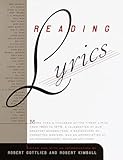 Robert Gottlieb, Robert Kimball
Reading Lyrics
Pantheon
Hardcover: 736 pages
(Includes the following types of information: song lyrics.)
|
|
|
|
|
“Mean to Me” was included in these films:
- Love Me or Leave Me (1955,
Doris Day)
- Lady Sings the Blues (1972,
Diana Ross)
- Stepping Out (1991, Liza Minnelli)
- Made (2001, Dean Martin)
- Bukowski: Born into This (2004,
Diane Schuur)
And on stage:
- Ain’t Misbehavin’ (1978, Nell
Carter) Broadway musical
- Ain’t Misbehavin’ (1988, Nell
Carter) Broadway revival
- Ain’t Misbehavin’ (1995, Anita
Pointer) touring revival
And on television:
- Ain’t Misbehavin’ (1982, Nell
Carter) NBC production
|
|
|
|
Comment Policy
- Your comments are welcome, including why you like
this tune, any musical challenges it presents, or additional background information.
- Jazz musicians, fans, and students of all ages use this website as an educational resource.
As such, off-topic, off-color, unduly negative, and patently promotional comments will be removed.
- Once submitted, all comments become property of JazzStandards.com.
By posting, you give JazzStandards.com permission to republish or otherwise distribute your comments in any format or other medium.
JazzStandards.com reserves the right to edit or remove any comments at its sole discretion.
|
|
| Click on any CD for more details at Amazon.com |
 Sarah Vaughan
Sarah Vaughan in Hi-Fi
Sony
Original recording 1950
|
|
This was a landmark recording session for Vaughan. The slyly swinging performance of "Mean to Me"' features some tasty trumpet work by Miles Davis behind the vocals. The primary instrumental soloist is the terrific Budd Johnson on tenor saxophone.
|
|
 Helen Humes
Songs I Like to Sing!
1991 OJC 171
Original recording 1961
|
|
The singers' singer could sing any style of music and did. She had perfect intonation and personalized phrasing that has been examined closely by many great singers. Here she is featured with Art Pepper, Ben Webster, and Jack Sheldon, to just skim the surface, and an equally prestigious rhythm section with arrangements by Marty Paich.
|
 Nat Adderley
Work Song
1991, Orig. Jazz Classics 363
Original recording, 1960
|
|
This is one of those classic albums that belongs in every jazz lover's collection. Cornetist Adderley and guitarist Wes Montgomery work their way through nine selections with alternating personnel. On this gently swinging number they are joined by Keter Betts on bass and Louis Hayes on drums.
|
 Betty Carter
I Can't Help It
Grp Records
|
|
A young Betty displays the idiosyncratic style which she refused to compromise and on which she built her reputation. This is a creative version of "Mean to Me,"' and the CD is a great introduction to the vocalist.
|
 Curtis Counce
You Get More Bounce With Curtis Counce
1991 Original Jazz Classics 159
Original recording 1957
|
|
Bassist Counce and his ultra-swinging West Coast quintet offer a delightful performance of "Mean to Me,"' with a much brighter tempo than is typically associated with the tune.
|
 Barney Kessel, Ray Brown, Shelly Manne
The Poll Winners
Contemporary 7535
Original recording 1957
|
|
Guitarist Kessel, bassist Ray Brown, and drummer Shelly Manne all placed first on their instruments in the three major jazz polls in 1956. Here they cover eight standards and one Kessel composition, and the performances are perfection.
|
|
|
|