|
|
|
| “It was as if the Lord said, ‘Well, here it is, now stop worrying about it!” |
|
 |
|
- Harold Arlen
|
|
| |
Judy Garland introduced “Over the Rainbow” in the 1939, MGM film, The Wizard of Oz. The filming of the production began in October of 1938 with premiers on August 15, 1939, at Grauman’s Chinese Theatre in Hollywood and on August 17, 1939, at the Capitol Theatre in New York City.
Within days of the two premiers, recordings of “Over the Rainbow” were climbing the pop charts with Glenn Miller and Larry Clinton leading the pack. By mid-September four recordings were in the top ten
And in 1960, the Dimensions’ hit recording rose to number sixteen on the pop charts.
|
|
| |
|
| |
|
“Over the Rainbow” was to be the first of many Judy Garland hit recordings and would be recognized as her signature song. Her 1939 rendition was inducted into the National Academy of Recording Arts and Sciences Grammy Hall of Fame in 1981.
|
| |
| |
|
| |
|
In 2001, “Over the Rainbow” was voted the best song of the twentieth century as part of the “Songs of the Century” project, a distinction created by the Recording Industry of America Association (RIAA) and the National Endowment for the Arts (NEA). Three years later, in 2004, the song was voted the top movie song of all time, with the American Film Institute (AFI) declaring, “In the venerated #1 spot was Judy Garland’s soulful and iconic rendition of ‘Over the Rainbow’ from the beloved family classic, The Wizard of Oz.”
The story for the film originated in 1899 when 43-year-old L. Frank Baum authored what was to become one of fourteen Oz books, The Wonderful Wizard of Oz, published in 1900. On the face of it, The Wonderful Wizard of Oz is a children’s book, but many scholars see the story as an allegory for the dangers of retaining the gold standard. A hot political topic of the time, the hard-money East opposed the Silverites who advocated bimetallism, the addition of silver coinage to the gold standard. It was thought that the inflationary effect of a looser monetary policy would help the farmers, and others hit hard by the 1890’s depression, to reduce their debts. In this scenario, Oz is the abbreviation for “ounce” (of gold); the Scarecrow represents the Western farmer, who turns out to be more intelligent than he realizes; the Tin Woodsman represents the depleted American factory worker; and the Cowardly Lion is William Jennings Bryan who betrayed the Silverites, and so on.
Another speculation cited by Alan Lewens in his book, Popular Song: Soundtrack of the Century, equates the journey to Oz with the one of America’s gold rushes, depicting how greed drove farmers (the Scarecrow), industrialists (the Tin Woodsman), and others who lacked moral courage (the Cowardly Lion) in search of the holy grail of personal wealth.
Yet another account has Baum getting the idea for the name Oz when he saw the letters O-Z on a file cabinet drawer.
Regardless of the intended allegory, The Wonderful Wizard of Oz was a huge success, and in 1902 an extravagant musical stage version opened in Chicago to great critical acclaim. The next year the show opened on Broadway becoming one of the greatest successes in Broadway history to that point. The book was also adapted for the screen with silent features in 1910, 1915, and 1925, none of which were successful.
MGM had originally wanted Jerome Kern to score the film but Kern’s doctor vetoed the idea, having prescribed rest to the songwriter who was recuperating from a recent heart attack. MGM also had to settle for second choice with the film’s star, casting Garland only after they were unable to borrow Shirley Temple from Twentieth Century-Fox. After multiple changes to the screenplay and cast and with contributions from four directors, The Wizard of Oz was completed in March of 1939 and went on to receive six Academy Award nominations, winning in the Best Score and Best Song categories, the latter for “Over the Rainbow”.
A number of film scholars have written analyses with Dorothy representing a depressed America turning to FDR’s New Deal for hope. Yip Harburg, who made contributions to the production beyond writing the lyrics, at least partially substantiated the claims in a Washington Post interview, saying that Emerald City was the New Deal.
Most of the Arlen/Harburg songs for The Wizard of Oz are remarkably memorable compositions with memorable lyrics. They are praised within the context of the film, but jazz instrumentalists and vocalists do not routinely perform them. Termed by Arlen the “lemon drop” songs, “Ding-Dong! The Wicked Witch Is Dead,” “The Merry Old Land of Oz,” and “We’re Off to See the Wizard” are usually considered novelty fare, too closely connected with the movie plot to have become widely accepted by jazz musicians. “We’re Off to See the Wizard” did gain some notoriety, however, when Australia adopted it as their wartime marching song during World War II.
|
| |
| |
|
| |
|
|
| |
| |
|
| |
|
According to the official Harold Arlen website, www.haroldarlen.com, after completing the “lemon drop” songs, Arlen felt a ballad was needed to balance them out.
I felt we needed something with a sweep, a melody with a broad, long, line. Time was getting short, I was getting anxious. My feeling was that picture songs need to be lush, and picture songs are hard to write.
While driving, the melody came to him out of the blue, and Arlen said, “It was as if the Lord said, ‘Well, here it is, now stop worrying about it!’” When Arlen played his tune for Harburg, however, the lyricist did not like it saying it sounded like something that should be sung by Nelson Eddy with a symphony orchestra rather than a twelve-year-old girl in a farmyard. In defense of his composition, Arlen played it for Ira Gershwin, knowing Gershwin was a respected (and childhood) friend of Harburg. Gerswin liked it and suggested a quicker tempo and less harmonization. With his encouragement Harburg proceeded to write the title and lyrics, attempting to scale the song down with childish words.
Once Harburg was convinced, Arlen had to pass the song by MGM executives who cut “Over the Rainbow” from the film three times, thinking it slowed the pace of their overly long movie. In the end, it was Arthur Freed who used his friendship and influence with Louis B. Mayer to get the song permanently reinstated.
|
|
|
|
More information on this tune... |
|
See the Reading and Research page for this tune for additional references. |
|
- Jeremy Wilson
|
|
| This section suggests definitive or otherwise significant recordings that will help jazz students get acquainted with
“Over the Rainbow.” These recordings have been selected from the Jazz History and
CD Recommendations sections.
|
Regardless of the jazz relevance, one cannot be truly familiar with “Over the Rainbow” without hearing Judy Garland sing it, and her 1939 recording ( Over the Rainbow) is a true classic. Among jazz version, two solo performances stand out, not surprising given the intimate qualities of the tune. Art Tatum’s 1955 version ( 20th Century Piano Genius) strikes a characteristic balance between lyricism and inventiveness. Meanwhile, Art Pepper’s live recording from 1977 ( At the Village Vangaurd 4: More for Less) is a great example of the emotional rawness of Pepper’s playing by that point in his career.
Noah Baerman - Jazz Pianist and Educator
|
Harold Arlen wrote “Over the
Rainbow” with an introductory verse
and a 32-bar A-A-B-A refrain. Each
A section starts out “Somewhere
over the rainbow…” and continues
by describing a fairytale situation,
such as ‘a land in a lullaby,’ ‘where
bluebirds fly’, ‘skies are blue’,
or ‘dreams come true.’ The bridge
promises the singer will someday
make a wish and then wake up, freed
from past troubles; this expectation
is underscored in the song’s final
line which asks, “Why then, oh why
can’t I?”
The verse is seldom sung, but
it is one of Harburg’s best, commencing
with, “When all the world is a hopeless
jumble…” Ella Fitzgerald includes
it on the highly rated Ella Fitzgerald
Sings the Harold Arlen Song Book,
a double CD set with arrangements
by Billy May.
Arlen’s composition does have
a grand feel to it, largely a result
of the octave leap in the first
two notes (“Some-where”),
which often draws praise for its
sympathetic support as a “leap”
over the rainbow. This ascension
does support the expression of Dorothy’s
soaring dreams, but as the lyrics
were penned after the music, it
is Harburg who deserves the final
credit for fitting the perfect concept
and title phrase, “Over the Rainbow,”
to what has been voted the best
song of the twentieth century and
the top movie song of all time. -JW
|
Musical analysis of
“Over the Rainbow”
|
| Original
Key |
G major |
| Form |
A – A – B
– A (ends with a four measure extension
based on “B”) |
| Tonality |
Major throughout;
interspersed minor chords create drama and
emotion |
| Movement |
Soaring leaps
upward, with downward skips followed by
upward, step-wise motion; many sustained
pitches |
|
Comments
(assumed
background)
|
|
One of the most beautiful ballads penned
during the “Golden Age of American Song,”
it requires a good deal of breath and tonal
control. It uses repeated motivic devices
in the melody which help make it memorable.
The harmonic structure is actually quite
simple; functionally, it departs from the
basic I – IV – I – V7 only once, in mm.
7-8 of the “B” section (“where troubles
melt”). However, the melody is flexible
enough to lend itself to a wide range of
chord substitutions and variations. Arlen’s
original uses quite a few of these substitutions
to add harmonic variety and interest. His
use of I – iii – I7 – IV and the IV – iv
– iii – VI+7 sequence in mm.5-6 of “A” are
purely decorative rather than functional,
but they increase tension and build interest
by taking the ear down unexpected paths
and delaying resolution until the end of
the line. |
|
K. J. McElrath - Musicologist for JazzStandards.com |
|
Pee Wee Russell was a marvelous yet misunderstood
clarinetist whose career began in the 1920s. For
many years he was stereotyped as a “Dixieland” musician,
although he stated, “I never played Dixieland in
my life; I played jazz music.”
Russell came into his own in the 1950s when he
was given more freedom and opportunities to record
with younger musicians. Coleman Hawkins stated,
“For thirty years, I’ve been listening to him play
those funny notes...he’s always been way out, but
they didn’t have a name for it then.”
A 1958 date finds Russell accompanied by a rhythm
section. As a single voice, his playing is quiet,
introspective, and oddly similar in approach to
Lester Young’s later playing.
Pee Wee Russell: Over the Rainbow. Xanadu
192 (out-of-print, but available for download at
www.emusic.com)
Chris Tyle - Jazz Musician and Historian
|
Additional information for "Over the Rainbow" may be found in:
|
|
|
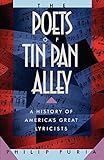
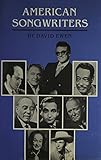
 David Ewen
Great Men of American Popular Song
Prentice-Hall; Rev. and enl. ed edition
Unknown Binding: 404 pages
(3 paragraphs including the following types of information: history.)
|
|
|
|
|
 Alan Lewens
Popular Song: Soundtrack of the Century
Watson-Guptill Publications
Paperback: 192 pages
(1 page including the following types of information: history, performers, style discussion and song writer discussion.)
|
|
|
|
|
 Robert Gottlieb, Robert Kimball
Reading Lyrics
Pantheon
Hardcover: 736 pages
(Includes the following types of information: song lyrics.)
|
|
|
|
|
“Over the Rainbow” was included in these films:
- Wizard of Oz (1939, Judy Garland)
- The Philadelphia Story (1940,
James Stewart, Katherine Hepburn)
- I Wake Up Screaming (1941,
instrumental)
- Junior Miss (1945)
- Springtime for Thomas (1946)
Tom and Jerry cartoon
- The Truce Hurts (1948) Tom
and Jerry cartoon
- Casanova Cat (1951) Tom and
Jerry cartoon
- The Glenn Miller Story (1953,
The Glenn Miller Orchestra)
- Interrupted Melody (1955,
Eleanor Parker dubbed by Eileen Farrell)
- A Patch of Blue (1965)
- The Abominable Dr. Phibes
(1971, instrumental)
- Dr. Phibes Rises Again (1972,
Vincent Price)
- That’s Entertainment! (1974,
Judy Garland from The Wizard of Oz, 1939)
- Saxophone Colossus (1986,
Sonny Rollins)
- Made in America (1993)
- Sleepless in Seattle (1993)
- Corrina, Corrina (1994, Jevetta
Steele)
- That’s Entertainment III (1994,
Judy Garland from the Wizard of Oz, 1939)
- To Wong Foo, Thanks for Everything!
Julie Newmar (1995, Patti La Belle)
- My Fellow Americans (1996,
instrumental)
- Contact (1997)
- Face/Off (1997, Olivia Newton-John)
- Harold Arlen: Somewhere over the Rainbow
(1998, Judy Garland)
- Meet Joe Black (1998, Israel
Kamakawiwo’ole)
- You’ve Got Mail (1998, Harry
Nilsson)
- Finding Forrester (2000, 1-Bill
Frisell; 2-Israel Kamakawiwo’ole)
- The Majestic (2001, Chet Baker)
- Unconditional Love (2002,
Jonathan Pryce)
- The Big Bounce (2002, Israel
Kamakawiwo’ole)
- Stormy Weather: The Music of Harold
Arlen (2003, Jimmy Scott)
- Sky Captain and the World of Tomorrow
(2004, Jane Monheit)
- 50 First Dates (2004, Israel
Kamakawiwo’ole)
And on stage:
- The Wizard of Oz (1987, Gillian
Bevan) Royal Shakespeare Company, London
- Forbidden Broadway 1990 (1990,
Kevin Ligon) Off-Broadway satirical revue
- Hakosem! (1994, Michal Yanay)
Tel-Aviv, Israel revival 1999
- The Wizard of Oz on Ice! (1996,
Oksana Baiul, skater; Shanice, singer) CBS special
- The Wizard of Oz on Ice (1996,
Jeri Campbell, skater; Laurnea Wilkerson, singer)
touring show
- The Wizard of Oz (1997, Jessica
Grove) touring show
- The Wizard of Oz (2001, Nikki
Webster) Australian revival
- Wizard: The Music of Harold Arlen
(2004) cabaret
And on television:
- Ford Star Jubilee: The Wizard of Oz
(1956, Judy Garland) CBS special
- The Muppet Show (1978, Robin)
Season 3, Episode 55
- Rainbow (1978, Andrea McArdle)
NBC biopic
- Picket Fences (1993, signed
by Marlee Matlin) CBS drama series, Episode
27, "The Dancing Bandit"
- First Do No Harm (1997, Aretha
Franklin) made-for-tv movie aired 2/16/97
- Little Girls in Pretty Boxes
(1997, Israel Kamakawiwo’ole) Lifetime TV
- Party of Five (1998, Israel
Kamakawiwo’ole) FOX drama series, Season 4,
Episode 83 "Of Human Bonding"
- Young Americans (2000, Israel
Kamakawiwo’ole) WB drama series, Season 1, Episode
1, Pilot aka "The Beginning"
- Gideon’s Crossing (2001, Israel
Kamakawiwo’ole) ABC drama series
- Life with Judy Garland: Me and My
Shadows (2001, Judy Garland) tv biopic
Tammy Blanchard
- ER (2002, Israel Kamakawiwo’ole)
NBC drama series, Season 8, Episode 21: "The
Beach"
- Pasadena (2002, Israel Kamakawiwo’ole)
FOX drama series, Episode 13, "Don’t It Always
Seems to Go?"
- Providence (2002, Israel Kamakawiwo’ole)
NBC drama series, Season 4, Episode 15, "Act
Naturally"
- Charmed (2003, Israel Kamakawiwo’ole)
WB
- Chocolate com Pimenta (2003,
Luiza Possi) Brazilian TV
- Taxicab Confessions (2003,
Willie Nelson) HBO documentary
- Tempted (2003, Israel Kamakawiwo’ole)
Lifetime TV
|
| This section shows the jazz standards written by the same writing team. |
|
|
|
|
Comment Policy
- Your comments are welcome, including why you like
this tune, any musical challenges it presents, or additional background information.
- Jazz musicians, fans, and students of all ages use this website as an educational resource.
As such, off-topic, off-color, unduly negative, and patently promotional comments will be removed.
- Once submitted, all comments become property of JazzStandards.com.
By posting, you give JazzStandards.com permission to republish or otherwise distribute your comments in any format or other medium.
JazzStandards.com reserves the right to edit or remove any comments at its sole discretion.
|
|
| Click on any CD for more details at Amazon.com |
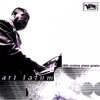
 Art Tatum
20th Century Piano Genius
1996 Polygram 31763
Original recording 1955
|
|
This informal live recording, among Tatum’s last, shows his technique and creativity to still be in top form.
|
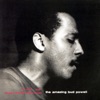
 Bud Powell
Amazing Bud Powell, Vol. 1
2001 Blue Note 32136
Original recording 1951
|
|
This creative, vibrant excursion is one of the sterling examples of Powell’s Tatum-influenced approach to solo piano ballads.
|
 Mary Lou Williams
Solo Recital
1998 Original Jazz Classics 962
Original recording 1978
|
|
This performance, from Williams’ final recording, serves as a fitting and poignant summary of the personal sound she developed through years of absorbing and participating in the major developments of jazz.
|
|
 Harold Arlen
Over the Rainbow
1997 Pearl 7095
Original recording 1939
|
|
Judy Garland’s version of “Over the Rainbow” is featured on this multi-artist compilation. While this is neither the first nor the “jazziest” recording of “Over the Rainbow,” one simply can’t know this song well without listening to Garland sing it. Fortunately, she sings it beautifully, so this is no sacrifice.
|
 Art Pepper
More for Les--At the Village
1992, Orig. Jazz Classics 697
Original recording, 1977 (Live at the Village Vanguard Vol #4)
|
|
Saxophonist Pepper's trio (George Cables, George Mraz, Elvin Jones) sits this one out as he proffers his emotional solo interpretation of "Over the Rainbow."'
|
 Ella Fitzgerald
Arlen Songbook 2
Polygram Records
Original Recording 1960
|
|
Fitzgerald shines on this performance from her “songbook” series. Her understated, tender singing keeps the string-laden arrangement from becoming saccharine.
|
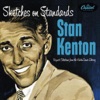
 Stan Kenton
Sketches on Standards
Blue Note Records
|
|
This rather moody version of "Over the Rainbow"' is uncharacteristic of not only the song but the artist as well. A wonderful trombone solo highlights a big brass sound courtesy of such greats as Lee Konitz and Maynard Ferguson.
|
 Aretha Franklin
The Great Aretha Franklin: The First 12 Sides
1990 Sony 31953
Original recording 1960
|
|
Years before Franklin became the “Queen of Soul,” she was a fine interpreter of standards. This skill is well demonstrated on her performance of “Over the Rainbow” with a small jazz combo featuring vibraphonist Tyree Glenn and pianist Ray Bryant.
|
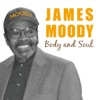
James Moody
1949-1950
2001, Melodie Jazz Classic
|
|
Moody's tenor saxophone is rich and imaginative on this intriguing bop reading of the song. The improvisation on the solo runs is fantastic and vaults the song to a whole other musical level.
|
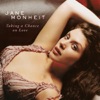
 Jane Monheit
Taking a Chance on Love
2004, Sony
|
|
Talented young vocalist Jane Monheit delivers a delicate and touching rendition of the song. Her sincerity and emotion are reminiscent of the Judy Garland original.
|
|
|
|