|
|
|
| “‘Perdido’ is the perfect vehicle for him. [Peterson] hits each note perfectly whether with ferocity or tenderness.” |
|
 |
|
- Ben Maycock
|
|
| |
On December 3, 1941, Duke Ellington and His Orchestra recorded “Perdido” for Standard Radio Transcription Services, a company that provided leased programming to radio stations. It is their January 21, 1942, recording of the song on the Victor label, however, that is regarded as their original recording. A modest hit, “Perdido” entered the pop charts on May 22, 1943, rising to number twenty-one.
|
| |
| |
|
| |
|
|
|
| |
|
| |
|
In 1944 Ervin Drake and Hans Lengsfelder were enlisted to fit lyrics to the tune, though the song was not generally sung with the Ellington band, the exception being Ella Fitzgerald on her 1957 recording of Ella Fitzgerald Sings the Duke Ellington Songbook.
|
| |
| |
|
| |
|
|
| |
| |
|
| |
|
In Stuart Nicholson’s Reminiscing in Tempo: A Portrait of Duke Ellington, Juan Tizol says he wrote “Perdido” on a train while sitting next to Herb Jeffries. The trombonist then handed it to Ellington who made an arrangement right then and there, and that very night they played it at a dance. A poster for Ellington’s Tempo Music, included in Nicholson’s book, bills “Perdido” as “It’s Latin America in Jitterbug Time.”
|
| |
| |
|
| |
|
“Perdido” is a driving composition in the popular A-A-B-A form. Its simplicity, short phrases, and irresistible swing feeling have made it one of the top vehicles for jazz jam sessions. As a result, recordings of “Perdido” are frequently ten minutes or more in length, allowing for multiple instrumental solos and variations on the basic theme. One such legendary session finds Illinois Jacquet and Flip Phillips partaking in a tenor sax battle at a 1947 Carnegie Hall set (The Complete Jazz at the Philharmonic on Verve: 1944-1949.)
|
|
|
|
More information on this tune... |
|
|
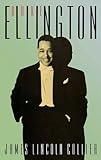 James Lincoln Collier
Duke Ellington
Oxford University Press, USA
Hardcover: 352 pages
(Ellington’s biographer analyzes the song’s musical content.)
|
|
|
|
See the Reading and Research page for this tune for additional references. |
|
- Jeremy Wilson
|
|
| This section suggests definitive or otherwise significant recordings that will help jazz students get acquainted with
“Perdido.” These recordings have been selected from the Jazz History and
CD Recommendations sections.
|
The Duke Ellington Orchestra’s original recording of “Perdido” ( Never No Lament: The Blanton-Webster Band) is noteworthy both as a historical document and as a shining example of Ellington’s gifts and those of his sidemen. Ella Fitzgerald is participated in many important recordings of the tune, and her 1957 performance with Ellington’s Orchestra ( The Complete Ella Fitzgerald Song Books) stands out both as one of the most charming and one of the most faithful to the song’s melody. Meanwhile Charlie Parker and Dizzy Gillespie and a rhythm section of bebop giants are responsible for a 1953 live recording ( Jazz at Massey Hall) that displays the song’s usefulness as a bop vehicle.
Noah Baerman - Jazz Pianist and Educator
|
Tizol’s tune clearly has no room
for complex or wordy lines, but
one has to wonder how much time
was spent on developing its lyrics.
The song begins “Perdido, I look
for my heart it’s Perdido” and then
the bridge, “High is the sun…” followed
by “Low is the moon…” The words
are not exactly clever. The Ervin
Drake and Hans Lengsfelder effort
seems little more than an afterthought
dashed off on a busy afternoon.
Minimal as they are, the lyrics
seldom draw critical comment, favorable
or unfavorable, although one music
website editorial declares, “They
don’t write ‘em like that now. Good
thing, too.” -JW
|
Musical analysis of
“Perdido”
|
| Original
Key |
Bb major |
| Form |
A – A –B
– A |
| Tonality |
Major throughout |
| Movement |
This tune
is highly motivic. “A” consists of a skip
and a step, alternating with an arpeggiated
figure before leaping up a major sixth and
down a fifth toward the end. “B” is a sustained
note that jumps down a fifth before ascending
step-wise and repeated once a whole step
lower. |
|
Comments
(assumed
background)
|
|
This is a favorite “jam” tune because of
its simplicity. “A” is merely a ii – V7
– I, repeated over and over, while “B” is
a circle of fifths similar to the bridge
of “I
Got Rhythm.” Each section is built from
motifs that repeat, making this tune easy
to learn and retain. |
|
K. J. McElrath - Musicologist for JazzStandards.com |
|
Violinist Stuff Smith had a popular, swinging,
six-piece combo on 52nd Street starting in 1935.
By 1944 he had scaled the group down to a trio,
which, by 1945, included bassist Ted Sturgis and
pianist Billy Taylor. Now Dr. Taylor, he commented
about the trio prior to his joining it, “Stuff’s
trio at the Onyx in 1944 was one of the greatest,
most rhythmic trios I ever heard.”
The trio in 1945 wasn’t bad either, as is evidenced
by a recording of the group performing “Perdido”
at a Town Hall concert in 1945. The seven-minute
version of the tune is taken at a moderate tempo
and features great swinging solos by leader Smith
and Art Tatum-influenced Taylor.
Chris Tyle - Jazz Musician and Historian
|
Additional information for "Perdido" may be found in:
|
|
|
James Lincoln Collier
Duke Ellington
Oxford University Press, USA
Hardcover: 352 pages
(2 paragraphs including the following types of information: music analysis.)
|
|
|
|
|
 Gary Giddins
Visions of Jazz: The First Century
Oxford University Press; New Ed edition
Paperback: 704 pages
(1 paragraph including the following types of information: performers.)
|
|
|
|
|
“Perdido” was included in these films:
- Next Stop, Greenwich Village
(1976, The Dave Brubeck Quartet)
- Another Woman (1988, Dave
Brubeck Quartet)
- The Fabulous Baker Boys (1989,
The Duke Ellington Orchestra)
- Blue Ice (1993, David Green,
bass; Anthony Kerr, vibes; Pete King, alto Sax;
Gerald Presencer, trumpet; Charlie Watts, drums;
Steve Williamson, tenor Sax)
And on stage:
- Sophisticated Ladies (1981,
1st time instrumental, 2nd time Judith Hamison,
Hinton Battle) Broadway musical
And on television:
- The Sopranos (2000, The Notables)
HBO TV series, Season 2, Episode 17 "Commendatori"
|
|
|
|
Comment Policy
- Your comments are welcome, including why you like
this tune, any musical challenges it presents, or additional background information.
- Jazz musicians, fans, and students of all ages use this website as an educational resource.
As such, off-topic, off-color, unduly negative, and patently promotional comments will be removed.
- Once submitted, all comments become property of JazzStandards.com.
By posting, you give JazzStandards.com permission to republish or otherwise distribute your comments in any format or other medium.
JazzStandards.com reserves the right to edit or remove any comments at its sole discretion.
|
|
| Click on any CD for more details at Amazon.com |
 Duke Ellington
Never No Lament the Blanton-Webster Band
RCA
|
|
Some great recordings of “Perdido” have been made, but none have surpassed this original Ellington studio version. Ellington himself plays wonderfully on this track, as do Harry Carney, Rex Stewart, Ben Webster and Ray Nance, all of whom have moments in the spotlight.
|
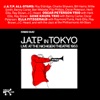
 Oscar Peterson
J.A.T.P. In Tokyo - Live at the Nichigeki Theatre 1953
Pablo 2620104
Original recording 1953
|
|
This is one of the best of Ella Fitzgerald’s numerous charming recordings of this tune. After singing the melody and scatting for a while, she hands the baton over to tenor saxophonist Ben Webster for a long solo. Their rapport here foreshadows their collaboration a few years later on several tracks of her “Duke Ellington Songbook” recordings. Flip Phillips follows with an energetic tenor solo of his own.
|
|
 Carmen McRae
Alive!
1994 Legacy Recordings 57887
Original recording 1965
|
|
This and the next recommendation are for two very different versions of "Perdido"': McRae gives it a seductive reading at mid-tempo, alternately scatting through some of its phrases...
|
 Sarah Vaughan
The Roulette Years
1991 Blue Note Records 94983
Compilation
|
|
... and Vaughan takes it uptempo, soaring to imaginative heights with the Basie band.
|
 Quintet, Charlie Parker, Dizzy Gillespie, Bud Powell, Max Roach
Jazz at Massey Hall
Ojc
|
|
The bebop super group of Charlie Parker, Dizzy Gillespie, Charles Mingus, Bud Powell and Max Roach has a whole lotta fun with this track. When not playing their hearts out, the musicians are verbally egging each other on. Even the audience cannot contain itself.
|
 Oscar Peterson
My Favorite Instrument
1990, Polygram #821843
Original recording, 1968, Verve
|
|
The Canadian pianist struts his stuff on this solo outing, and "Perdido"' is the perfect vehicle for him. Peterson has the hands of a surgeon and hits each note perfectly whether with ferocity or tenderness.
|
 Ella Fitzgerald
The Complete Ella Fitzgerald Song Books
1993 Polygram 519832
Original recording 1957
|
|
Fitzgerald collaborates here with Ellington and his orchestra and it is a match made in heaven. Everybody swings with assurance and subtlety.
|
 Don Patterson
Dem New York Dues
1995 Prestige 24149
Original recording 1969
|
|
Patterson swings like mad here, showing off his noteworthy application of bebop phrases and techniques to the organ. Other soloists here include. They begin and end the performance with sly references to Tadd Dameron’s “Wahoo,” a melody riff that is often used by modern musicians when performing “Perdido.”
|
 Art Tatum/Lionel Hampton
The Tatum Group Masterpieces, Vol. 3
Pablo 2405426
Original recording 1955
|
|
Tatum, Lionel Hampton and Buddy Rich take “Perdido” at a relaxed medium tempo, though plenty of sparks fly nonetheless.
|
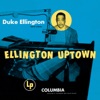
 Duke Ellington
Ellington Uptown
2004, Sony
Original recording, 1952, Legacy Recordings
|
|
Ten years after recording the song for the first time, the Ellington Orchestra explores the song’s possibilities and, in the process, highlights its timelessness.
|
|
|
|