|
|
|
| “...its ‘lyrics are rife with religious imagery...’” |
|
 |
|
- Will Friedwald
|
|
| |
On October 10, 1935, the American folk opera Porgy and Bess opened at the Alvin Theatre in New York. During the opening act Clara, portrayed by singer/actress Abbie Mitchell, sang “Summertime” as a lullaby to her baby.
|
| |
| |
|
| |
|
Other members of the original Porgy and Bess cast included Todd Duncan, Anne Brown, Warren Coleman, John W. Bubbles, and Ruby Elzy. In addition to “Summertime” there were over 50 songs in the score including, “My Man’s Gone Now,” “I Got Plenty o’ Nuttin’,” “Bess, You Is My Woman,” “It Ain’t Necessarily So,” and “I Loves You, Porgy.”
In September of 1936 Billie Holiday’s recording of “Summertime” went onto the charts and rose to number twelve. Thirty years later Billy Stewart recorded an R&B rendition which rose to number ten in 1966.
|
|
| |
|
| |
|
In February of 1934 George Gershwin had completed the first of the Porgy and Bess songs, a DuBose Heyward poem set to music called “Summertime.” He then spent the next 20 months completing and orchestrating the score. In the summer of 1934 the Gershwin brothers joined the Heywards at Folly Beach near Charleston to observe the local people and their customs and to continue work on their collaboration. After several weeks, the Gershwins returned to New York to uphold George’s previous commitments, one of which was a weekly radio broadcast entitled “Music by Gershwin.” By August of 1935 George had completed Porgy and Bess. After producing nearly 700 pages of music he is said to have exclaimed, “I think the music is so marvelous I don’t believe I wrote it.”
|
| |
| |
|
| |
|
|
| |
| |
|
| |
|
On September 30, 1935, the opera opened in Boston to generally positive reviews.
Critics at the New York opening were divided, however, and the show was not profitable, closing in December after 124 performances. On tour, Porgy and Bess was also a financial disappointment, exhausting the entire balance of the original $70,000 investment.
Despite such a dismal start Porgy and Bess went on to become the most performed American opera. There have been numerous revivals over the years, the most notable being January 22, 1942, at the Majestic Theater which ran for 286 performances, and the March 10, 1953, show at the Ziegfeld Theatre ran for 305 performances.
Adding to the distinctions, Will Friedwald (Stardust Melodies)describes, “Summertime” as “the best-known piece of music in the opera.” He goes on to comment that its “lyrics are rife with religious imagery...” and it “is not only a lullaby but a spiritual as well.”
The 1959 screen adaptation of Porgy and Bess starred Sidney Poitier, Dorothy Dandridge, Sammy Davis Jr., Pearl Bailey, Brock Peters, and Diahann Carroll, with everybody dubbed except Davis and Bailey. Directed by Otto Preminger and produced by Samuel Goldwyn, the film won the 1959 Golden Globe Award for Best Picture -Musical and the 1959 Academy Award for Best Musical Score (Andre Previn and Ken Darby). Despite, or possibly because of, the lavish production values and the handsome cast, a common critical opinion is that the Broadway musical did not translate well to film.
|
|
|
|
More information on this tune... |
|
|
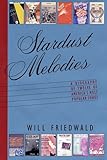 Will Friedwald
Stardust Melodies
Pantheon; 1st edition
Hardcover: 416 pages
(This book devotes 38 pages to “Summertime” and includes the song’s history, lyric and music analyses, short biographies of the songwriters, and information on performers and recordings. The book also examines eleven other popular songs in depth.)
|
|
|
|
See the Reading and Research page for this tune for additional references. |
|
- Jeremy Wilson
|
|
| This section suggests definitive or otherwise significant recordings that will help jazz students get acquainted with
“Summertime.” These recordings have been selected from the Jazz History and
CD Recommendations sections.
|
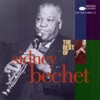
Sidney Bechet’s slow, blues-drenched take on “Summertime” ( The Best of Sidney Bechet) is a standout performance of the tune and one of the most significant moments in Bechet’s storied career and in the early history of Blue Note Records. A more modern interpretation from 1958 came from trumpet giant Miles Davis and arranger Gil Evans ( Porgy and Bess) and would prove to be a defining moment in their fruitful partnership.
Noah Baerman - Jazz Pianist and Educator
|
|
Musical analysis of
“Summertime”
|
| Original
Key |
A minor. The tune spends a moment in C major in mm.13-14 before returning to A minor. |
| Form |
A – B – A
– C |
| Tonality |
Primarily
minor; borders on pentatonic, except for
the B natural in mm. 7-8. |
| Movement |
Primarily
skips, consisting of downward thirds and
fourths. Some stepwise movement. |
|
Comments
(assumed
background)
|
|
Gershwin was remarkably successful in
his intent to have this sound like a
folk song. This is reinforced by his
extensive use of the pentatonic scale
(C-D-E-G-A) in the context of the A
minor tonality and a slow-moving
harmonic progression that suggests a
“blues.” Because of these factors, this
tune has been a favorite of jazz
performers for decades and can be done
in a variety of tempos and styles. Many
young players just beginning to learn
improvisation often start with the
pentatonic scale since it is nearly
impossible to sound bad. For that
reason, this is an excellent choice for
the novice. The caveat is the V7 chord
in mm. 7-8. The melody note here is NOT
part of a pentatonic scale, and the root
and its upper neighbor clash badly.
However, if one were to substitute a V+7
for the normal V7 (an acceptable
practice during improvised choruses) the
novice could confine him/herself to the
pentatonic scale and experience success. |
|
K. J. McElrath - Musicologist for JazzStandards.com |
|
From it’s inception in 1939, Blue Note Records was dedicated to recording great jazz performances. One of their earliest sessions featured veteran New Orleans soprano saxophonist Sidney Bechet on “Summertime.” With a trio of guitarist Teddy Bunn, bassist John Williams and drummer “Big Sid” Catlett, it was the first time a jazz performer was allowed to “stretch-out,” with Bechet taking five consecutive choruses on the Gershwin melody. The record was a minor hit and helped establish Blue Note Records, and the record’s popularity paved the way for Coleman Hawkins to do a similar treatment on “Body and Soul” for Victor Records a few months later. Oddly enough, it was Victor who refused to allow Bechet to record “Summertime” prior to his Blue Note date!
Chris Tyle - Jazz Musician and Historian
 Sidney Bechet
Best of
Blue Note Records
Original Recording 1949
|
|
|
|
|
Additional information for "Summertime" may be found in:
|
|
|
 Alan Lewens
Popular Song: Soundtrack of the Century
Watson-Guptill Publications
Paperback: 192 pages
(1 page including the following types of information: history, performers, style discussion and song writer discussion.)
|
|
|
|
|
Will Friedwald
Stardust Melodies
Pantheon; 1st edition
Hardcover: 416 pages
(38 pages including the following types of information: history, lyric analysis, music analysis, performers, recordings and song writer discussion.)
|
|
|
|
|
 Philip Furia
Ira Gershwin: The Art of the Lyricist
Oxford University Press; Reprint edition
Paperback: 308 pages
(1 page including the following types of information: anecdotal, history and lyric analysis.)
|
|
|
|
|
 Robert Gottlieb, Robert Kimball
Reading Lyrics
Pantheon
Hardcover: 736 pages
(Includes the following types of information: song lyrics.)
|
|
|
|
|
 Henry Martin
Enjoying Jazz
Schirmer Books
Paperback: 302 pages
(2 pages including the following types of information: music analysis and performers.)
|
|
|
|
|
 Edward Jablonski
Gershwin: A Biography
Bdd Promotional Book Co
Hardcover
(3 paragraphs including the following types of information: history.)
|
|
|
|
|
 Gerald Mast
Can't Help Singin'
Overlook Press; Rei edition
Paperback: 400 pages
(1 paragraph including the following types of information: lyric analysis and music analysis.)
|
|
|
|
|
“Summertime” was included in these films:
- Rhapsody in Blue (1945, Anne
Brown)
- Porgy and Bess (1959, Diahann
Carroll dubbed by Loulie Jean Norman, reprised
by Dorothy Dandridge dubbed by Adele Addison)
- Janis (1974, Janis Joplin)
- Jazz in Exile (1978, Richard
Davis, Bill Meeker, Ben Sidran)
- American Pop (1981)
- The Indian Runner (1991, Janis
Joplin, Big Brother and The Holding Company)
- Theremin: An Electronic Odyssey
(1994)
- The War (1994)
- There’s Something about Mary
(1998, Ray Conniff)
- Chocolat (2000, Sidney Bechet)
- Yi Yi aka A One and a Two...
(2000, Kelly Lee)
- La Ville est tranquille aka The Town
Is Quiet (2000, Janis Joplin)
- Hart’s War (2002)
- I’ll Be There (2003, Charlotte
Church)
- Stuck on You (2003, Greg Kinnear)
And on stage:
- Porgy and Bess (1935, Abbie
Mitchell, reprised by Anne Brown) Broadway opera
- Porgy and Bess (1942, Harriet
Jackson, reprised by Anne Brown) Broadway revival
- Porgy and Bess (1953, Leontyne
Price) Broadway revival
- Porgy and Bess (1976, Betty
D. Lane) Broadway revival
- Porgy and Bess (1983) Broadway
revival
And on television:
- Cracker (1993, Carol Kidd)
British TV
- Porgy and Bess (1997, Paula
Ingram dubbed by Harolyn Blackwell, reprised
by Cynthia Haymon) BBC TV, Classical TV
- The Sopranos (1999, Booker
T and the MG’s) HBO drama series, Season 1,
Episode 8 "The Legend of Tennessee Moltisanti"
- Porgy and Bess (2002, Adina
Aaron) PBS Live from Lincoln Center
|
| This section shows the jazz standards written by the same writing team. |
|
|
|
|
Comment Policy
- Your comments are welcome, including why you like
this tune, any musical challenges it presents, or additional background information.
- Jazz musicians, fans, and students of all ages use this website as an educational resource.
As such, off-topic, off-color, unduly negative, and patently promotional comments will be removed.
- Once submitted, all comments become property of JazzStandards.com.
By posting, you give JazzStandards.com permission to republish or otherwise distribute your comments in any format or other medium.
JazzStandards.com reserves the right to edit or remove any comments at its sole discretion.
|
|
| Click on any CD for more details at Amazon.com |
 Lambert, Hendricks & Ross
Everybody's Boppin'
1990, Sony 45020
Original recording, 1959
|
|
LH&R are considered the best vocal jazz group ever. They took vocalese, the art of setting words to improvised jazz solos, to new heights. Their version of “Summertime” is timeless and one for all seasons.
|
 Ray Brown Trio
Bam Bam Bam
1988, Concord Records 4375
|
|
When Gene Harris was the pianist in bassist Brown’s trio with drummer Jeff Hamilton, “Summertime” was an audience favorite. Harris’ bluesy take on the tune fairly drips with Spanish moss.
|
|
 Miles Davis
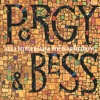
Porgy and Bess
1997, Sony 65141
Original recording, 1958
|
|
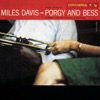
This may be the definitive version of “Summertime” on what many consider one of the definitive jazz albums. “Summertime,” in the gentle hands of trumpeter Davis, is only made better by the arrangement of Gil Evans and the backing of a stellar orchestra.
|
 Art Blakey Quartet
A Jazz Message
1990, MCA
Original recording, 1963
|
|
Drummer Blakey steps away from the Messengers to lead a stellar quartet featuring Art Davis on bass, McCoy Tyner on piano, and Sonny Stitt on saxophone. Their version of “Summertime” is, as the title suggests, a relaxed, breezy affair that swings as gently as a hammock.
|
 Joshua Redman
Timeless Tales for Changing Times
1998 Warner Bros 47052
Original recording 1998
|
|
Saxophonist Redman places “Summertime” among an interesting mix of jazz standards and pop songs. He gives the song fresh attitude, playing around with the theme and adding Latin spice.
|
|
|
|