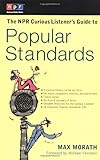
|
|
|
| “The wonderful Ray Charles is given free rein at the piano as trombonist Steve Turre leads the group through a medium-paced version of the song.” |
|
 |
|
- Ben Maycock
|
|
| |
Fred Astaire introduced “The Way You Look Tonight” in the RKO musical Swing Time, the sixth of ten films he would star in with Ginger Rogers. For the film, Dorothy Fields and Jerome Kern wrote one of the most popular film scores of all time, with “The Way You Look Tonight,” beating out “I’ve Got You Under My Skin” and “Pennies from Heaven” to win the 1936 Academy Award for best song.
|
| |
| |
|
| |
|
Swing Time was a goldmine for Fred Astaire. He recorded five of the seven songs that composed the score and each one became a hit. “The Way You Look Tonight” climbed up the pop charts to settle at the number one slot for six weeks. The flip side to that record was “Pick Yourself Up” which rose to number six. “A Fine Romance” was nearly as well received, rising to number one for five weeks while its flip side, the instrumental “Waltz in Swing Time,” peaked at number sixteen. “Never Gonna Dance” was a number five hit with its flip side, “Bojangles of Harlem,” attaining seventeenth position. Each of the recordings was made with Johnny Green and His Orchestra, and the only song that did not become a hit was the short dance number “It’s Not in the Cards.”
“The Way You Look Tonight” was covered by a number of groups, notably
- Guy Lombardo and His Royal Canadians (1936, #3)
- Teddy Wilson and His Orchestra (1936, Billie Holiday, vocal, #3)
- Benny Goodman and His Orchestra (1942, Peggy Lee, vocal, #21)
- The Letterman (1961, #13)
|
|
| |
|
| |
|
Originally titled I Won’t Dance, after the Kern song in 1935’s Roberta, then Never Gonna Dance, Swing Time presents Fred and Ginger at the top of their form dancing to a phenomenal score. The film proved a commercial success and endures to this day as one of their top vehicles despite a flimsy plot that critics have called tedious, practically non-existent, and even asinine.
|
| |
| |
|
| |
|
Rather than Astaire singing “The Way You Look Tonight” directly to Rogers, perhaps in an evening gown on a balcony, the film takes a lighter approach. Astaire plays the piano and sings to no one, while Ginger Rogers is washing her hair in the next room. Unexpectedly, she walks in on him as he completes the song.
|
| |
| |
|
| |
|
|
|
|
|
More information on this tune... |
|
|
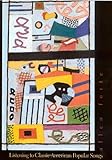 Allen Forte
Listening to Classic American Popular Songs
Yale University Press; Book & CD edition
Hardcover: 219 pages
(Author/educator Forte offers six pages of information on the song, including its history, the lyric, and analyses of both the lyric and music. There is also a companion CD.)
|
|
|
|
- Jeremy Wilson
|
|
| This section suggests definitive or otherwise significant recordings that will help jazz students get acquainted with
“The Way You Look Tonight.” These recordings have been selected from the Jazz History and
CD Recommendations sections.
|
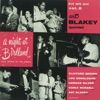
Billie Holiday came up with a classic vocal version of “The Way You Look Tonight” in 1936 ( The Quintessential Billie Holiday, Vol.2: 1936) backed by a small group featuring the exceptionally swinging rhythm section playing of bassist Milt Hinton, drummer Gene Krupa and pianist/bandleader Teddy Wilson. Eventually, the tune became popular as an up-tempo number, and two post-bebop versions from the 1950s illustrate its application in this way. Art Blakey’s nascent Jazz Messengers burned through the tune in a live recording made in 1954 at Birdland in New York ( A Night at Birdland, Vol. 2). Clifford Brown, Lou Donaldson and Horace Silver all shine. Then, in what may have been saxophonist Johnny Griffin’s defining moment, he took on Hank Mobley and John Coltrane in a recorded “cutting contest” in 1957. This recording ( A Blowin’ Session) included an utterly blistering performance of “The Way You Look Tonight”
Noah Baerman - Jazz Pianist and Educator
|
The instant popularity of Kern’s score was no accident. In The Melody Lingers On: The Great Songwriters and Their Movie Musicals, author Roy Hemming says of Swing Time, “Neither the picture nor the score ‘swings’ in the true sense of the era’s swing music craze. But Kern’s score is, overall, his most unabashedly and buoyantly pop-oriented.” True to the pop style, “The Way You Look Tonight” is in the A-A-B-A, 32-bar form with no verse.
Also in top form is Dorothy Fields, who supports Kern’s sensuous composition with lyrics that tell of the desire to capture a moment, saving a beautiful memory for the future. Statements of admiration: “you’re lovely,” “your smile so warm,” “your cheeks so soft,” describe the vision to be saved. Fields is regularly praised for “The Way You Look Tonight” and her contribution to the Swing Time score in general. In Easy to Remember: The Great American Songwriters and Their Songs, author William Zinsser comments on the pairing of the 50-year-old Kern and the 30-year-old Fields saying, “The young lyricist drew out of the famously intractable older composer a score of unusual zest.” Allen Forte, in Listening to Classic American Popular Songs says of “The Way You Look Tonight”: “In short, she has created extraordinarily intricate and, yes, poetic lyrics, lyrics that I would compare with the best of Lorenz Hart’s.” -JW
|
Musical analysis of
“The Way You Look Tonight”
|
| Original
Key |
Eb major;
bridge shifts to Gb major |
| Form |
A – A – B
– A with an eight-bar extension |
| Tonality |
Primarily
major |
| Movement |
There are
downward leaps, ascending step-wise in “A”
section. The “B” section contains repeated
notes moving in skips and steps in both
directions over a fairly narrow range (less
than an octave). There are sustained notes
throughout. |
|
Comments
(assumed
background)
|
| This is the I – vi – ii – V7 progression
(“Heart And Soul,” “These Foolish Things”) but with some substitutions
and variations. For example, the second
time through the progression in “A,” a iii
chord is substituted for I, and the vi becomes
a VI7(b9). “B” does the same thing in the
bIII key (Gb in the original), substituting
a #i˚7 for the vi (in the
original: Gb – G˚7 – Abm). Modulation
back to the tonic key is
accomplished by way of going to the
relative minor (Eb minor) with the vi –III7
becoming a “pivot,” turning into the V7
of the initial tonic key. |
|
K. J. McElrath - Musicologist for JazzStandards.com |
|
Often an interpretation of a song is so engrained in the psyche that it’s hard to think of it in another way. Fred Astaire’s version of this opus as a ballad led the way for a number of covers by vocalists, most notably Billie Holiday’s with the Teddy Wilson Orchestra and Peggy Lee’s with the Benny Goodman Sextet.
Guitarist and nightclub owner Eddie Condon was an indefatigable proponent of the style of jazz referred to as “Dixieland,” although he and his musicians disliked the stereotypical term. On a rare occasion when they were allowed to record something other than “Muskrat Ramble” and “Jazz Me Blues,” Condon’s crew laid down a scorching, up-tempo version of “The Way You Look Tonight” in 1946 that led the way for other versions at a similar tempo.
Chris Tyle - Jazz Musician and Historian
 Benny Goodman
1942
Classics 1324
|
|
|
|
|
Additional information for "The Way You Look Tonight" may be found in:
|
|
|
Allen Forte
Listening to Classic American Popular Songs
Yale University Press; Book & CD edition
Hardcover: 219 pages
(6 pages including the following types of information: history, lyric analysis, music analysis and song lyrics. (Book includes CD).)
|
|
|
|
|
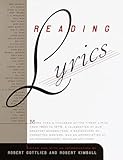 Robert Gottlieb, Robert Kimball
Reading Lyrics
Pantheon
Hardcover: 736 pages
(Includes the following types of information: song lyrics.)
|
|
|
|
|
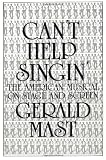 Gerald Mast
Can't Help Singin'
Overlook Press; Rei edition
Paperback: 400 pages
(1 paragraph including the following types of information: music analysis.)
|
|
|
|
|
“The Way You Look Tonight” was included in these films:
- Swing Time (1936, 1-Fred Astaire,
2-George Metaxa, 3-instrumental)
- Chinatown (1974)
- Hannah and Her Sisters (1986)
Carrie Fisher
- Alice (1990, Erroll Garner)
- Father of the Bride (1991,
Steve Tyrell)
- Father of the Bride Part II
(1995, Steve Tyrell)
- Deconstructing Harry (1997,
Erroll Garner Trio)
- My Best Friend’s Wedding (1997,
Tony Bennett)
- National Lampoon’s Vegas Vacation
(1997, Gary LeMel)
- Love’s Labour’s Lost (2000,
Geraldine McEwan, Richard Briers)
- Manna from Heaven (2002, Shirley
Jones, Buffalo Philharmonic)
- Anything Else (2003, Billie
Holiday, Teddy Wilson and His Orchestra)
- What a Girl Wants (2003, Oliver
James)
And on stage:
- Never Gonna Dance (2003, danced
by Noah Racey, Nancy Lemenager) Broadway musical
And on television:
- New York: A Documentary Film
(1999, Jacqueline Schwab) PBS American Experience
- Star Trek: Deep Space Nine
(1999, James Darren) Season 7, Episode 125,
"What You Leave Behind, Part I"
- Friends (2000, Tony Bennett)
NBC sitcom, Season 6, Episode 17, "The One with
Unagi"
- Young Americans (2000, Julius
La Rosa) WB drama series, Season 1, Episode
4, "Cinderbella"
- Six Feet Under (2002) HBO
drama series, Season 2, Episode 24, "The Liar
and the Whore"
|
| This section shows the jazz standards written by the same writing team. |
|
|
|
|
Comment Policy
- Your comments are welcome, including why you like
this tune, any musical challenges it presents, or additional background information.
- Jazz musicians, fans, and students of all ages use this website as an educational resource.
As such, off-topic, off-color, unduly negative, and patently promotional comments will be removed.
- Once submitted, all comments become property of JazzStandards.com.
By posting, you give JazzStandards.com permission to republish or otherwise distribute your comments in any format or other medium.
JazzStandards.com reserves the right to edit or remove any comments at its sole discretion.
|
|
| Click on any CD for more details at Amazon.com |
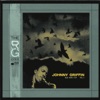
 Johnny Griffin
A Blowin' Session
1999 Blue Note 99009
Original recording 1957
|
|
Griffin asserts himself mightily on a burning-fast tenor battle with Hank Mobley and John Coltrane. Other featured artists here include drummer Art Blakey and the young trumpeter Lee Morgan.
|
 Art Blakey
A Night At Birdland, Vol. 2
1990 Blue Note 46520
Original recording 1954
|
|
This live performance helped usher in the era of Blakey’s Jazz Messengers. Soloists Lou Donaldson, Clifford Brown and Horace Silver play with breathtaking exuberance and dexterity on this up-tempo track.
|
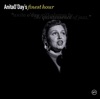
 Anita O'Day
Anita O'Day's Finest Hour
Polygram Records
Original recording 1961
|
|
Along with a great rendition of the melody, this playful performance features some O’Day scatting and a sophisticated arrangement by Jimmy Guiffre.
|
 Barry Harris
Chasin' the Bird
1996 Original Jazz Classics 872
Original recording 1962
|
|
This is definitive bebop piano, with Harris playing inventively and creatively, backed by bassist Bob Cranshaw and drummer Clifford Jarvis.
|
|
 Tete Montoliu
The Music I Like to Play, Vol. 4
1990, Soul Note #121250
|
|
The Catalonian pianist goes for broke in this solo outing. “The Way You Look Tonight,”’ taken in waltz time, rises above the ordinary in his creative hands.
|
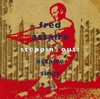
 Fred Astaire
Steppin' Out: Astaire Sings
Polygram Records
Original recording 1952
|
|
Astaire introduced “The Way You Look Tonight” in the 1936 film Swing Time. Here he displays the vocal phrasing and delivery that made him a favorite of composers and lyricists. His stellar jazz sextet includes Charlie Shavers (t), Flip Phillips(ts), Oscar Peterson (p), Barney Kessel(g), Ray Brown (b), and Alvin Stoller (d).
|
|
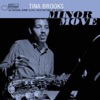
 Tina Brooks
Minor Move
2000, Blue Note 22671
Original recording, 1958
|
|
Trumpeter Lee Morgan and drummer Art Blakey join saxophonist Brooks for a searing bop version of the song. JazzTimes commented on the recording: “the gem of the date is an inspired reading of ‘The Way You Look Tonight.’”’
|
 Steve Turre
In the Spur of the Moment
2000, Telarc
|
|
The wonderful Ray Charles is given free rein at the piano as trombonist Steve Turre leads the group through a medium-paced version of the song. Charles is terrific in an improvisatory role that he rarely commits to CD.
|
 Lionel Hampton Quintet
The Lionel Hampton Quintet
2001 Verve 314589100
Original recording 1954
|
|
Vibraphonist Hampton leads heavyweights, such as pianist Oscar Peterson and drummer Buddy Rich, through a swinging “The Way You Look Tonight.” Clarinetist Buddy DeFranco tops them all with his sentimental solo.
|
|
|
|