|
|
|
| “The lyrics were later included with the sheet music, but it never carried our names.” |
|
 |
|
- Jack Teagarden
|
|
| |
Louis Armstrong introduced this number in 1928. Although it didn’t prove a hit that year, a 1938 reissue hit the charts:
|
|
| |
|
| |
|
Pianist and composer Spencer Williams titled this number after the street where he lived as a youngster with his aunt. But the house he lived in was no ordinary house: it was Mahogany Hall, probably the most famous brothel of Storyville, New Orleans’ red light district. And Spencer’s aunt was the notorious madam Lulu White.
|
| |
| |
|
| |
|
Williams composed the tune in 1928, eleven years after Storyville closed and seven years after Basin Street had been changed to North Saratoga Street by city fathers who wanted every trace of the Storyville “experiment” to disappear. (Ironically, they changed the name back in 1946, no doubt due in part to Williams’ song.)
As is common with so many jazz standards, trumpeter/vocalist Louis Armstrong’s version is the premier one, done at a time when his six-piece group included his perfect musical foil, the great pianist Earl Hines. Although Armstrong sings on the record, it’s a scat vocal backed by the rest of the band. Armstrong’s version also includes the original verse, which was a 12-bar blues.
The person with whom the tune was most often associated was trombonist/vocalist Jack Teagarden. Although he had recorded the number in 1929 with the Louisiana Rhythm Kings (a recording band with not one musician from Louisiana), it wasn’t until the session from February, 1931, with another recording band, the Charleston Chasers, that “Basin Street Blues” really made an impact.
It is generally assumed that Spencer Williams wrote the lyrics. According to Jack Teagarden’s recollection, he and Glenn Miller were responsible for both the music and lyrics for the “new” verse and the lyrics for the chorus. The following, from Bill Crow’s Jazz Anecdotes, tells the real story:
“I was home in New York the evening before the “Basin Street Blues” record date when Glenn called me from his apartment in Jackson Heights. ‘Jack, I think we could do a better job if we could put together some lyrics and you could sing it. Want to come over and see what we can do?’...We finally finished the job sometime early in the morning. Next day, we cut the record. It’s been the most popular I’ve ever done! The lyrics were later included with the sheet music, but it never carried our names.”
Miller and Teagarden’s lyrics paint a picture of Basin Street that never really existed. The line “you’ll never know how nice it seems, or just how much it really means” has sent many a tourist looking for “where welcome’s free, and dear to me.” It gives the impression that you step off of a Mississippi steamboat right onto the street that’s paradise, but it’s actually eight blocks northwest of the river. As far as being “a heaven on earth,” from 1895-1917 it was the heart of the red light district. After Storyville was closed, many of the buildings were torn down or vacant, and in the 1940s the majority that remained were torn down for a department store warehouse and a government housing project. Although there have been plans for years for a rejuvenation of the street, the only addition has been a large grocery store. But one street over toward the French Quarter, North Rampart Street, has seen a number of excellent music clubs spring up which may presage regeneration.
|
|
|
|
| This section suggests definitive or otherwise significant recordings that will help jazz students get acquainted with
“Basin Street Blues.” These recordings have been selected from the Jazz History and
CD Recommendations sections.
|
Louis Armstrong’s 1928 version of “Basin Street Blues” (Vol. 4: Louis Armstrong and Earl Hines) is an important rendition of the tune, not to mention an important moment in 1920s jazz. The 1931 recording by the “Charleston Chasers” (Benny Goodman 1931-1935), meanwhile, is perhaps the most significant performance of the song by Jack Teagarden, considered by many to be the song’s definitive interpreter, and offers a fairly straightforward vocal rendition of the melody. Among modern versions, Miles Davis’ 1963 recording featuring Victor Feldman on piano (Seven Steps to Heaven) is the gold standard.
Noah Baerman - Jazz Pianist and Educator
|
|
Musical analysis of “Basin Street Blues”
|
|
Original Key
|
Bb major
|
|
Form
|
A - A - B1 - B2
|
|
Tonality
|
Major throughout
|
|
Movement
|
“A” consists of two ascending scale figures with chromatic passing tones making up the “call” and with a “response” based on a descending blues scale; “B” sections contain repeated notes, upward leaps (fifths), and embellishing half-steps.
|
|
Comments (assumed background)
|
|
While the chord progression is not a “blues” in the strict sense, the melody makes use of flatted “blue notes,” specifically the third and the seventh. The difference here between a “blues scale” and Dorian or Mixolydian mode is really one of context. In addition, a blues scale does not seek to consistently alter the third and seventh degrees; the natural and the flatted third are often both present. The “blue” note is really an attempt to “play in the cracks,” a reflection of quarter-tone pitches found in the music of many West African cultures from which the blues developed.
|
|
K. J. McElrath - Musicologist for JazzStandards.comle style="width: 100%" cellpadding="10" border="1">
|
|
Musical analysis of “Basin Street Blues”
|
|
Original Key
|
Bb major
|
|
Form
|
A - A - B1 - B2
|
|
Tonality
|
Major throughout
|
|
Movement
|
“A” consists of two ascending scale figures with chromatic passing tones making up the “call” and with a “response” based on a descending blues scale; “B” sections contain repeated notes, upward leaps (fifths), and embellishing half-steps.
|
|
Comments (assumed background)
|
|
While the chord progression is not a “blues” in the strict sense, the melody makes use of flatted “blue notes,” specifically the third and the seventh. The difference here between a “blues scale” and Dorian or Mixolydian mode is really one of context. In addition, a blues scale does not seek to consistently alter the third and seventh degrees; the natural and the flatted third are often both present. The “blue” note is really an attempt to “play in the cracks,” a reflection of quarter-tone pitches found in the music of many West African cultures from which the blues developed.
|
|
K. J. McElrath - Musicologist for JazzStandards.com
|
|
Collectors were overjoyed when a 1970s
LP release appeared with recordings from
a 1934 radio transcription date (under the
sobriquet of Bill Dodge and his Orchestra),
featuring classic clarinet by
Benny Goodman, trumpeter Bunny Berigan,
and a band made up of other New York studio
luminaries. Their version of “Basin Street”
is sans vocal, featuring a similar arrangement
to that of the 1931 Charleston Chasers session,
with Berigan doffing his cap in the direction
of
Louis Armstrong, his mentor.
In the 1930s Esquire Magazine
featured a number of articles on jazz and
by the 1940s was heavily involved in the
scene, publishing several yearbooks and
running a reader’s poll. A recording from
their All-Star concert of 1944 includes
a unique version of “Basin Street Blues”
featuring
Louis Armstrong and Jack Teagarden reprising
their vocal renditions.
Chris Tyle - Jazz Musician and Historian
|
Additional information for "Basin Street Blues" may be found in:
|
|
|
 George T. Simon
Big Bands Songbook
Barnes & Noble
Paperback
(4 pages including the following types of information: anecdotal, performers, song writer discussion and sheet music.)
|
|
|
|
|
 Thomas S. Hischak
The Tin Pan Alley Song Encyclopedia
Greenwood Press
Hardcover: 552 pages
(1 paragraph including the following types of information: film productions, history and performers.)
|
|
|
|
|
| This section shows the jazz standards written by the same writing team. |
|
|
|
|
Comment Policy
- Your comments are welcome, including why you like
this tune, any musical challenges it presents, or additional background information.
- Jazz musicians, fans, and students of all ages use this website as an educational resource.
As such, off-topic, off-color, unduly negative, and patently promotional comments will be removed.
- Once submitted, all comments become property of JazzStandards.com.
By posting, you give JazzStandards.com permission to republish or otherwise distribute your comments in any format or other medium.
JazzStandards.com reserves the right to edit or remove any comments at its sole discretion.
|
|
| Click on any CD for more details at Amazon.com |
 Louis Armstrong
Earl & Hines 4
Sony
Original Recording 1928
|
|
In perhaps the first essential recording of “Basin Steet Blues,” Armstrong plays a remarkable trumpet solo as well as offering some excellent scat singing. The relaxed performance also features Earl Hines on both piano and celeste.
|
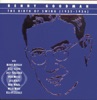
 Benny Goodman
1931-1935
Timeless Holland
Original Recording 1931
|
|
The “Charleston Chasers” here feature Benny Goodman, who contributes a bluesy clarinet solo, Glenn Miller, who arranged this version, and most notably Jack Teagarden on trombone and vocals. The vocals are commanding, and Teagarden would go on to record and perform this song quite often.
|
 Sidney Bechet
Best of
Blue Note Records
Original Recording 1949
|
|
Bechet was for many years a keeper of the flame of New Orleans jazz, and this recording is both traditional and vibrant. His soprano saxophone is bluesy and expressive and his band, featuring Wild Bill Davison on cornet, is up to the task as well.
|
 Duke Ellington, Johnny Hodges
Side By Side
Polygram Records
Original Recording 1959
|
|
Saxophonist Hodges and pianist Ellington each play fabulous solos on this slow, swinging track. Also featured are guitarist Les Spann, trumpeter Harry “Sweets” Edison and the remarkably swinging drummer “Papa” Jo Jones.
|
 Eddie Condon
Live in Japan
Chiaroscuro Records
Original Recording 1964
|
|
A crucial figure in the Dixieland revival, guitarist and entrepreneur Condon put together the all-star band featured on this live recording from Japan. There are spirited solos by clarinetist Pee Wee Russell, trombonist Vic Dickenson, trumpeter Buck Clayton and saxophonist Bud Freeman.
|
|
 Shirley Horn
I Remember Miles
Verve
|
|
Vocalist Horn slows the tempo right down for this loving tribute to Miles Davis. Her smoky voice and tempered delivery invest the song with whole new depth.
|
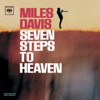
 Miles Davis
Seven Steps to Heaven
1992 Sony 48827
Original recording 1963
|
|
It is to this achingly beautiful version of the song that Shirley Horn pays homage in her above mentioned CD. Miles, with this 1963 recording, introduced his new sound and his new band and at the same time changed the perception of this normally uptempo tune forever.
|
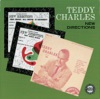
 Teddy Charles
New Directions
1999 Original Jazz Classics 1927
Original recording 1953
|
|
This groovy set is led by vibraphonist Teddy Charles. The mood is light, the vibe is bluesy, and the tempo is laid way back.
|
 Dr John
Goin' Back to New Orleans
1992 Warner Bros 26940
Original recording 1992
|
|
Dr. John’s boogie piano rolls and raspy singing voice remain true to his roots and the roots of the song in this appealing performance.
|
 Peggy Lee
Peggy Lee Sings the Blues
1992 Music Masters Jazz
Original recording 1988
|
|
Lee takes the song at a sultry tempo with some nice guitar work by John Chiodini.
|
|
|
|