|
|
|
| Violinists Stephane Grappelli and Yehudi Menuhin include “I Can’t Believe That You’re in Love with Me” in their 2000 tribute to unforgettable classics. |
|
 |
|
- Sandra Burlingame
|
|
| |
Vocalist Cliff Edwards, known as “Ukulele Ike,” introduced this Clarence Gaskill number on a recording session for the Perfect label in January, 1927. His recording didn’t make the charts, but one by bandleader Roger Wolfe Kahn did:
- Roger Wolfe Kahn and His Orchestra (1927, #11)
- Ames Brothers (1953, vocal, #22)
|
|
| |
|
| |
|
Gaskill’s involvement in the music business is rather unusual. His output is on the small side, and he only wrote music for two Broadway shows, neither of which produced a hit. He did write a few songs with rather unusual titles such as “No Squat, No Stoop, No Squint,” “The Tin Can Song,” and “In the Vallee of Lombardo” (a strange play on words using the names of vocalist Rudy Vallee and bandleader Guy Lombardo). He is credited as composer of what surely must be one of the most surrealistic recordings by Louis Armstrong, the 1933 Victor recording entitled “Laughin’ Louis.” Armstrong and the band play a 32-bar tune with what sounds like improvised lyrics, but there’s a great deal of clowning around leading up to Armstrong’s a cappella improvisation on a theme composed for a 1920s silent film. For many years the title and authorship of this melody was a mystery until jazz historian/bandleader/bassist Vince Giordano discovered the piece was “Love Scene,” written in 1920 by Minnie T. Wright.
|
| |
| |
|
| |
|
|
| |
| |
|
| |
|
Gaskill’s collaboration with Jimmy McHugh produced only one other number, also from 1926, “I Don’t Mind Being All Alone,” recorded by Cliff Edwards. Both writers apparently were working for Jack Mills Music Publishers Inc. at the time. “I Can’t Believe...” was Gaskill’s biggest hit, although he wrote two numbers that became theme songs: the 1931 “Minnie the Moocher” for Cab Calloway and the 1933 “Prisoner of Love” for vocalist Russ Colombo.
|
|
|
|
| This section suggests definitive or otherwise significant recordings that will help jazz students get acquainted with
“I Can't Believe That You're in Love with Me.” These recordings have been selected from the Jazz History and
CD Recommendations sections.
|
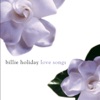
Louis Armstrong’s powerhouse 1930 recording of “I Can’t Believe That You’re In Love With Me” (Portrait of the Artist As a Young Man) is an excellent starting point for anyone learning the song, thanks to his brilliant playing and singing. Billie Holiday’s 1938 recording (Love Songs) featuring Lester Young and Teddy Wilson is a small-group swing era classic and one of the best-loved versions of the song. An instrumental version from 1940 by the unfortunately-named “Chocolate Dandies” (Tenor Giants) is a historical landmark, featuring remarkable work by Coleman Hawkins on tenor saxophone, Benny Carter on alto saxophone and Roy Eldridge on trumpet.
Noah Baerman - Jazz Pianist and Educator
|
As the title suggests, “I Can’t Believe That You’re in Love with Me” is a declaration of astonishment in finding, as the saying goes, “a good catch.” Chris Tyle
Musical analysis of “I Can’t Believe That You’re in Love with Me” | | Original Key | C major | | Form | A - A - B - A | | Tonality | Major throughout | | Movement | A series of descending arpeggios outlining the harmonic structures and chord inversions | Comments (assumed background) | | The harmonic progression, starting on IV, begins very much like “Just Friends” and the second strain of “Copenhagen.” Where the former turns to a ct°7 and the latter the V7/II, this piece goes to the II (V7/V) chord in second inversion. Modern players may be tempted to replace this with a vii°7/V7, but this does not really fit the melody (clashing briefly with the pick-up to measure 5). The original chord here is preferable. Other substitutions may be made in mm. 5-8 (ii for V7, for example), and “B” lends itself well for a series of ii7-V7 embellishments. | | K. J. McElrath - Musicologist for JazzStandards.com |
|
Trumpeter Cootie Williams accepted the mantle of “plunger-mute” expert when he joined Duke Ellington in 1929, taking over from Bubber Miley, whose sound had become an integral part of Duke’s music. Although Cootie’s approach was a bit different from Miley’s, Williams was forever saddled with role. When Cootie left the Duke in 1940 to join Benny Goodman’s band, the mutes took a back seat and his marvelous, Armstrong-inspired, open horn was featured. Although Cootie had recorded “I Can’t Believe...” with his own small group in 1937, it’s the interesting “rehearsal” with the Goodman Sextet (sans its leader) that demonstrates what a beautiful sound he had. The recording group The Chocolate Dandies (an all-star group under the leadership of multi-instrumentalist Benny Carter) waxed a swinging version of the tune in 1940 with top-notch solos from Carter on alto saxophone, trumpeter Roy Eldridge, and tenor saxophonist Coleman Hawkins.
Chris Tyle - Jazz Musician and Historian
|
Additional information for "I Can't Believe That You're in Love with Me" may be found in:
|
|
|
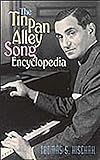 Thomas S. Hischak
The Tin Pan Alley Song Encyclopedia
Greenwood Press
Hardcover: 552 pages
(1 paragraph including the following types of information: film productions, history and performers.)
|
|
|
|
|
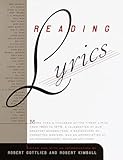 Robert Gottlieb, Robert Kimball
Reading Lyrics
Pantheon
Hardcover: 736 pages
(Includes the following types of information: song lyrics.)
|
|
|
|
|
|
|
|
Comment Policy
- Your comments are welcome, including why you like
this tune, any musical challenges it presents, or additional background information.
- Jazz musicians, fans, and students of all ages use this website as an educational resource.
As such, off-topic, off-color, unduly negative, and patently promotional comments will be removed.
- Once submitted, all comments become property of JazzStandards.com.
By posting, you give JazzStandards.com permission to republish or otherwise distribute your comments in any format or other medium.
JazzStandards.com reserves the right to edit or remove any comments at its sole discretion.
|
|
| Click on any CD for more details at Amazon.com |
 Louis Armstrong
Portrait of the Artist As a Young Man
Sony
Original recording 1930
|
|
Though he is not the only musician featured on this track, Louis Armstrong is the one who single-handedly makes it a masterpiece. He interprets the melody brilliant both vocally and with his trumpet, and he plays a fabulous trumpet solo as well.
|
 Billie Holiday
Love Songs
Sony
Original recording 1938
|
|
This relaxed, swinging recording features some classic Billie Holiday vocals, as well as some rightfully heralded interplay with saxophonist Lester Young. Pianist Teddy Wilson also makes the most of his moment in the sun, as do trombonist Benny Morton and trumpeter Buck Clayton.
|
 Count Basie
Essential Basie 2
Sony
Original recording 1939
|
|
Vocalist Jimmy Rushing is featured here, offering a great, faithful interpretation of “I Can’t Believe That You’re In Love With Me.” It is worth noting that the Basie band’s ensemble work here is remarkably swinging, as self-evident as that may be.
|
 Lee Konitz, Gerry Mulligan
Konitz Meets Mulligan
Blue Note Records
Original recording 1953
|
|
Saxophonists Gerry Mulligan and Lee Konitz and trumpeter Chet Baker engage in some intense interplay on the melody of this cool jazz classic before moving on to some melodic, flowing solos.
|
 Art Pepper
Intensity
Ojc
Original recording 1960
|
|
This track is Pepper’s third recording of the tune, and represents his last session before a long hiatus. His playing is extremely intense, as is the work of his bandmates Dolo Coker, Jimmy Bond and Frank Butler.
|
|
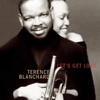
 Terence Blanchard
Let's Get Lost
2001 Sony 89607
Original recording 2001
|
|
Blanchard’s muted trumpet delicately softens the passionate edge created by singer Dianne Reeves’ powerful rendering of the lyrics.
|
 Brew Moore Quintet
Brew Moore Quintet
1998 Original Jazz Classics 100
Original recording 1956
|
|
Bouncy swing, infectious rhythm, and tenor horn work reminiscent of Lester Young make saxophonist Moore’s version fantastic.
|
 Lorez Alexandria
Singing Songs Everyone Knows
1994 King 676
Original recording 1959
|
|
It’s always been a mystery that vocalist Alexandria didn’t gain the attention that other singers of her generation garnered. From a rousing “Just One of Those Things” to a light and airy “I Can’t Believe...” to a tender “Spring Is Here” she shows her full range of gifts.
|
|
|
|