|
|
|
| There are relatively few jazz recordings of waltzes prior to the 1950s, so it was surprising to many when...Waller composed this tune in 1943. |
|
 |
|
- Chris Tyle
|
|
| |
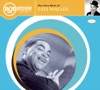
Thomas “Fats” Waller and His Rhythm introduced “Jitterbug Waltz” on their March 16, 1942, RCA Victor recording date.
When Waller composed “Jitterbug Waltz” he was 38 years old and at the high point of his career as a veteran recording artist for RCA Victor, making the occasional movie appearance, broadcasting on radio, and traveling the United States and Europe on an incredibly hectic and tiring schedule. It’s not surprising that by 1943, after years of work and overindulgence, his body gave out.
|
| |
| |
|
| |
|
“Jitterbug Waltz” was inspired by some piano exercises that Waller’s son Maurice had been practicing on the piano. Fats and his band were appearing at the Panther Room in Chicago in early 1942, a gig they had done the previous year which had led to Waller’s composition “Pantin’ at the Panther.” According to Fats’ manager Ed Kirkeby in his biography Ain’t Misbehavin’: The Story of Fats Waller, it was during the six-week stint at the Panther that Waller penned the number and Kirkeby came up with the title. Two months later Waller recorded it in New York.
Although Waller was mainly known as a pianist, he was a fine organist and had made many solo pipe organ recordings in the 1920s for Victor Records at their recording studio located in a former church in New Jersey. Waller loved playing the organ, which he had learned as a youth while a member of the choir at the Abyssinian Baptist Church in Harlem. When he was on tour with his band and able to find an instrument he would delight in playing Bach for whomever might be listening. By the late-1930s and early ‘40s many recording studios had acquired Hammond organs, hence Waller’s use of it on his March 16 session.
Dinah Washington recorded a vocal version of “Jitterbug Waltz” in her 1957 Fats Waller Songbook with a lyric by Charles R. Grean and Maxine Manners which describes the dance:
You find a combination
Of a lovely waltz
That’s played in syncopation
And you have the jitterbug waltz
In 1978, as part of the Broadway musical on Waller’s life, Ain’t Misbehavin’, director Richard Maltby, Jr. wrote a new lyric for the piece. The lyric describes a pair of dancers, late in the evening at a band performance, and even though they are tired they still find romance in the waltz:
The night is getting on
The band is getting slow
The crowd is almost gone
But here we are still dancing
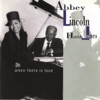
However, “Jitterbug Waltz” is almost universally performed as an instrumental. Only a handful of vocalists have taken on the challenging melody, although Abbey Lincoln performed Maltby’s lyric on her duo recording with pianist Hank Jones in her 1992 CD When There Is Love. |
|
|
|
| This section suggests definitive or otherwise significant recordings that will help jazz students get acquainted with
“Jitterbug Waltz.” These recordings have been selected from the Jazz History and
CD Recommendations sections.
|
It practically goes without saying that Fats Waller’s own recording of his “Jitterbug Waltz,” from 1942, (Very Best of Fats Waller) is an important point of reference for learning the tune; Waller is featured here on organ. Erroll Garner’s elegant 1949 trio version (Jazz ‘Round Midnight) offers a contrasting approach, as does Eric Dolphy’s edgier version from 1963 (Conversations).
Noah Baerman - Jazz Pianist and Educator
|
|
Musical analysis
of “Jitterbug Waltz”
|
|
Original Key |
Eb
major |
|
Form |
A
- B1 - A - B2 |
|
Tonality |
Major
throughout |
|
Movement |
After
an upward third, the melody of “A”
descends in a pattern of downward
fourths that sound almost like an
etude. “B” is constructed from major
and minor thirds and ends with a
series of ascending triplet figures. |
|
Comments
(assumed
background)
|
|
A spunky little piece in 3/4 time,
this is a reflection of the fun-loving
humor that pervades most of Waller’s
compositions. Although Waller conceived
this as an instrumental piece (for
piano), Richard Maltby, Jr. added
lyrics in the 1970s for the Broadway
revue Ain’t Misbehavin’.
Because of the descending fourths
(kept diatonic and therefore creating
a tri-tone at one point), as well
as the quick chromatic passages
in “B,” it requires a great deal
of vocal training and experience
to pull off an effective performance. |
|
K. J. McElrath - Musicologist for JazzStandards.com |
|
There are relatively few jazz recordings of waltzes prior to the 1950s, so it was surprising to many when pianist/vocalist/bandleader Thomas “Fats” Waller composed this tune in 1943, when he also recorded it (on organ, his other instrument) with his short-lived big band.
The tune has been recorded by a wide range of jazz artists, from cornetist Bobby Hackett’s live version in 1951 to pianist Chick Corea’s in 2001. A live concert version from 1971 has Hackett teaming up with trumpeter Dizzy Gillespie, ably supported by a group that includes the incomparable Mary Lou Williams.
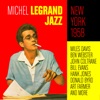
A couple of big band recordings worth attention are the 1953 version by the English band led by Ted Heath, Dinah Washington’s vocal version from 1957, and arranger/conductor Michel Legrand’s album with trumpeter Miles Davis from 1958.
Chris Tyle - Jazz Musician and Historian
|
| This section shows the jazz standards written by the same writing team. |
|
|
|
|
Comment Policy
- Your comments are welcome, including why you like
this tune, any musical challenges it presents, or additional background information.
- Jazz musicians, fans, and students of all ages use this website as an educational resource.
As such, off-topic, off-color, unduly negative, and patently promotional comments will be removed.
- Once submitted, all comments become property of JazzStandards.com.
By posting, you give JazzStandards.com permission to republish or otherwise distribute your comments in any format or other medium.
JazzStandards.com reserves the right to edit or remove any comments at its sole discretion.
|
|
| Click on any CD for more details at Amazon.com |
 Erroll Garner
Jazz ‘Round Midnight
Polygram Records
Original Recording 1949
|
|
This early recording by Garner’s trio is elegant and slow, featuring lush block chords as Garner interprets the melody.
|
 Art Tatum
Solo Masterpieces 3
Pablo
Original Recording 1953
|
|
Pianist Tatum is both harmonically and rhythmically exploratory on this expansive performance. His signature displays of technique are largely absent, with his touch and ingenuity taking precedence instead.
|
 Junior Mance
Happy Time
Ojc
Original Recording 1962
|
|
Pianist Mance offers a swinging, elegant trio rendition of “Jitterbug Waltz.” Bassist Ron Carter and drummer Mickey Roker contribute to the bluesy, rhythmically playful feeling.
|
 Eric Dolphy
Conversations
Jazz World
Original Recording 1963
|
|
This performance is modern and edgy but not without reverence. In addition to a powerhouse flute solo by Dolphy himself, there are great solos by Woody Shaw on trumpet, Bobby Hutcherson on vibraphone and Eddie Khan on bass.
|
 Dizzy Gillespie
Dizzy's Big 4
Ojc
Original Recording 1974
|
|
Tempos and groove are toyed with here by trumpet giant Gillespie and his all-star sidemen, guitarist Joe Pass, bassist Ray Brown and drummer Mickey Roker. Between funk and multiple tempos of swing, the quartet plays effortlessly and creatively, with some particularly fine late-career trumpet work by the bandleader.
|
|
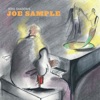
 Joe Sample
Soul Shadows
2004 Verve 283402
Original recording 2004
|
|
Ex-Crusader pianist Sample proves he has chops on this solo effort. His style and passion are reminiscent of the ragtime masters, and the result is a sharp, intriguing, contemporary interpretation of the song.
|
 Abbey Lincoln/Hank Jones
When There Is Love
1994 Verve 314519697
Original recording 1994
|
|
Pianist Hank Jones slows the song to a mid-tempo, and Lincoln’s vocals cascade elegantly over the late night mood he sets. A warm and inviting rendition that revels in the lyrics.
|
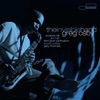
 Greg Osby
The Invisible Hand
2000 Blue Note 20134
Original recording 2000
|
|
Osby’s alto saxophone draws out some interesting figures as he paints the Waller piece with a bop brush. His off-tempo take makes for an interesting interpretation, a reinvention as invigorating as the original must have been in its day.
|
 Peter Leitch
A Special Rapport
1994 Reservoir Records 129
|
|
Guitarist Leitch modernizes this Waller tune at a brisk tempo with bandmates pianist John Hicks, bassist Ray Drummond, and drummer Marvin “Smitty” Smith.
|
|
|
|