|
|
|
| A well-constructed melody, made up of strong motivic patterns, helps keep this tune “in the ear” and easily learned. |
|
 |
|
- K. J. McElrath
|
|
| |
Composer Victor Young wrote this song as the title piece for the film My Foolish Heart for which he also wrote the score. Long-time collaborator Ned Washington wrote the lyrics, and the song was introduced by vocalist Martha Mears, dubbing for actress Susan Hayward. “My Foolish Heart” was nominated for a Best Song Oscar in 1950.
|
| |
| |
|
| |
|
|
| |
| |
|
| |
|
Composer/arranger/bandleader Gordon Jenkins’ Capitol recording hit third place in the charts, beating out the version by popular, jazz-influenced singer Billy Eckstine.
- Gordon Jenkins and His Orchestra (1950, Sandy Evans, vocal, #3)
- Billy Eckstine and His Orchestra (1950, vocal, #6)
- Mindy Carson (1950, vocal, #6)
- Margaret Whiting (1950, vocal, #17)
- Richard Hayes (1950, #21)
- Hugo Winterhalter and His Orchestra (1950, #29)
|
|
| |
|
| |
|
Victor Young is considered by many to be among the cadre of best film music writers of the 20th century. Although not a composer of sweeping, symphonic-type scores like Miklos Rosza, Dimitri Tiomkin or Bernard Hermann, Young had a marvelous knack for creating supreme melodies--not really surprising since his writing career began with popular songs. “He wrote music from the heart,” music editor and associate Bill Stinson said of Young. “He had so much melody within him. He may have been the best melody writer we ever had in Hollywood.” But even by the early 1930s he had a reputation as one of the music business’ top arrangers, too.
In Bruce Jenkins’ biography of his father, Goodbye: In Search of Gordon Jenkins, the author quotes an interview by Wink Martindale, where the senior Jenkins told of his first encounter with Victor Young while recording with Isham Jones’ band in Chicago. “He asked me if I would take a walk with him. We walked for three hours in Lincoln Park and he talked to me about music, some of the things I’d done wrong on the record date, and some of the things I’d done right... I learned more about practical writing that afternoon than I could ever learn in college... If I did nothing for the rest of my life but arrange Victor Young songs, I still couldn’t repay him.”
Young’s film writing, beginning with his arrival in Hollywood in 1935, took a front seat over all his other work, although he was a workaholic, conducting and arranging for his own orchestra, doing radio work, and backing a plethora of fine singers in the recording studios. Fellow composer Irving Gertz mentioned an encounter on a recording date. “The first time I met him was at Columbia and he was coming to the podium to conduct. He was a little guy who looked like a prizefighter with a cigar.”
When Young died at the relatively young age of 56 in 1956 (many close acquaintances said his obsessive work habits were the cause), vocalist/pianist Nat “King” Cole did a television tribute to the composer which included a sensitive version of “My Foolish Heart.”
Young was wise in choosing Ned Washington to write the lyrics for the song. The pair had successfully collaborated on several hits, beginning with “Can’t We Talk It Over” (1932), “Love Me” (1934), and “Stella by Starlight” (1946). Washington’s lyrics tell of a moonlit night, the right atmosphere for the beginning of a love affair. But he also suggests the uncertainty of such a situation with the words, “Is it love or fascination?”
|
|
|
|
| This section suggests definitive or otherwise significant recordings that will help jazz students get acquainted with
“My Foolish Heart.” These recordings have been selected from the Jazz History and
CD Recommendations sections.
|
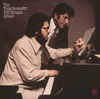
Gene Ammons’ earliest rendition of “My Foolish Heart” was a 1950 performance (Young Jug) that shows his gentle side and also proved vital in showing the tune’s compatibility with instrumental jazz. In 1961, Bill Evans recorded the tune with his trio at New York’s Village Vanguard (Waltz for Debby) and history was made. Many people now associate the song with Evans, and he also participated in one of its classic vocal performances, a duet with Tony Bennett (The Tony Bennett/Bill Evans Album).
Noah Baerman - Jazz Pianist and Educator
|
|
Musical analysis of “My Foolish Heart”
|
|
Original Key
|
C Major
|
|
Form
|
A1 - B - A2 - C
|
|
Tonality
|
Major throughout
|
|
Movement
|
“A” is primarily arpeggiated; “B” moves mainly in steps.
|
|
Comments (assumed background)
|
| A well-constructed melody, made up of strong motivic patterns, helps keep this tune “in the ear” and easily learned. With a wide range (a 10th), it is probably more attractive to instrumentalists than vocalists. The original chord progression consists of the “ice cream changes” (“Blue Moon,” “Heart and Soul,” “Again,” etc.). Because of the arpeggiated nature of the melody, however, there are ample opportunities to use interesting substitutions and chord extensions. One example, used frequently by modern players, is to use C maj7 - F maj9 - Em11 - A7b9 in the first two measures rather than the original C - Am (I - vi). Another variation might be C maj7 - Ab9#5 - F maj(6-9) during the first two measures of “B” as opposed to the original C maj7 - C7#5 - F6. In general, this is an excellent tune for anyone wishing to experiment with re-harmonization and the use of chord extensions. |
|
K. J. McElrath - Musicologist for JazzStandards.com
|
|
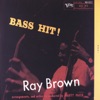
Despite being recorded by tenor saxophonist
Gene Ammons and underrated jazz pianist
Dodo Marmarosa in 1950, “My Foolish Heart”
didn’t really pick up momentum in the studios
until 1956 when vocalist Carmen McRae, pianist
Andre Previn and bassist Ray Brown did versions.
Brown’s version, his first long-play
record date, is a beautiful rendition of
the tune with a band made up of stellar
Los Angeles studio jazz players. The recording
begins with Brown doing eight bars a cappella
before he’s joined by the rest of the rhythm
section. Up next is the soulful trumpeter,
Harry “Sweets” Edison, and then the mellow,
breathy clarinet playing of Jimmy Giuffre.
Brown again steps up to the mike to play
eight bars, followed by eight from the ensemble,
and then finishes up, again a cappella.
Chris Tyle - Jazz Musician and Historian
|
Additional information for "My Foolish Heart" may be found in:
|
|
|
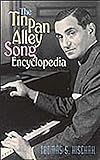 Thomas S. Hischak
The Tin Pan Alley Song Encyclopedia
Greenwood Press
Hardcover: 552 pages
(1 paragraph including the following types of information: film productions, history and performers.)
|
|
|
|
|
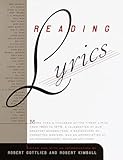 Robert Gottlieb, Robert Kimball
Reading Lyrics
Pantheon
Hardcover: 736 pages
(Includes the following types of information: song lyrics.)
|
|
|
|
|
| This section shows the jazz standards written by the same writing team. |
|
|
|
|
Comment Policy
- Your comments are welcome, including why you like
this tune, any musical challenges it presents, or additional background information.
- Jazz musicians, fans, and students of all ages use this website as an educational resource.
As such, off-topic, off-color, unduly negative, and patently promotional comments will be removed.
- Once submitted, all comments become property of JazzStandards.com.
By posting, you give JazzStandards.com permission to republish or otherwise distribute your comments in any format or other medium.
JazzStandards.com reserves the right to edit or remove any comments at its sole discretion.
|
|
|