|
|
|
| “The song itself became a dramatic focal point when Milland’s character Rod serenades his Stella...” |
|
 |
|
- JW
|
|
| |
Victor Young and His Orchestra introduced “Stella by Starlight” in the 1944 Paramount film, The Uninvited, a ghost story starring Ray Milland, Ruth Hussey and Gail Russell. While Young’s composition was written as the film’s recurrent theme, the song itself became a dramatic focal point when Milland’s character Rod serenades his Stella, played by Russell. Looking out the window while Rod is at his grand piano Stella asks what he is playing. Rod replies, “It’s a serenade. ‘To Stella by Starlight.’”
|
| |
| |
|
| |
|
The Uninvited garnered generally good reviews when it was released and to this day receives high marks from home video consumers. Lewis Allen directed with restraint, using almost no graphic images, demonstrating how effectively chilling a ghost story can be when more is left to the imagination. Allen’s frequent light touches are engaging and keep the film moving at a steady pace.
In May of 1947, “Stella by Starlight,” recorded by Harry James and His Orchestra, rose to number 21 on the pop charts. Two months later, in July, Frank Sinatra’s recording of the song with Axel Stordahl and His Orchestra also reached 21st place.
|
|
| |
|
| |
|
Although “Stella by Starlight” was composed as a theme song, it was to everyone’s advantage to enhance the Young composition. The addition of lyrics would increase the chances of the song becoming a pop hit, and a vocal hit could promote the film and vice-versa. When Young turned “Stella by Starlight” over to Ned Washington, he also posed the lyricist a bit of a problem. The song had already been titled, and Washington had to incorporate the phrase into his lyrics. The lyricist found he could only fit the title one place in the song, and as a result “Stella by Starlight” is unusual in that its title is not at the beginning or end of the song but about three-quarters of the way through.
|
| |
| |
|
| |
|
|
|
|
|
| This section suggests definitive or otherwise significant recordings that will help jazz students get acquainted with
“Stella By Starlight.” These recordings have been selected from the Jazz History and
CD Recommendations sections.
|
Many recordings of “Stella By Starlight” have been made in a ballad style. The definitive recording of the tune starts gently, but evolves into a hard-swinging performance. This performance is courtesy of Miles Davis and his sextet ( The Complete Columbia Recordings: Miles Davis & John Coltrane), captured during a transitional moment. John Coltrane and Paul Chambers are carry-overs from the classic quintet of the mid-1950s, while Cannonball Adderley, Bill Evans and Jimmy Cobb round out the group.
Noah Baerman - Jazz Pianist and Educator
|
“Stella by Starlight” is most often characterized as “haunting” and is usually performed somberly. The song is frequently described as “beautiful” and “rhapsodic,” apt descriptions considering that Young’s compositional influence was Sergei Rachmaninoff (1873-1943) whose melodies are often described in similar terms. The song was also set apart from other pop hits of the day because of its A1-B-C-A2 form.
Another film composer who borrowed from Rachmaninoff was Miklos Rosza (1907-1995) who won Academy Award nominations for his work on The Thief of Bagdad, Sundown, The Jungle Book, and Academy Awards for Spellbound, A Double Life, and Ben-Hur. Rozsa said of Young, “He wrote in the Broadway-cum-Rachmaninoff idiom which was then the accepted Hollywood style.” -JW
|
Musical analysis
of “Stella By Starlight”
|
|
Original Key |
G
major, with two brief false key
changes to C major and D major. |
|
Form |
A1
– B – C – A2 |
|
Tonality |
Primarily
major. All minor harmonies serve
voice-leading functions as the piece
wavers from one key to another. |
|
Movement |
It
initially descends to the low range,
moving up to the high range in section
“C,” then drops in an arc movement.
About 90% of the motion is by step;
there are a few skips and only two
downward leaps of a fourth or larger.
Over half of the melody consists
of long, sustained tones. |
|
Comments
(assumed
background)
|
|
Section "A1" opens with a iiø7/iii,
followed by a V7/iii and a deceptive
resolution to the ii chord of Am
(actually Am11 when the melody note
is included.) As the listener would
expect, this ii is followed by V7.
The first surprise comes when this
V7 (D7) turns minor in the following
measure. The G7 resolving to C that
comes after this strongly implies
a false key change to C. In section
"B," the C major tonality is somewhat
reinforced by the F7(IV7/I in C).
However, if one considers it a
VII7, as a mixolydian substitute
for V7, this F7 chord is the harmonic
pivot leading back to the original
tonic key of G. The second half
of section "B" begins with a I -
vi - iii progression that is not
by itself unusual - in fact, this
particular progression is found
in a number of standards and popular
tunes, especially after 1950 ("You
Are My Special Angel" is perhaps
the best known example). In context
of "Stella," however, it has a less
emotional and more "impressionistic"
flavor - especially due to the chord
that leads into the new, temporary
key of "D" in section "C." In the
original sheet music edition, this
chord is identified as a second
inversion Em7(b5). On one hand,
this could be construed as a i in
the key of D. However, the presence
of Bb in the bass would seem to
make this a "French augmented sixth
chord" (Fr+6), which corresponds
to a Bb7(b5) in the key of D. In
terms of pitch classes, all three
of these chords are identical, and
in this case, serve an identical
function - as a substitution of
the ii7 chord. Bypassing the V7
altogether, the progression now
turns very briefly to the key of
D major. It does not rest there
long, however; this new, extremely
temporary tonic of D is followed
by a third inversion vii˚7, created
by diatonic stepwise descent of
the bass line. Normally, the ear
expects a vii˚7 to resolve to I.
In this case, the resolution is
to a chord that shares three pitches
in common with the temporary I chord
of D, but because the root is not
present and the bass note is F#,
the chord becomes a iiø7/III - essentially
- being followed by V7/III - the
pivot chord that eventually leads
back to G major. This original tonic
is not heard again until the end
of section "C," however.
Some musicologists
disagree that section "A2" is indeed
an "A" section at all, considering
it a "D" section with a reference
to "A." It is useful to keep in
mind that songwriters and composers
of this period were true craftspeople,
often with formal musical education.
A trained composer would have striven
to achieve some kind of compositional
unity and balance through the use
of structure. The difference between
"A1" and "A2" is small, the variation
being found in the last four measures.
The melodic contour of these measures
in section "A2" is nearly a mirror
of that found in section "A1." The
real divergence comes at the end.
Whereas section "A1" leaps downward,
"A2" remains on pitch. |
|
K. J. McElrath - Musicologist for JazzStandards.com |
|
Charlie Parker, in addition to being
a seminal figure in jazz history, had an
exceptional ability in choosing repertoire
that had previously been overlooked by jazz
players. A perfect example is the tune “Stella
by Starlight.” Parker was responsible for
making the first recording of it in a jazz
context in January, 1952. Parker was influenced
by tenor saxophonist Lester Young, as was
another tenor player, Stan Getz, and Getz’s
version of “Stella” was recorded in December,
1952. As the tune caught on, in 1953 there
would be versions by pianist Bud Powell
and the powerful big band of Stan Kenton.
Chris Tyle - Jazz Musician and Historian
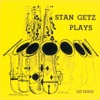
 Stan Getz
1951-1952
Melodie Jazz Classic
Original recording 1952
|
|
|
|
|
Additional information for "Stella By Starlight" may be found in:
|
|
|
 Thomas S. Hischak
The Tin Pan Alley Song Encyclopedia
Greenwood Press
Hardcover: 552 pages
(1 paragraph including the following types of information: film productions, history and performers.)
|
|
|
|
|
“Stella By Starlight” was included in these films:
- The Nutty Professor
(1965, Jerry Lewis singing to Stella
Stevens)
- Sabrina (1995, as
part of the track, “The Party Sequence,”
which includes “When Joanna Loved Me”/”The
Shadow of Your Smile”/”Call Me Irresponsible”/”Stella
by Starlight”)
|
| This section shows the jazz standards written by the same writing team. |
|
|
|
|
Comment Policy
- Your comments are welcome, including why you like
this tune, any musical challenges it presents, or additional background information.
- Jazz musicians, fans, and students of all ages use this website as an educational resource.
As such, off-topic, off-color, unduly negative, and patently promotional comments will be removed.
- Once submitted, all comments become property of JazzStandards.com.
By posting, you give JazzStandards.com permission to republish or otherwise distribute your comments in any format or other medium.
JazzStandards.com reserves the right to edit or remove any comments at its sole discretion.
|
|
| Click on any CD for more details at Amazon.com |
 Miles Davis
Highlights from the Plugged Nickel
Sony 67377
Original recording 1965
|
|
With his classic 1960s quintet, Miles deftly takes this tune in so many directions that it hardly seems as though it could be a single performance.
|
 Bill Evans
Conversations With Myself
Polygram Records
Original Recording 1963
|
|
This lush, elegant performance documents Evans’ controversial foray into overdubbing multiple piano parts. The controversy abated with time and with the awareness of how tastefully he was using this technology.
|
 Joe Henderson
State of the Tenor
1994 Blue Note 28874
Original recording 1985
|
|
Henderson plays tastefully and emotively in an interactive trio with bassist Ron Carter and drummer Al Foster.
|
|
 The Monty Alexander Quintet
Ivory & Steel
1990, Concord 4124
Original recording, 1980
|
|
Pianist Alexander’s Quintet features the fabulous Othello Molineaux on steel drums. His improvisations on “Stella by Starlight” are a highlight of the CD which contains jazz compositions by John Coltrane, Miles Davis, Nat Adderley, and Milt Jackson.
|
 Chris Connor
Sings Lullabies of Birdland
Rhino/Wea
|
|
This CD combines two marvelous 10-inch LP’s which Connor recorded in 1953 plus a few big band sides. “Stella” is from the Lullabys for Lovers LP with bassist Vinnie Burke’s unusual quartet of accordion, guitar and drums embellished by the flute and clarinet work of Ron Odrich (whose name is misspelled on the original LP). The group swings the tune lightly and Connor’s sensual alto lends the song intimacy and joy. Lovely improvisations by Odrich and accordionist Don Burns add to the uniqueness of this rendition.
|
|
 Tony Bennett
Jazz
1990 Sony 40424
Original recording 1964
|
|
Vocalist Bennett and orchestra lend a gentle swing to “Stella by Starlight.”’
|
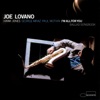
 Joe Lovano
I'm All For You
2004, Blue Note 91950
|
|
Saxist Lovano delivers “Stella by Starlight”’ with reverence yet still manages to tweak its core to give it new passion. This quartet recording, featuring the great Hank Jones on piano, was played live to disc.
|
|
|
|