|
|
|
| “Sinatra enjoyed a succession of several dozen hits with the Dorsey band, his first being the ballad ‘Polka Dots and Moonbeams’...” |
|
 |
|
- JW
|
|
| |
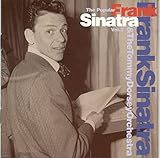
The 1939 recording of “All or Nothing at All” is sometimes credited as Frank Sinatra’s first hit, but in actuality it didn’t make the charts until its re-release four years later in 1943. Harry James had hired Frank Sinatra after hearing him on a New York radio station, and they recorded the song shortly before Sinatra left to join Tommy Dorsey and His Orchestra in 1940. Sinatra enjoyed a succession of several dozen hits with the Dorsey band, his first being the ballad “Polka Dots and Moonbeams” which hovered at eighteenth place on the charts for one week. In 1942 Sinatra struck out on his own, appearing that year on the charts with “Night and Day.”
|
|
| |
|
| |
|
In the late 1930’s and throughout the 1940’s Johnny Burke and Jimmy Van Heusen wrote mostly for Bing Crosby, and Crosby’s films and were so successful that they became know as the Gold Dust Twins. Not all their compositions were written for films. “Polka Dots and Moonbeams” and “Imagination” (1939) were both written for the Tommy Dorsey band, and neither had any screen affiliation.
|
| |
| |
|
| |
|
|
| |
| |
|
| |
|
|
|
|
|
More information on this tune... |
|
|
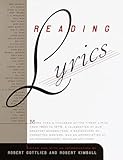 Robert Gottlieb, Robert Kimball
Reading Lyrics
Pantheon
Hardcover: 736 pages
(This book contains a short biography of Johnny Burke and over eight pages of his lyrics, including those for “Polka Dots and Moonbeams.”)
|
|
|
|
See the Reading and Research page for this tune for additional references. |
|
- Jeremy Wilson
|
|
| This section suggests definitive or otherwise significant recordings that will help jazz students get acquainted with
“Polka Dots and Moonbeams.” These recordings have been selected from the Jazz History and
CD Recommendations sections.
|
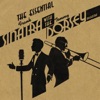
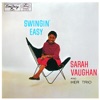
Frank Sinatra’s 1940 recording of “Polka Dots and Moonbeams” is one of his best ballad performances and perhaps the best-loved version of the song. Sarah Vaughan’s tender 1957 version ( Swingin' Easy) represents a very different approach, but an equally effective one. The influential ballad style of guitarist Wes Montgomery, meanwhile, is well represented on a landmark performance of the tune from 1960 ( The Incredible Jazz Guitar of Wes Montgomery).
Noah Baerman - Jazz Pianist and Educator
|
While there is no doubt that “Polka Dots and
Moonbeams” has an appealing melody, it is a wonder
that the song is so often performed with lyrics
as corny as they are. William Zinsser in
Easy to Remember: The Great American Songwriters
and Their Songs describes the words as “…too
cute for any but the strongest stomach…” He may
have been referring to lyrics such as:
I saw polka dots and moonbeams
sparkled on a pug-nosed dream
and
…in a cottage, built of lilacs
and laughter I know the meaning, of the words:
“ever after.”
The literal meaning of the lyrics, however, may
be somewhat irrelevant to a vocalist. In
Singing Jazz: The Singers and Their Styles,
by Bruce Crowther and Mike Pinfold, vocal artist
Stacey Kent is quoted as saying,
If I love the feel or the
melody of a song, it might not matter what the
lyric is. Of course, the lyric matters! But
I almost feel that I can make any lyric work…I
can sing “Polka Dots and Moonbeams” earnestly
and honestly, without even bothering to think
that I myself might not ask a pug-nosed dream,
dressed in polka dots, to dance.
-JW
|
Musical analysis of
“Polka Dots and Moonbeams”
|
| Original
Key |
F major;
false key change to A major in the bridge |
| Form |
A1 – A2 –
B – A2 |
| Tonality |
Primarily
major |
| Movement |
It moves
primarily step-wise, ascending and descending,
with occasional leaps and skips; melodic
contour is very wave-like. |
|
Comments
(assumed
background)
|
|
This is not one of Van Heusen’s more sophisticated
pieces; however, because of its relative
simplicity, jazz performers have been able
to use substitutions and extended harmonies.
The harmonic sequence in the first half
of “A” and the entirety of “B” is based
on I – vi – ii7 – V7 – I (“Blue
Moon,” “Heart
And Soul”). Contemporary players have
substituted iii for I in mm. 3-4 of “A”.
In the second half of “A,” the ii7 proceeds
to III7 as a dominant, leading to vi. Today,
a vii˚7 is usually inserted before the III7
(Dm7b5 - G7 in the original key). On its
way back to the tonic, Van Heusen used a
rather tasteful and unusual sequence. Instead
of simply going vi – ii7 – V7 – I (which
works, but is bland sounding), the progression
ascends by step so that vi is followed by
bVII9 (a substitution for V7 and a “common-tone
modulation,” since the 9th of this chord
corresponds to the root tone of the tonic
key). Modulation into the new key of section
“B”–a major third higher than the tonic
(from F major to A major in the original)--is
accomplished via a seventh chord a half
step lower than I (vii7 functioning as V7
of the new key). Returning to the tonic
key for the final “A” is easily accomplished
through the cycle of fifths.
|
|
K. J. McElrath - Musicologist for JazzStandards.com |
|
Gil Evans, the masterful arranger for Miles Davis,
rose to prominence arranging for band leader/pianist
Claude Thornhill, and his 1947 arrangement of “Polka
Dots and Moonbeams” illustrates why his talents
appealed to Miles.
This was also a favorite number of tenor sax
giant Lester Young. He recorded it several times,
first in 1949 with pianist Hank Jones, bassist Ray
Brown, and drummer Buddy Rich. In an interesting
reunion with former boss Count Basie, he recorded
a live version at the 1957 Newport Jazz Festival.
Two interesting sessions from May 7, 1957, feature
trumpeter Donald Byrd playing “Polka Dots and Moonbeams.”
The first is a quartet session led by Byrd; the
second is led by pianist Elmo Hope and has John
Coltrane on tenor saxophone.
Chris Tyle - Jazz Musician and Historian
|
Additional information for "Polka Dots and Moonbeams" may be found in:
|
|
|
Robert Gottlieb, Robert Kimball
Reading Lyrics
Pantheon
Hardcover: 736 pages
(Includes the following types of information: song lyrics.)
|
|
|
|
|
“Polka Dots and Moonbeams” was included in these films:
- Hannah and Her Sisters (1986,
as part of a medley by Dick Hyman)
- The Sensible Thing (1996)
Interestingly, “Polka Dots and Moonbeams” was
almost included in the 23-song soundtrack of the
Oscar-nominated, 1995 documentary
A Great Day in Harlem. First-time producer
Jean Bach found that one song could cost 20 percent
of her film’s $500,000 budget. In the International
Herald Tribune she is quoted as saying, “The
publisher wanted $100,000 for Lester Young playing
‘Polka Dots And Moonbeams,’ so we dropped that one.” |
|
|
|
Comment Policy
- Your comments are welcome, including why you like
this tune, any musical challenges it presents, or additional background information.
- Jazz musicians, fans, and students of all ages use this website as an educational resource.
As such, off-topic, off-color, unduly negative, and patently promotional comments will be removed.
- Once submitted, all comments become property of JazzStandards.com.
By posting, you give JazzStandards.com permission to republish or otherwise distribute your comments in any format or other medium.
JazzStandards.com reserves the right to edit or remove any comments at its sole discretion.
|
|
| Click on any CD for more details at Amazon.com |
 Frank Sinatra, Tommy Dorsey Orchestra
The Essential Frank Sinatra with the Tommy Dorsey Orchestra (2CD)
RCA
Original Recording 1940
|
|
Sinatra presents perhaps the definitive vocal rendition of this song with the expert backing of the Tommy Dorsey Orchestra. Sinatra’s wry delivery fits well with the lighthearted nature of the song.
|
|
 Sarah Vaughan
Swingin' Easy
1992 Polygram 14072
Original recording 1954
|
|
The incomparable vocalist delivers a lovely rendition of the song within an intimate trio setting.
|
 Wes Montgomery
The Incredible Jazz Guitar of ...
2003, Riverside
Original recording, 1960
|
|
Hard bop guitarist Montgomery set the standard for not only the song but also the style of a generation of jazz guitarists that would follow. His lyrical version is West Coast laid-back. Note: The sound quality of the original CD release was not even as good as the LP. Be sure and get the audio CD referred to here.
|
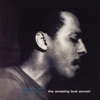
 Bud Powell
The Amazing Bud Powell, Vol. 2
Blue Note Records
Original recording 1953
|
|
Powell is best known for his jaw-dropping pyrotechnics, but his Tatum-inspired ballad playing was significant as well. Here he gives a gentle, lush performance in a trio with bassist George Duvivier and drummer Art Taylor.
|
 Chet Baker
Chet Baker In New York
1991 Original Jazz Classics 207
Original recording 1958
|
|
Baker, known to many as a vocalist, sticks to the trumpet here, giving a wonderful interpretation of the melody, followed by a lyrical improvisation. Pianist Al Haig also has ample space to shine.
|
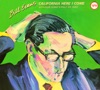
 Bill Evans
California Here I Come
2004 Verve 268102
Original recording 1967
|
|
This creative, super-tight performance documents pianist Evans at a gig at New York’s Village Vanguard alongside his new band member Eddie Gomez on bass and his old friend “Philly” Joe Jones on drums.
|
 Cassandra Wilson
Blue Skies
2002 Winter & Winter 919018
Original recording 1988
|
|
Thirty years after Sarah Vaughan's version, Cassandra Wilson gives the song a refreshing take. Wilson and trio allow themselves to explore while respecting the past, turning the tune into a modern, swinging waltz.
|
 Oscar Peterson
Romance: The Vocal Stylings of Oscar Peterson
Phantom
Original recording, 1956, Verve
|
|
If you’re feeling flush and can spring for an import, you won’t be sorry about this one. With the backing of Herb Ellis and Ray Brown, Peterson sings and plays a dozen standards, including “But Not for Me” and “Spring Is Here.” Purportedly he was told to give up singing because he sounded too much like Nat “King” Cole. This is his only vocal album.
|
|
|
|