|
|
|
| “Carmichael’s easygoing delivery and everyman drawl are offset by the sophistication of a band including such luminaries as Art Pepper and Jimmy Rowles.” |
|
 |
|
- Ben Maycock
|
|
| |
In 1942 “Skylark” appeared on the pop chart four times. The first recording was by Glenn Miller and His Orchestra featuring vocalist Ray Eberle, and it rose to number seven. All told, the hit recordings were
- Glenn Miller (1942, Ray Eberle, vocal, #7)
- Harry James (1942, Helen Forrest, vocal, #11)
- Dinah Shore (1942, with Rosario Bourdon and His Orchestra, #5)
- Bing Crosby (1942, with John Scott Trotter and His Orchestra, #14)
|
| |
| |
|
| |
|
|
| |
| |
|
| |
|
|
|
| |
|
| |
|
Hoagy Carmichael originally wrote the composition that would become “Skylark” for a musical about his deceased friend, Bix Beiderbecke. The song’s melody is said to have been based on Beiderbecke solos, at least the phrasing, a claim supported by the composition’s original title, “Bix Lix” (“Bix Licks”). Though the musical did not get produced, Carmichael reworked the composition and passed the melody on to Johnny Mercer who, some months later, called Hoagy and sang him “Skylark.” By that time Carmichael had forgotten he wrote it!
|
| |
| |
|
| |
|
|
| |
| |
|
| |
|
Young Man with a Horn was to have been the title for the Beiderbecke musical, the same as the1938 novel by Dorothy Baker that was partially based on Beiderbecke’s life. In 1950 Warner Brothers produced the film Young Man with a Horn, based on Baker’s novel and starring Kirk Douglas, Lauren Bacall, and Doris Day. In the film Douglas portrays a trumpet player (dubbed by Harry James) in a downhill battle with alcohol after he marries a wealthy neurotic played by Bacall. Hoagy Carmichael narrates the tale as well as playing a substantial role as Douglas’ piano playing friend. Movie critics generally find something to like about the film and are almost unanimous in their praise for the musical score, which includes many standards.
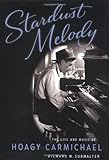
“Skylark” was the second in what Richard Sudhalter in his Carmichael biography Stardust Melody: The Life and Music of Hoagy Carmichael calls Carmichael’s “musical aviary.” First came “Mr. Bluebird” (1935) with lyrics by Carmichael, and finally there was “Baltimore Oriole” (1942) with lyrics by Paul Francis Webster (“I Got It Bad (and That Ain’t Good”).
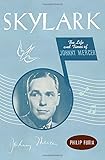
In his Mercer biography titled Skylark: The Life and Times of Johnny Mercer, Philip Furia explains the yearning expressed in “Skylark” as a voicing of the lyricist’s longing for Judy Garland with whom he had a stormy affair. Mercer told a friend that he wrote “I Remember You” for Garland and that “One for My Baby” (1943) bemoaned her loss.
Johnny Mercer claimed that “Skylark” was not inspired by Percy Bysshe Shelley’s (1792-1822) poem, “To a Skylark,” although the similarities cannot be ignored. Both men were sad geniuses who turned to the skylark for answers: Mercer, with regard to romance queries, “Won’t you tell me where my love can be?” Shelley, with broader concerns, requests, “Teach me half the gladness, That thy brain must know...”
|
|
|
|
More information on this tune... |
|
See the Reading and Research page for this tune for additional references. |
|
- Jeremy Wilson
|
|
| This section suggests definitive or otherwise significant recordings that will help jazz students get acquainted with
“Skylark.” These recordings have been selected from the Jazz History and
CD Recommendations sections.
|
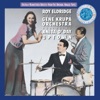
Anita O’Day and Roy Eldridge star on one of the definitive recordings of “Skylark,” a 1941 classic recorded by Gene Krupa’s band ( Uptown). Hoagy Carmichael’s own 1956 recording of “Skylark” ( Hoagy Sings Carmichael) is a classic example of his and a great chance to hear his own conception of the tune. Meanwhile, Freddie Hubbard stars on a modern classic with Art Blakey’s band ( Caravan), one of Hubbard’s most significant recorded ballads.
Noah Baerman - Jazz Pianist and Educator
|
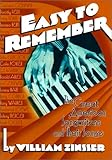
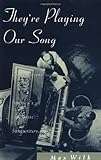
In
Easy to Remember: The Great American Songwriters
and Their Songs, William Zinsser
characterizes Carmichael’s composition as
“graceful and confident” and “matched by
lyrics that have all the right down-home
images…” He goes on to say, “its complex
bridge, making two changes of key in eight
bars, is a model of freshness and surprise.”
With a 2-bar introduction, no verse and
a 32-bar A1-A2-B-A3 form, Johnny Mercer’s
lyrics lead off each A section with the
word “Skylark” and follow with questions
about his romantic fate, ranging from “Won’t
you tell me where my love can be?” to the
final line, “Won’t you lead me there...”
Mercer’s phrases are rich with imagery (“a
meadow in the mist,” “a valley green with
spring,” “a blossom-covered lane”) and masterfully
support the changing moods of Carmichael’s
composition. -JW
|
Musical analysis
of “Skylark”
|
|
Original Key |
Eb
major with false key change to Ab
in thebridge |
|
Form |
A1
– A2 – B – A3 |
|
Tonality |
Primarily
major; some “minor blues” tonality
in mm. 4-5 of “B” |
|
Movement |
There
are upward leaps, arpeggiated descents
and ascents, and some step-wise
movement throughout. The melody
seems to soar (like the lark?) |
|
Comments
(assumed
background)
|
|
Like “Star
Dust,” this melody appears to
have been strongly influenced by
Bix Beiderbecke (years after his
demise). The melody soars up and
down over the range of a tenth,
using all manner of embellishing
tones and even some “blue notes.”
Harmonic progression contains familiar
elements: “A” begins with a relatively
simple I – V7 – I – IV – I – IV
– I. An ascending bass line, creating
inversions, and the use of a coloristic,
half-diminished, passing chord between
the third I and second IV add sophistication
and complexity. A vi – II7 – ii7–
V7 leads into the first ending,
where a I – II7 – V7 turnaround
takes place. The second ending is
a simple I – V7 – I; however, the
melody over V7 contains the #9th,
giving it more color. (Carmichael
wrote a Bb7(+5) here.) The I chord
adds a 7th, becoming a V7 of the
new key of the subdominant(in the
original, Eb – Ab).
Section “B” uses an ascending
I – vii˚7/ii –ii7 – V7 sequence,
returning to the I. It then modulates
to the relative minor (F minor in
the original), using a viiø7 – III7
modulation and going into the dark,
“bluesy” section of the song. Soon,
however, the minor cloud begins
to break as F minor makes its way
back to Ab major, and then–SURPRISE!
Without any warning, the sun bursts
out in the form of a sudden key
shift to G major. After a brief
I – vi – II7 – V7 – I in this new
“key of the moment,” there is yet
another direct modulation back to
the original tonic of Eb by way
of a Bb7.
|
|
K. J. McElrath - Musicologist for JazzStandards.com |
|
Hoagy Carmichael’s lovely melody is given
a first-class treatment in a 1941 recording
by drummer Gene Krupa’s big band. (Krupa
had played and recorded with cornetist Bix
Beiderbecke, whose playing inspired Carmichael’s
composition.)
Jazz great Roy Eldridge on trumpet opens
up Krupa’s version with a beautifully performed
half-chorus solo, lightly insinuating the
melody yet avoiding some of the high note
excesses that occasionally mar his playing.
Following his solo is a lovely vocal by
singer Anita O’Day, who had her first important
gig with Krupa and then went on to become
one of the top vocalists in jazz. Although
the band’s arrangement of the tune is not
credited, it is top notch.
Chris Tyle - Jazz Musician and Historian
 Roy Eldridge, Anita O'Day with Gene Krupa's Orchestra
Uptown
Sony 45448
Original recording 1941
|
|
|
|
|
Additional information for "Skylark" may be found in:
|
|
|
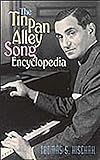 Thomas S. Hischak
The Tin Pan Alley Song Encyclopedia
Greenwood Press
Hardcover: 552 pages
(1 paragraph including the following types of information: history, music analysis and performers.)
|
|
|
|
|
 Robert Gottlieb, Robert Kimball
Reading Lyrics
Pantheon
Hardcover: 736 pages
(Includes the following types of information: song lyrics.)
|
|
|
|
|
“Skylark” was included in these films:
- Torch Song Trilogy
(1988, Marilyn Scott)
- Midnight in the Garden of
Good and Evil (1997, k.d. lang)
And on stage:
- Dream: The Johnny Mercer Musical
(1997) Broadway revue
|
|
|
|
Comment Policy
- Your comments are welcome, including why you like
this tune, any musical challenges it presents, or additional background information.
- Jazz musicians, fans, and students of all ages use this website as an educational resource.
As such, off-topic, off-color, unduly negative, and patently promotional comments will be removed.
- Once submitted, all comments become property of JazzStandards.com.
By posting, you give JazzStandards.com permission to republish or otherwise distribute your comments in any format or other medium.
JazzStandards.com reserves the right to edit or remove any comments at its sole discretion.
|
|
| Click on any CD for more details at Amazon.com |
 Hoagy Carmichael
Hoagy Sings Carmichael
2000 Capitol 46862
Original recording 1956
|
|
Carmichael is heard here singing one of his classic tunes in an unusually jazz-oriented context, with a terrific band featuring alto saxophonist Art Pepper and pianist Jimmie Rowles.
|
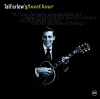
 Tal Farlow
Tal Farlow's Finest Hour
2001 Verve 549677
Original recording 1952
|
|
This recording features guitarist Farlow in the innovative trio of vibraphonist Red Norvo. By the time of this recording, Red Mitchell had replaced Charles Mingus on bass, but they still had some important music left in them. On this performance Farlow coaxes some surprising sounds from his guitar.
|
 Paul Motian
On Broadway, Vol. 3
2004 Winter and Winter 919055
Original recording 1991
|
|
Drummer Motian has made quite a bit of stirring music with his unorthodox trio featuring guitarist Bill Frisell and saxophonist Joe Lovano. On this recording, the group is augmented by Charlie Haden on bass and by Lee Konitz, who offers some wonderful soprano saxophone on their performance of “Skylark.”
|
|
 Stan Getz & Jimmy Rowles
The Peacocks
2000 Koch 7867
Original recording 1975
|
|
Getz plays beautifully on this ballad performance, as does his duet partner, pianist Jimmie Rowles, who is featured prominently throughout this album.
|
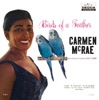
 Carmen McRae
Birds of a Feather
2002 Verve 314589515
Original recording 1958
|
|
Vocalist Carmen McRae kicks off this bird-themed album with a weighty, eloquent version of "Skylark."' McRae's voice is in top form and her interpretation of the song makes it one of the finest.
|
 Art Blakey & the Jazz Messengers
Caravan
1991 Orig. Jazz Classics #38
Original recording, 1962, Riverside Records
|
|
Freddie Hubbard's moving trumpet solo is the highlight of this poignant reading from one of the finest hard bop groups in jazz history.
|
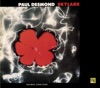
 Paul Desmond
Skylark
1997, Sony 65133
Original recording, 1974, Legacy
|
|
Alto saxophonist Desmond includes two versions of the title track. Both readings feature Desmond's clear, bright tone and gift for taking a song through some intriguing musical hoops.
|
 Kenny Barron
Green Chimneys
1994 Criss Cross 1008
Original recording 1983
|
|
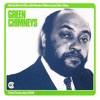
Most of this album presents a 1983 trio session with Ray Drummond and Ben Riley, but a bonus on the CD version is this solo piano rendition of “Skylark” from 1987. Barron’s gentle touch and lyricism are on full display here.
|
 Winard Harper
Trap Dancer
1999, Savant 2013
|
|
This version of "Skylark"' features trumpeter Patrick Rickman playing melody while saxist J.D. Allen weaves lines around him. Drummer Harper is at his most subtle, with Eric Revis on bass and George Cables at the piano.
|
|
|
|