|
|
|
| “... the song was a genuine emotional outburst and, possibly, this genuineness accounted for its subsequent standard status.” |
|
 |
|
- Vernon Duke
|
|
| |
Vernon Duke’s composition was written for the 1934 show Thumbs Up! and introduced by J. Harold Murray. Thirteen years later it rose to number 27 on the pop charts thanks to a fine vocal version by Frank Sinatra.
|
|
| |
|
| |
|
Composer Vernon Duke wrote three pieces for Thumbs Up!: a dance number for Hal Le Roy to tap to, a tango for J. Harold Murray, and the finale, “Autumn in New York.” Only the latter remained in the show which opened on December 27, 1934, and closed five months later. In his autobiography Passport to Paris Duke described the show as “a decent, average revue [that] received decent, average notices.”
|
| |
| |
|
| |
|
Duke wrote “Autumn in New York” while vacationing in Westport, Connecticut. Again from his autobiography he discusses the “premier” of the tune: “Both the long ‘conversational’ verse and the constantly modulating refrain contained not a particle of what the Harms (publishing company) moguls called ‘popular appeal’; the song was a genuine emotional outburst and, possibly, this genuineness accounted for its subsequent standard status. I played it at one or two Westport get-togethers and found the listeners retreating to the bar in the middle of the verse.”
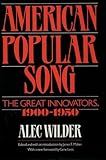
It’s this very same verse that composer Alec Wilder, in his book American Popular Song, The Great Innovators 1900-1950, praises. “The verse may be the most ambitious I’ve ever seen. It begins simply enough, but halfway through it’s almost as if the other musical side of the man couldn’t be silent and the rest of the verse was finished by Dukelsky.” Here Wilder is alluding to composer Vernon Duke’s “other” life as a composer of extended works. Wilder continues: “It’s extremely difficult and very lush. But I find it very interesting, and I approve of its experimental nature. After all, it’s in the verse that the writer should be freer, for in practical terms it’s the chorus that’s being sold or promoted.”
But then again, perhaps the problem with the song was that it was too far ahead of its time in 1934. The big bands of Harry James and Charlie Spivak played the tune on radio broadcasts in 1944, and there was a 1946 recording made for Musicraft Records by vocalist Louanne Hogan. But it wasn’t until 1947 with recordings by vocalists Jo Stafford and Frank Sinatra that the tune made any kind of splash.
Duke’s lyrics to the verse could easily be the message from a post card: “It’s time to end my lonely holiday, and bid the country a hasty farewell.” He goes on to mention returning to a Manhattan hotel “on the 27th floor, looking down on the city I hate and adore!” The lyrics of the chorus are a joy, filled with picturesque writing: “glittering crowds and shimmering clouds in canyons of steel” and in the second chorus “jaded roues and gay divorcees, who lunch at the Ritz,” all of which explain why New York in autumn is so special.
|
|
|
|
| This section suggests definitive or otherwise significant recordings that will help jazz students get acquainted with
“Autumn in New York.” These recordings have been selected from the Jazz History and
CD Recommendations sections.
|
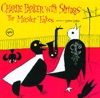
Charlie Parker’s, thanks to his 1952 version of “Autumn in New York” with strings (Charlie Parker with Strings: The Master Takes), stands as perhaps the definitive instrumental interpreter of the song. For a less densely-textured instrumental version, the Modern Jazz Quartet’s elegant recording from the following year is recommended (Complete Modern Jazz Quartet Prestige & Pablo Recordings). Among vocal recordings, the 1957 collaboration between Louis Armstrong and Ella Fitzgerald is a standout (Ella and Louis Again).
Noah Baerman - Jazz Pianist and Educator
|
Duke’s lyrics to the verse could easily be the message from a post card: “It’s time to end my lonely holiday, and bid the country a hasty farewell.” He goes on to mention returning to a Manhattan hotel “on the 27th floor, looking down on the city I hate and adore!” The lyrics of the chorus are a joy, filled with picturesque writing: “glittering crowds and shimmering clouds in canyons of steel” and in the second chorus “jaded roues and gay divorcees, who lunch at the Ritz,” all of which explain why New York in autumn is so special.
- Chris Tyle
|
Musical analysis of “Autumn in New York”
|
|
Original Key
|
F major
|
|
Form
|
A1 - B - A2 - C
|
|
Tonality
|
Primarily major; minor tonality occurs in the penultimate measures of “A2” and “C.”
|
|
Movement
|
Arpeggiated in both directions over the range of a 10th. Some stepwise movement and chromatic embellishment.
|
|
Comments (assumed background)
|
|
On the surface, this melody is of simple construction. The main motif is based on a descending pentatonic scale over I followed by an ascending IV arpeggio. This is combined with a very sophisticated ascending harmonic progression (that might have been a prototype for Neal Hefti’s “Cute”). Vernon Duke follows up with more of the same in “B”; fragments of the F and Ab pentatonic scale over Gm7 and Bbm7 harmonies lead to a brief false key change to Ab major, a pleasing surprise to the ear. He then turns to C minor by way of a common-tone modulation using a iiø7 of the new “key of the moment” (in this case, Ab6 - Dø7, a.k.a. Dm7(b5)). C minor becomes C major, and from there it is easy to return to the original tonic key.
In the second half of “A2,” Duke replaces the ii7 (Gm7) chord with a iv chord (Cm), which becomes the ii7 of yet another new “key of the moment,” Bb minor. “C,” which starts out in F minor, contains yet one more harmonic surprise when he takes the song to Db major via an Ab7(#5), accomplished by means of lowering the F a half-step to create the pivot chord. Improvisers will find endless possibilities with this favorite.
|
|
K. J. McElrath - Musicologist for JazzStandards.com
|
|
How fortunate it is that alto saxophonist
Charlie Parker recorded so many lovely ballads
on his “with strings” albums. His unerring
taste may have led to the resurrection of
many a great popular song. Bird’s masterly
approach on these selections shows what
a brilliant jazzman he was.
Stan Kenton’s Orchestra was a powerful
force in jazz in the 1950s; his band became
a kind of “training camp” for many musicians
who went onto successful careers in the
Hollywood studio and recording industry.
Stan’s recording of “Autumn in New York”
features a Bill Russo arrangement and trumpeter
Buddy Childers.
The Three was the name given to a group
composed of the creme de la creme of West
Coast “Cool” Jazz. Made up of Shorty Rogers
on trumpet, Shelly Manne on drums (both
ex-Kenton sidemen), and Jimmy Giuffre on
baritone sax, the unusual group does what
might be one of the most engaging versions
of “Autumn in New York.”
Chris Tyle - Jazz Musician and Historian
|
Additional information for "Autumn in New York" may be found in:
|
|
|
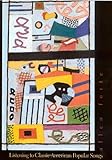 Allen Forte
Listening to Classic American Popular Songs
Yale University Press; Book & CD edition
Hardcover: 219 pages
(6 pages including the following types of information: history, lyric analysis, music analysis and song lyrics. (Book includes CD).)
|
|
|
|
|
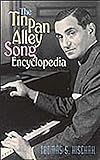 Thomas S. Hischak
The Tin Pan Alley Song Encyclopedia
Greenwood Press
Hardcover: 552 pages
(1 paragraph including the following types of information: film productions, history and performers.)
|
|
|
|
|
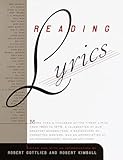 Robert Gottlieb, Robert Kimball
Reading Lyrics
Pantheon
Hardcover: 736 pages
(Includes the following types of information: song lyrics.)
|
|
|
|
|
| This section shows the jazz standards written by the same writing team. |
|
|
|
|
Comment Policy
- Your comments are welcome, including why you like
this tune, any musical challenges it presents, or additional background information.
- Jazz musicians, fans, and students of all ages use this website as an educational resource.
As such, off-topic, off-color, unduly negative, and patently promotional comments will be removed.
- Once submitted, all comments become property of JazzStandards.com.
By posting, you give JazzStandards.com permission to republish or otherwise distribute your comments in any format or other medium.
JazzStandards.com reserves the right to edit or remove any comments at its sole discretion.
|
|
| Click on any CD for more details at Amazon.com |
 Billie Holiday
Lady in Autumn: The Best of the Verve Years
Polygram Records
Original Recording 19
|
|
Holiday’s interpretation of “Autumn in New York” is tender, clear and unsentimental. The band is terrific as well, with Oscar Peterson’s piano a particular standout.
|
 Bud Powell
The Amazing Bud Powell, Vol. 2
Blue Note Records
Original recording 1953
|
|
This inventive trio performance with George DuVivier and Arthur Taylor is rich, heavily arranged and somewhat edgy compared to most of Powell’s ballads.
|
 The Modern Jazz Quartet
Complete Modern Jazz Quartet Prestige & Pablo Recordings
Prestige
Original recording 1953
|
|
This elegant rendition of “Autumn in New York” combines several of the Modern Jazz Quartet’s strengths, from the intricately arranged introduction and coda to the more loosely structured and endlessly inventive soloing of vibraphonist Milt Jackson.
|
 Ella Fitzgerald, Louis Armstrong
Ella & Louis Again (Dig)
Umvd Labels
Original Recording 1956
|
|
Fitzgerald and Armstrong each take a turn at the melody here, eventually singing together as the song wraps up, and unsurprisingly the results are wonderful. As a bonus, Armstrong plays a half-chorus of trumpet.
|
 Sun Ra
The Sun Ra Sextet at the Village Vanguard
Rounder
Original recording 1993
|
|
Sun Ra was always an inventive iconoclast, but with one foot in more traditional sounds. Most of the tradition here is provided by the soulful and melodic playing of saxophonist John Gilmore, with Ra himself offering some quirky interjections on synthesizer.
|
|
 Buddy Defranco
Mr Clarinet (Special Packaging)
Umvd Labels
|
|
Clarinetist DeFranco offers up a great bebop interpretation of this song.Drummer Art Blakey, pianist Kenny Drew, and bassist Milt Hinton make up the ultimate rhythm section in support.
|
 Phineas Newborn Jr
Phineas' Rainbow
2001 Koch Jazz 8585
Original recording 1957
|
|
A dazzling display of technical ability marks this impetuous invention. Nimble-fingered pianist Newborn conducts a clinic on how to refashion a standard in a contemporary image.
|
 John Stetch
Heavens of a Hundred Days
2000 Justin Time 145
Original recording 2000
|
|
In a dramatic, breath-taking reading of the song, pianist Stetch runs the gamut from delicate touch to vigorous strike.
|
 The Hi-Lo's
Love Nest/All Over the Place
2001 Collectables 6694
Original recording 1960
|
|
The vocal quartet of The Hi-Lo’s combined extraordinary voices with musical creativity. Their reharmonization of “Autumn in New York” is set against an orchestra conducted by the great Marty Paich.
|
|
|
|