|
|
|
| “Guest vocalist Cassandra Wilson starts this one off smoky and sensual, but as the song progresses, so does the tempo.” |
|
 |
|
- Ben Maycock
|
|
| |
During the 1932 musical revue, Clowns in Clover, Walter Woolf King introduced “Don’t Blame Me” at Chicago’s Apollo Theater. Originally opening in 1927 at the Adelphi Theater in London, Clowns in Clover starred the husband and wife musical comedy team of Jack Hulbert and Cicely Courtneidge. The London engagement enjoyed great success and ran for 500 performances. While Noel Gay wrote the original score for Clowns in Clover, Dorothy Fields and Jimmy McHugh added songs such as “Don’t Blame Me” for the Chicago run.
|
| |
| |
|
| |
|
The year after its Chicago debut Fields and McHugh recycled “Don’t Blame Me” into the score of the popular 1933 film Dinner at Eight. As a result, that film is often credited as the composition’s origin. The songwriting team also wrote a promotional title song for the film that was sung by Frances Langford at the premier and became a hit for Ben Selvin and His Orchestra with vocalist Helen Rowland.
|
| |
| |
|
| |
|
|
| |
| |
|
| |
|
Guy Lombardo was the first to have a hit recording with “Don’t Blame Me,” entering the pop charts in July of 1932 and rising to number nine. The best remembered recording of that era, however, was by Ethel Waters, accompanied by members of the Dorsey Brothers orchestra.
All told, the major hit recordings of “Don’t Blame Me” were:
- Guy Lombardo and His Royal Canadians (1933, Carmen Lombardo, vocal, #9)
- Ethel Waters (1933, with Bunny Berigan, Tommy and Jimmy Dorsey, #6)
- Charles Agnew and His Stevens Hotel Orchestra (1933, #13)
- Nat “King” Cole (1948, a re-release from a 1944 Nat “King” Cole Trio recording, #21)
- The Everly Brothers (1960, #20)
|
|
| |
|
| |
|
“Don’t Blame Me” has long been a favorite of musicians and music fans, jazz or otherwise. Paul McCartney says of John Lennon,
One of John’s favorite songs was “Don’t Blame Me.” People think of John Lennon as a peacenik, or a crazy man, or a great man, but they never associate him with the kinds of songs his mum taught him. His mum was a musical lady. She taught him banjo chords. I had to change him to guitar chords. We used to love “Little White Lies” and “Don’t Blame Me.”
And Leslie Uggams says,
[It was] on the movie set of Two Weeks in Another Town. The movie starred Kirk Douglas; I sang his favorite song in it. The song was “Don’t Blame Me.” Liza got me the movie. Her dad, Vincent Minnelli, directed it. What a friend!
Dorothy Fields and Jimmy McHugh wrote “Don’t Blame Me” during their transition from Broadway shows to Hollywood films. Their stage contributions produced such hits as “I Can’t Give You Anything But Love” (1929), “Diga Diga Doo” (1928), “In A Great Big Way” (1929), “On the Sunny Side of the Street” (1930), “Exactly Like You” (1930), and “Blue Again” (1931). Fields and McHugh’s success continued with Hollywood scores producing “I Feel A Song Coming On,” “I’m in the Mood for Love,” and “Hooray for Love,” all in 1935.
|
|
|
|
More information on this tune... |
|
See the Reading and Research page for this tune for additional references. |
|
- Jeremy Wilson
|
|
| This section suggests definitive or otherwise significant recordings that will help jazz students get acquainted with
“Don't Blame Me.” These recordings have been selected from the Jazz History and
CD Recommendations sections.
|
Nat “King” Cole recorded “Don’t Blame Me” as an instrumental with his trio several times, but it was his trio recording from 1944 with vocals ( For Sentimental Reasons: 25 Early Vocal Classics) that would eventually become a hit when reissued four years later and which is an all-time classic among vocal versions of the tune. Among modern jazz fans and musicians Charlie Parker’s 1947 performance of “Don’t Blame Me” ( Complete Dial Sessions Master Takes) is a definitive version of the tune. People wanting to explore Parker’s ballad style will find this to be an excellent starting point.
Noah Baerman - Jazz Pianist and Educator
|
“Don’t Blame Me” is written in A1-A2-B-A2
form, and the title phrase is used to open
the song and close the A sections. Putting
a twist on the phrase “Don’t Blame Me,”
Fields’ lyrics profess love and passion,
saying in short, “Don’t blame me for falling
in love with you”; instead, “blame all your
charms that melt in my arms.”
In his book
The Poets of Tin Pan Alley: A History of
America’s Great Lyricists, Philip
Furia comments on the lyrics of “Don’t Blame
Me,” saying the song “… marks the shift
to a more languorously erotic style.” He
goes on to say that each of the three words
in the phrase, “Don’t Blame Me” offers “…a
different open vowel — o, a, e, — to provide
a perfect vehicle for the torchiest of singers.”
-JW
|
Musical analysis
of “Don’t Blame Me”
|
|
Original Key |
C
major |
|
Form |
A1
– A2 – B – A2 |
|
Tonality |
Primarily
major |
|
Movement |
“A”
consists of upward skips alternating
with step-wise descents. “B” rises
chromatically before a skip upward;
the downward leap of a seventh then
arpeggiates up before a final chromatic
descent into the last “A”. |
|
Comments
(assumed
background)
|
|
A number of chord substitutions
and delayed resolutions keep this
tune interesting. Many of the melody
tones are the “color” tones or harmonic
extensions of the underlying chords.
Of special interest are the chromatic
“lower neighbor tones” occurring
in the first two measures of “B”.
In the first measure of this section,
this seemingly creates tension between
the minor iv and its parallel major.
Functionally, however, the entire
measure is really major. If the
clashing between the minor third
of the melody and the major third
of the chord causes confusion, the
accompanist might consider using
common-tone diminished chords on
beats one and three in the measure
(or omit the third). The second
measure of “B” is different; the
melody alternates between the flatted
and the natural fifth. In this context,
the flatted fifth (Bb) cannot be
anything other than a color tone.
The bass should be confined to the
root and third here. |
|
K. J. McElrath - Musicologist for JazzStandards.com |
|
Pianist
Teddy Wilson’s 1937 solo version resurrected
this 1933 tune. It was recorded during a
busy time in his career when he was working
with the
Benny Goodman Trio and leading recording
sessions backing
Billie Holiday.
Tenor saxophonist Coleman Hawkins, not
to be outdone by his “protege” Ben Webster,
made his version just months after Webster’s
and is accompanied by a group which includes
Teddy Wilson.
Another Goodman alumnus, pianist Mel
Powell, was a member of Major
Glenn Miller’s Army Air Force band in
Europe during World War II. In Paris, just
days after VE Day in May 1945, he made a
solo version, no doubt as tribute to Wilson.
Powell went on to compose and teach in the
classical field.
Chris Tyle - Jazz Musician and Historian
 Coleman Hawkins
1944
Classic 842
|
|
|
|
|
Additional information for "Don't Blame Me" may be found in:
|
|
|
 Thomas S. Hischak
The Tin Pan Alley Song Encyclopedia
Greenwood Press
Hardcover: 552 pages
(1 paragraph including the following types of information: film productions, history and performers.)
|
|
|
|
|
 Robert Gottlieb, Robert Kimball
Reading Lyrics
Pantheon
Hardcover: 736 pages
(Includes the following types of information: song lyrics.)
|
|
|
|
|
“Don't Blame Me” was included in these films:
- Dinner at Eight (1933)
- Freddie Steps Out
(1946, Freddie Steward) Freddy Slack,
Charlie Barnet and His Orchestra
- The Big City (1948,
Betty Garrett, George Murphy)
- The Strip (1951, Vic
Damone)
- The Bad and the Beautiful
(1952, conflicting information)
- Bring Your Smile Along
(1955, Constance Towers)
- Two Weeks in Another Town
(1962, Leslie Uggams)
- Shoot the Moon (1982,
Helen Slayton-Hughes)
- Thelonious Monk - Straight,
No Chaser (1989, Thelonious
Monk)
- The Tic Code (1999,
Thelonious Monk)
And on stage:
- Clowns in Clover (1933,
Jeanette Loff) Chicago revue
- Sugar Babies (1979,
Ann Miller) Broadway
- Clue: The Musical
(1997, Cast) Off-Broadway
- Lucky in the Rain
(1997) Connecticut
|
| This section shows the jazz standards written by the same writing team. |
|
|
|
|
Comment Policy
- Your comments are welcome, including why you like
this tune, any musical challenges it presents, or additional background information.
- Jazz musicians, fans, and students of all ages use this website as an educational resource.
As such, off-topic, off-color, unduly negative, and patently promotional comments will be removed.
- Once submitted, all comments become property of JazzStandards.com.
By posting, you give JazzStandards.com permission to republish or otherwise distribute your comments in any format or other medium.
JazzStandards.com reserves the right to edit or remove any comments at its sole discretion.
|
|
| Click on any CD for more details at Amazon.com |
 Charlie Parker
Complete Dial Sessions Master Takes
Definitive/Disconforme SL
Original recording 1947
|
|
Bird’s tender interpretation of “Don’t Blame Me” is one of the definitive recordings of the tune and is a prime example of his ballad style.
|
 Ahmad Jamal
The Legendary Okeh and Epic Recordings
2005 Sony 93580
Original recording 1955
|
|
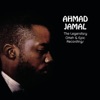
Out of print for years before its 2005 reissue, this classic performance swings elegantly and is a wonderful showcase for the influential work of Jamal’s drummer-less trio with Ray Crawford and Israel Crosby.
|
 Art Tatum
20th Century Piano Genius
1996 Polygram 31763
Original recording 1955
|
|
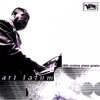
Tatum offers a relaxed interpretation of “Don’t Blame Me” that relies more on his rhythmic self-assurance than on his usual dazzling displays of technique.
|
 Jackie McLean
Capuchin Swing
2002 Blue Note 40033
Original recording 1960
|
|
McLean plays wonderfully on the rest of this album, but “Don’t Blame Me” is a tight, swinging trio feature for the rhythm section of Walter Bishop, Jr., Paul Chambers and Art Taylor.
|
|
 Thelonious Monk
Criss-Cross
2003, Sony
Original recording, 1963, Legacy
|
|
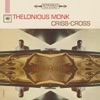
Monk is alone at his piano on this passionate reading of “Don’t Blame Me.”’ The mood is somber, and the playing dissonant, and Monk compellingly takes possession of yet another standard.
|
 Ben Webster
1944-1946
1999, Melodie Jazz Classics 1017
|
|
The tone is warm and relaxed on this great, mid-tempo reading of “Don’t Blame Me”’ with saxophonist Webster taking a meandering, full-bodied solo.
|
 Nat "King" Cole
For Sentimental Reasons: 25 Early Vocal Classics
ASV Living Era 5236
Original recording 1947
|
|
With his trio, featuring the brilliant Oscar Moore on guitar, Cole offers an infectious performance of “Don’t Blame Me,” showcasing both his voice and his piano.
|
 Terence Blanchard
Let's Get Lost
2001 Sony 89607
Original recording 2001
|
|
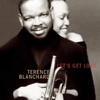
Guest vocalist Cassandra Wilson starts this one off smoky and sensual, but as the song progresses, so does the tempo. Blanchard’s red-hot trumpet fills all the space with some fantastic runs.
|
|
|
|