|
|
|
| Perhaps the most famous version of the tune was waxed in 1949 by saxophonist James Moody on a visit to Sweden. |
|
 |
|
- Chris Tyle
|
|
| |
This Dorothy Fields-Jimmy McHugh collaboration was written for the Paramount motion picture Every Night at Eight and introduced by vocalist Frances Langford in the film. Although Langford’s recording made the charts, it was the disc by Little Jack Little that bounced into the number-one slot.
- Little Jack Little and His Orchestra (1935, vocal, #1)
- Louis Armstrong and His Orchestra (1935, vocal, #3)
- Frances Langford (1935, vocal, #15)
- Leo Reisman and His Orchestra (1935, Frank Luther, vocal, #18)
- Billy Eckstine (1946, vocal, #12)
|
|
| |
|
| |
|
The songs for Every Night at Eight basically ended the successful collaboration between lyricist Dorothy Fields and Jimmy McHugh. The pair wrote one more song in 1935, “Lovely to Look At,” which was used in the film version of the Broadway musical Roberta, and they teamed up again briefly in 1947 for the first Radio City Music Hall production. Fields then paired up with veteran composer Jerome Kern and together they finished the music for Roberta. McHugh began a collaboration with Harold Adamson.
|
| |
| |
|
| |
|
|
| |
| |
|
| |
|
McHugh and Fields wrote a total of six numbers for Every Night at Eight. “I’m in the Mood for Love” and “I Feel a Song Comin’ On” were the two that made the biggest impact. Both numbers had success in the charts for 1935, and vocalist Frances Langeford’s record featured both tunes, her first big recording.
Many die-hard jazz fans felt that Louis Armstrong had deserted jazz by the late-1920s when he began concentrating on recording popular songs. Yet Armstrong realized the importance of being what would now be referred to as a “crossover” artist; that to continue to play jazz and be successful he had to make concessions to the Tin Pan Alley music machine. Considering some of the material that Louis recorded during his Decca Records period (1934-1945), “I’m in the Mood” was certainly a better song than many, and Armstrong had successfully recorded versions of other Fields-McHugh compositions, notably “On the Sunny Side of the Street” and “Exactly Like You” from 1930 and “Blue Again” from 1931. (And if we are to believe that Fields and McHugh wrote “I Can’t Give You Anything But Love,” rather than Fats Waller and Andy Razaf, then it could be included in the list.)
Armstrong’s version of “I’m in the Mood for Love,” more pop treatment than swing, did have an impact. As far away as France, the American ex-pat trumpeter Bill Coleman did a duo version with the superb pianist Herman Chittison.
Vocalist/bandleader Billy Eckstine, another crossover artist who, like Armstrong, was more jazz than pop, recorded a hit version in 1945. His big band included jazz giants Fats Navarro on trumpet, Gene Ammons on tenor sax, and Art Blakey on drums.
|
|
|
|
| This section suggests definitive or otherwise significant recordings that will help jazz students get acquainted with
“I'm in the Mood for Love.” These recordings have been selected from the Jazz History and
CD Recommendations sections.
|
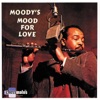
When studying “I’m in the Mood for Love” there are two “threads” that should ideally be explored. One is the comparatively straightforward interpretations of the melody, as perhaps best represented by Nat “King” Cole’s trio version with vocals from 1945 (Embraceable You) and Charlie Parker’s gorgeous interpretation with strings from 1950 (Complete Verve Master Takes). The other thread is the influential phenomenon that began with saxophonist James Moody’s brilliant 1949 ballad performance (The Very Best of Prestige Records: Prestige 60th Anniversary), which in turn led to his popular and influential 1956 recording with vocalese by Eddie Jefferson (Moody’s Mood for Love), who set the entirety of Moody’s original solo to words.
Noah Baerman - Jazz Pianist and Educator
|
Fields’ lyrics explain how the nearness of that certain someone puts one “in the mood for love.” It’s pretty typical songwriter material, moon and stars, rain and clouds, but as with most everything Fields touched, it’s splendidly crafted. Chris Tyle
Musical analysis of “I’m in the Mood for Love” | | Original Key | C major | | Form | A - A - B - A | | Tonality | Primarily major | | Movement | By step, scale-wise throughout 90% of the tune; some skips of a third. “A” sections end with a downward skip of a major sixth. “B” is a rising and falling scale pattern ending with an upward skip of a fourth, played twice, with the repetition beginning a major third higher while the harmony drops a half-step as it modulates to temporary minor tonality. | Comments (assumed background) | | “A” is a standard I - ii7 - V7 progression; the iii and vii°7/V7 in measure five of “A” are ornamental variations of this formula. The same can be said of the minor 6th chords in mm. 7-8 of “B” (actually minor chords with a flatted fifth); a pair of ii7 - V7 cadences would work just as well here but would sound far less interesting. | | K. J. McElrath - Musicologist for JazzStandards.com |
|
Tenor saxophone patriarch Coleman Hawkins’ all-star sessions from 1944 yielded an excellent version of “Mood” where Hawkins plays an unusually restrained, double-time solo.
Perhaps the most famous version of the tune was waxed in 1949 by saxophonist James Moody on a visit to Sweden. Moody’s version clearly shows the influence of Charlie Parker. Six years later, vocalist Eddie Jefferson would put lyrics to the tune and record it with Moody as “Moody’s Mood for Love.”
Two versions from 1950 by alto saxophone giant Charlie Parker find him in different settings. On the first, from April, he’s accompanied by a quartet including Hank Jones (piano), Ray Brown (bass), and Buddy Rich (drums). Not originally issued on Verve, it’s easy to hear why---the microphone picks up Bird moving around. The second version, with strings, is pure brilliance, and Bird is in top form.
Chris Tyle - Jazz Musician and Historian
|
Additional information for "I'm in the Mood for Love" may be found in:
|
|
|
| This section shows the jazz standards written by the same writing team. |
|
|
|
|
Comment Policy
- Your comments are welcome, including why you like
this tune, any musical challenges it presents, or additional background information.
- Jazz musicians, fans, and students of all ages use this website as an educational resource.
As such, off-topic, off-color, unduly negative, and patently promotional comments will be removed.
- Once submitted, all comments become property of JazzStandards.com.
By posting, you give JazzStandards.com permission to republish or otherwise distribute your comments in any format or other medium.
JazzStandards.com reserves the right to edit or remove any comments at its sole discretion.
|
|
| Click on any CD for more details at Amazon.com |
 Louis Armstrong
Highlights From His Decca Years
Verve
Original Recording 1935
|
|
On this performance with his Orchestra, Armstrong finds a solid balance between faithfully interpreting the melody of “I’m in the Mood for Love” and creatively embellishing it, both in his vocals and in his trumpet work.
|
 Nat King Cole
Embraceable You
Prestige Elite
Original Recording 1945
|
|
Pianist and vocalist Cole and his trio offer up a relaxed, swinging performance with fabulous, understated vocals. Cole’s piano is also picture-perfect, and guitarist Oscar Moore gets a solo turn of his own.
|
 Art Tatum
The Art Tatum Solo Masterpieces, Vol. 1
Pablo
Original Recording 1953
|
|
This solo piano performance presents “I’m in the Mood for Love” as a gentle, lush ballad. Eventually Tatum builds up enough speed to introduce some swinging stride, but the relaxed feeling remains.
|
 Lester Young
Comp Lester Young Studio Session on Verve
Polygram Records
Original Recording 1954
|
|
This tender ballad performance features extremely emotive and melodic saxophone work by Young as he interprets and embellishes the melody. His lyricism remains on his solo, though the feeling changes to a swinging double-time.
|
 Shirley Horn
Loads of Love & Shirley With Horns
Polygram Records
Original Recording 1963
|
|
Horn’s vocal approach to “I’m in the Mood for Love” is straightforward and emotionally direct, leaving decorative work to the lush orchestrations of Quincy Jones’ Orchestra.
|
|
 Elmo Hope Trio
Meditations
1991 Original Jazz Classics 1751
Original recording 1955
|
|
Pianist Hope’s playing is gratifying but it is John Ore’s fastidious bass solo that steals the show on this exemplary trio reading.
|
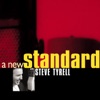
 Steve Tyrell
A New Standard
1999 Atlantic/WEA 83209
|
|
Tyrell is a straight-ahead singer with an appealing, slightly raspy voice. His version of this song is decidedly romantic.
|
 Don Shirley
...Plays Love Songs/Don Shirley Trio
1999 Collectables 2758
Original recording
|
|
For an entirely different approach to this song listen to pianist Shirley’s solo version played in a classical vein.
|
|
|
|