|
|
|
| “As with many standards, Louis Armstrong nabs the honor of making the first jazz version of this song in 1930....” |
|
 |
|
- Chris Tyle
|
|
| |
Harry Richman and Gertrude Lawrence introduced “Exactly Like You” in Lew Leslie’s International Revue on February 25, 1930, at the Majestic Theater in New York City. After a run of 95 performances the show closed, but two Dorothy Fields and Jimmy McHugh compositions, “On the Sunny Side of the Street” and “Exactly Like You,” endured to become standards.
|
| |
| |
|
| |
|
“Exactly Like You” made the charts several times:
- Ruth Etting (1930, vocal, #11)
- Harry Richman (1930, vocal, #12)
- Sam Lanin and His Orchestra (1930, Smith Ballew, vocal, #19)
- Benny Goodman Trio (1936, Lionel Hampton, vocal, #12)
- Don Redman and His Orchestra (1937, #14)
|
|
| |
|
| |
|
Broadway was hard hit by the Great Depression, and many shows like the International Revue closed after short runs. Although well-funded and featuring a top-notch cast (Gertrude Lawrence, Harry Richman, Jack Pearl, Anton Dolin, and Argentinita) with choreography by master Busby Berkeley and songs by McHugh/Fields, the musical was poorly scripted, too long, and, in general, had little appeal for audiences or critics.
|
| |
| |
|
| |
|
|
| |
| |
|
| |
|
The Depression hit the recording industry, too, and once the initial popularity of a tune wore off, the public was on to something new. As swing became progressively more popular, big band leaders resurrected a number of older hits. The Benny Goodman Trio’s version of “Exactly Like You” from August, 1936, was the first recorded vocal by vibraphonist/drummer Lionel Hampton, and the disc hit the charts, rekindling the momentum that would lead to it becoming a jazz standard.
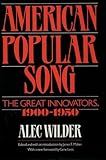
Although this tune has been recorded by many jazz vocalists, its greater appeal over the decades has been as an instrumental. In fact, most jazz singers, beginning with Louis Armstrong’s 1930 recording, avoid singing the melody as written. For example, Armstrong, Jimmy Rushing with Count Basie’s band, and Lionel Hampton sang the opening melodic phrase on one note, rather than the descending fourths as written. Alec Wilder, in his book American Popular Song: The Great Innovators, 1900-1950, points out more challenges of this song: “For a pop song it’s very rangy, an octave and a fifth. This vocal demand is seldom found even in a theater song.” He also mentions the lack of a point to take a breath right before and after the bridge, necessitating a slight rhythmic adjustment by the performer.
A great deal of the tune’s charm is in the superb lyrics by Dorothy Fields. As Alec Wilder put it in his book, “Her lyrics often swung, and their deceptive ease gave a special luster to McHugh’s music.” The lyric describes “how grand” it is when you find the right person, “who seems to understand” one’s dreams and schemes.
|
|
|
|
Musical analysis of “Exactly Like You” | | Original Key | C major | | Form | A - A - B - A | | Tonality | Primarily major | | Movement | “A” is angular; a descending scale pattern using intervals of a fourth before a final upward 4th and downward octave. “B” is more flowing, primarily using stepwise motion. | Comments (assumed background) | | Those unfamiliar with this tune will need to pay attention to the “ink,” because the melodic line of “A” does some unexpected things. When the opening interval is heard-3rd scale degree descending to the leading tone-the ear expects this to resolve to the tonic. Instead, it goes to the 2nd scale degree, dropping another fourth before moving up to the tonic. This pattern repeats two more times before the final downward octave leap in measure 8. This could be a problem for the novice, especially vocalists, as the 4th is an unstable interval (and the penultimate augmented 4th-a tri-tone-very unstable, generally singable only by experienced vocalists). | | K. J. McElrath - Musicologist for JazzStandards.com |
|
As with many standards, Louis Armstrong nabs the honor of making the first jazz version of this song in 1930, but the tune didn’t really come into its own until the 1936-37 period when several interesting versions were made. In 1936 Benny Goodman’s Trio, with a vocal by vibraphonist Lionel Hampton, brought the tune back into view. The following year Count Basie’s Orchestra, on their second recording session for Decca, waxed a swinging version featuring solos by Basie, the seldom-heard baritone saxophonist Jack Washington, Lester Young on tenor sax, the short-lived but excellent trumpeter Bobby Moore, and a vocal by Jimmy Rushing. That same year in Paris, the Quintette of the Hot Club of France, with violinist Stephane Grappelli and brilliant guitarist Django Reinhardt, recorded a classic version.
Chris Tyle - Jazz Musician and Historian
|
Additional information for "Exactly Like You" may be found in:
|
|
|
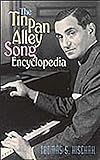 Thomas S. Hischak
The Tin Pan Alley Song Encyclopedia
Greenwood Press
Hardcover: 552 pages
(1 paragraph including the following types of information: film productions, performers and style discussion.)
|
|
|
|
|
| This section shows the jazz standards written by the same writing team. |
|
|
|
|
Comment Policy
- Your comments are welcome, including why you like
this tune, any musical challenges it presents, or additional background information.
- Jazz musicians, fans, and students of all ages use this website as an educational resource.
As such, off-topic, off-color, unduly negative, and patently promotional comments will be removed.
- Once submitted, all comments become property of JazzStandards.com.
By posting, you give JazzStandards.com permission to republish or otherwise distribute your comments in any format or other medium.
JazzStandards.com reserves the right to edit or remove any comments at its sole discretion.
|
|
|