|
|
|
| ...it was Harbach who added the lyrics based upon the Russian proverb, “When your heart’s on fire, smoke gets in your eyes,” |
|
 |
|
- JW
|
|
| |
On November 18, 1933, the Broadway musical Roberta opened on the stage of the New Amsterdam Theater and, despite mostly negative reviews, managed to run for 295 performances. The show’s longevity was due in no small part to the Kern/Harbach songs, of which “Smoke Gets In Your Eyes” stood out among such other tunes as “I’ll Be Hard to Handle,” “Yesterdays,” and “Let’s Begin.”
Despite the popularity of “Smoke Gets in Your Eyes” and the fact that it is the first song mentioned when speaking of Roberta, nearly twice as many jazz artists currently cover “Yesterdays.”
Roberta, based on Alice Duer Miller’s novel, Gowns by Roberta, told the story of a college football player who inherits a dress shop in Paris. The plot was panned as overly romantic and just plain ridiculous; however, the songs purportedly saved what was to be Jerome Kern’s last successful Broadway show. The Herald Tribune reported that there was a “sudden outburst of public whistling, humming, and crooning of its score.”
Another major strength of the original Broadway run was a stellar cast that included Fay Templeton, Lyda Roberti, Sydney Greenstreet, George Murphy, Bob Hope, and Fred MacMurray. Tamara was given the honor of performing the lovely “Smoke Gets in Your Eyes.”
|
| |
| |
|
| |
|
An instant hit with the public, “Smoke Gets in Your Eyes” made the pop charts four times in 1934:
- Paul Whiteman and His Orchestra (Bob Lawrence, vocal, #1)
- Leo Reisman and His Orchestra Tamara, vocal, #3)
- Emil Coleman and His Riviera Orchestra (Jerry Cooper, vocal, #4)
- Ruth Etting(#15)
Later,
- Artie Shaw and the Gramercy Five (1941, #24)
- The Platters (1959, million-seller #1)
- Blue Haze (1973, #27)
|
|
| |
|
| |
|
The Platters’ best-selling version has been collected in The Platters Universal Masters Collection. This compilation contains a crisp version of The Platters’ number one hit. This doo-wop arrangement is probably the best known of all versions.
Hot on the heels of its Broadway success, Roberta found new life as a 1935 Hollywood musical. The film starred Irene Dunne, Randolph Scott, Fred Astaire, and Ginger Rogers and was again well-received on the strength of the Kern/Harbach score* as well as the Astaire/Rogers dance routines. The 1952 remake, Lovely to Look At, was not as well reviewed.
Described as “incomparable” and “immortal,” “Smoke Gets in Your Eyes” was written by Kern as a tap dance number to be performed between scene changes during his Broadway hit Showboat. Originally up-tempo and based on a radio commercial, Kern turned it into a ballad at the request of the producer. Otto Harbach later claimed that he suggested the tempo adjustment, which reportedly irritated Kern. Regardless of who came up with the ballad idea, it was Harbach who added the lyrics based upon the Russian proverb, “When your heart’s on fire, smoke gets in your eyes,” The song was an instant hit.
|
| |
| |
|
| |
|
|
| |
| |
|
| |
|
*According to Clive Hirschhorn’s book Hollywood Musicals the film Roberta retained four of the show’s original numbers, “Let’s Begin,” “Smoke Gets in Your Eyes,” “Yesterdays,” and “I’ll Be Hard to Handle,” the latter with new lyrics by Bernard Dougall. Three more were used as background music and two were commissioned from Kern and lyricist Dorothy Fields: “Lovely to Look At” and “I Won’t Dance” which was originally written by Kern and Oscar Hammerstein II for a London show called Three Sisters.
|
|
|
|
More information on this tune... |
|
See the Reading and Research page for this tune for additional references. |
|
- Jeremy Wilson
|
|
| This section suggests definitive or otherwise significant recordings that will help jazz students get acquainted with
“Smoke Gets in Your Eyes.” These recordings have been selected from the Jazz History and
CD Recommendations sections.
|
While there are some wonderful, straightforward instrumental recordings of this tune, the one that stands out is Thelonious Monk’s version for Prestige from 1954 ( Monk); as quirky as Monk’s arrangement and playing are, the performance of the song’s melody is ultimately rather faithful and ranks as one of Monk’s definitive performances of standards. As for versions with the lyrics included, Sarah Vaughan’s classic performance ( No Count Sarah) from 1958 (on the “No Count Sarah” album and subsequently reissued on numerous compilations) is a great starting point.
Noah Baerman - Jazz Pianist and Educator
|
Kern was slow to embrace new styles, and there
is considerable discussion about his 1930’s melodies
clinging to the qualities of an operetta. Author/editor/publicist
Eric Myers says, “Jerome Kern had planned Roberta
as a semi-operetta along the lines of his previous
hits, The Cat and the Fiddle and Music
in the Air. What finally emerged was closer
to traditional musical comedy, although the refulgent
melodies of “Smoke Gets in Your Eyes,” “The Touch
of Your Hand,” and “Yesterdays”
definitely have their roots in the florid ground
of operetta.”
Allen Forte, in his book
Listening to Classic American Popular Songs,
observes that the full-octave ascension in the
melody of the first few bars of “Smoke Gets in Your
Eyes” creates “a romantic ambience characteristic
of the European operetta.”
In
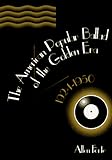
The American Popular Ballad of the Golden Era,
however, he adds that the B major key of the bridge
and the “swift and harmonically rich transition
from bridge to chorus” represent a departure from
the operetta tradition.
The repeated use of a half note, followed by
four eighth notes, is highly attractive to any jazz
musician, the device creating a melodic drive and
an invariant construction around which to improvise.
The bridge is often characterized as “adventurous”
or “daring,” with its enharmonic (notes with the
same pitch but different names) change of key, of
which Kern is said to have been fond.
Harbach’s lyrics tell a story beginning with
blind love and the rejection of friendly advice
When your heart’s on fire
… Smoke gets in your eyes
And ending with loss, derision, and the consolatory
statement
… when a lovely flame dies,
Smoke gets in your eyes.
But the middle of the song holds equal interest.
The first line of the bridge shows Harbach is no
more fully out of the operetta camp than Kern, having
written
So I chaffed them and I gaily
laughed
And the bridge is where the mood of the song
changes, going from laughter to loss, in perfect
concert with the enharmonic change of key. -JW
|
Musical analysis of
“Smoke Gets in Your Eyes”
|
| Original
Key |
Eb major,
with false key change to B major during
the bridge (originally written as Cb major) |
| Form |
A1 – A2 –
B – A2 |
| Tonality |
Primarily
major |
| Movement |
The rhythmic
motif is a half note followed by four eights,
gradually climbing, then descending in section
“A.” The generally arpeggiated section “B”
rises and falls with some wide leaps (6th). |
|
Comments
(assumed
background)
|
|
For a ballad, this tune has a good deal
of dynamic, forward-moving energy due to
the placement of the moving notes toward
the end of the measure. (There are very
few sustained notes in this work.) The harmonic
progressions at work here are simple: “A”
consists of I –ii7 – V7 – I, followed by
I – I7(+5) (V7/IV) – IV - #iv˚7 – I, and
finishing with the opening harmonic sequence.
This, incidentally, does not take into consideration
the many embellishing and passing harmonies,
both in Kern’s original and the additions
made by jazz performers over the years.
Section “B” uses the “ice cream changes”
(“Blue
Moon,” “Heart
And Soul”) for the first six measures.
The second time through, however, the vi
resolves back to the original tonic key
of the “A” section (in the original key,
the sequence is B –Abm – Eb, in which the
Ab – vi of B – becomes the iv of Eb.)
|
|
K. J. McElrath - Musicologist for JazzStandards.com |
|
This tune scored highly with piano players, beginning
in 1941 with a version by
Teddy Wilson; versions by Dodo Marmarosa and
Nat “King” Cole in 1946; and 1947 recordings by
Johnny Guarnieri and Art Tatum.
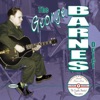
An octet, led by guitarist George Barnes in a
1946 session, had the unusual instrumentation of
four reeds and standard four-piece rhythm section.
What was even more remarkable was the instruments
used by the reed players (especially for that time):
flute, alto flute, bass clarinet, piccolo, English
horn, oboe and bassoon. Their rendition of “Smoke
Gets in Your Eyes” is truly unique, as are the titles
of some of the original compositions: “Kilroy is
Here”; “Zebra’s Derby”; “Priority on a Moonbeam.”
Chris Tyle - Jazz Musician and Historian
|
Additional information for "Smoke Gets in Your Eyes" may be found in:
|
|
|
 David Ewen
Great Men of American Popular Song
Prentice-Hall; Rev. and enl. ed edition
Unknown Binding: 404 pages
(3 paragraphs including the following types of information: history, music analysis and recordings.)
|
|
|
|
|
 Alan Lewens
Popular Song: Soundtrack of the Century
Watson-Guptill Publications
Paperback: 192 pages
(1 page including the following types of information: history, performers, style discussion and song writer discussion.)
|
|
|
|
|
 Robert Gottlieb, Robert Kimball
Reading Lyrics
Pantheon
Hardcover: 736 pages
(Includes the following types of information: song lyrics.)
|
|
|
|
|
 Gary Giddins
Visions of Jazz: The First Century
Oxford University Press; New Ed edition
Paperback: 704 pages
(1 paragraph including the following types of information: history.)
|
|
|
|
|
“Smoke Gets in Your Eyes” was included in these films:
- Roberta (1935, Irene Dunne)
- Till The Clouds Roll By (1946,
Cyd Charisse and Gower Champion)
- Lovely to Look At (1952, Kathryn
Grayson)
- Four Weddings And A Funeral
(1994, Nu Colours)
- Smoke (1995, The Jerry Garcia
Band)
- Hearts in Atlantis (2001,
The Platters)
|
| This section shows the jazz standards written by the same writing team. |
|
|
|
|
Comment Policy
- Your comments are welcome, including why you like
this tune, any musical challenges it presents, or additional background information.
- Jazz musicians, fans, and students of all ages use this website as an educational resource.
As such, off-topic, off-color, unduly negative, and patently promotional comments will be removed.
- Once submitted, all comments become property of JazzStandards.com.
By posting, you give JazzStandards.com permission to republish or otherwise distribute your comments in any format or other medium.
JazzStandards.com reserves the right to edit or remove any comments at its sole discretion.
|
|
| Click on any CD for more details at Amazon.com |
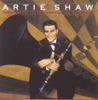
 Artie Shaw
The Complete Gramercy Five Sessions
RCA Label 7637
Original recording 1940
|
|
This lightly swinging hit version of “Smoke Gets In Your Eyes” documents the first incarnation of clarinetist and bandleader Shaw’s small group, the Gramercy Five. Billy Butterfield is featured on trumpet and Johnny Guarnieri, normally a pianist, plays some surprisingly funky harpsichord.
|
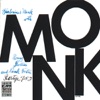
 Thelonious Monk
Monk
1991 Original Jazz Classics 16
Original recording 1954
|
|
Thelonious Monk is heard here at a transitional point between his heralded stints on the Blue Note and Riverside record labels. The front line of Ray Copeland on trumpet and Frank Foster on tenor saxophone plays Monk’s arrangement, but Monk is the featured soloist. With the assistance of bassist Curly Russell and drummer Art Blakey, Monk provides a solo that is alternately lyrical and jarring, but always compelling.
|
|
 Sarah Vaughan
No Count Sarah
1991 Polygram 824057
Original recording 1958
|
|
Vocalist Vaughan offers a wonderful performance here. Her backing band is made up of the Count Basie Orchestra, with pianist Ronnell Bright taking Basie’s place, and the lush arrangement is courtesy of Luther Henderson.
|
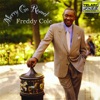
 Freddy Cole
Merry-Go-Round
2000, Telarc
|
|
While the familial connection is there, pianist/vocalist Cole is his own man and an adept interpreter of some great tunes on this CD in the company of young horn players Steve Davis and Eric Alexander.
|
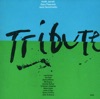
 Keith Jarrett
Tribute
2000 ECM 847135
Original recording 1989
|
|
Pianist Jarrett is heard here with his “Standards Trio,” also featuring bassist Gary Peacock and drummer Jack DeJohnette, paying tribute to saxophonist Coleman Hawkins with a characteristically lyrical reading of “Smoke Gets In Your Eyes.”
|
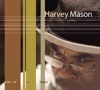
 Harvey Mason
With All My Heart
2004, RCA
|
|
Drummer Mason breathes new life into the song on this all-star trio album. Joined by Bob James and Charlie Haden, Mason makes “Smoke Gets in Your Eyes” a highlight of an already impressive album.
|
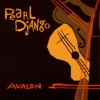
 Pearl Django
Avalon
2000 Modern Hot Records
|
|
This quintet of violin, bass, and three guitarists (sometimes playing unusual models) has brought the lively sound of the Quintet of the Hot Club of France into the 21st century. They swing “Smoke Gets in Your Eyes” at a joyous tempo.
|
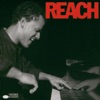
 Jacky Terrasson
Reach
1996 Blue Note Records 35739
|
|
Always innovative and engaging, pianist Terrasson bends the song into new shapes. On this album he bookends the song in an arrangement with the title track.
|
 Duke Jordan
As Time Goes By
1994, Steeplechase
Original recording, 1985
|
|
Hard bop pianist Jordan delivers a “cool” version of the song in an arrangement with “Lush Life.”
|
|
|
|