|
|
|
| “Roberta starred Irene Dunne, Randolph Scott, Fred Astaire, and Ginger Rogers and once again was well received on the strength of the Kern-Harbach score* as well as the Astaire-Rogers dance routines. |
|
 |
|
- JW
|
|
| |
On November 18, 1933, “Yesterdays” was introduced to a New Amsterdam Theater audience. The song was included in the score of Roberta, a Broadway musical that would enjoy a successful run of 295 performances. “Yesterdays” was an instant hit, appearing on the recording charts a week after the show opened. The recording by Leo Reisman and His Orchestra (Frank Luther, vocal) would climb all the way to third place.
|
|
| |
|
| |
|
Roberta, based on Alice Duer Miller’s novel, Gowns by Roberta, told the story of a college football player who inherits a dress shop in Paris. The plot was panned as overly romantic and just plain ridiculous; however, the songs purportedly saved what was to be Jerome Kern’s last successful Broadway show. Along with “Yesterdays” the score included such notable songs as “I’ll Be Hard to Handle,” “Let’s Begin,” and “Smoke Gets In Your Eyes.” The Herald Tribune reported that there was a “sudden outburst of public whistling, humming, and crooning of its score.”
Hot on the heels of its Broadway success, Roberta found new life as a 1935 Hollywood musical. The film starred Irene Dunne, Randolph Scott, Fred Astaire, and Ginger Rogers and once again was well received on the strength of the Kern-Harbach score* as well as the Astaire-Rogers dance routines. The 1952 remake, Lovely to Look At, was not as well reviewed.
Another major strength of the original Broadway run was a stellar cast that included Tamara, Lyda Roberti, Sydney Greenstreet, George Murphy, Bob Hope and Fred MacMurray. Fay Templeton was given the honor of performing the lovely “Yesterdays.”
|
| |
| |
|
| |
|
Jerome Kern was slow to embrace new styles, and there is considerable discussion about his 1930’s melodies clinging to the qualities of an operetta. Author-editor-publicist Eric Myers says, “Jerome Kern had planned Roberta as a semi-operetta along the lines of his previous hits, The Cat and the Fiddle and Music in the Air. What finally emerged was closer to traditional musical comedy, although the refulgent melodies of ‘Smoke Gets in Your Eyes,’ ‘The Touch of Your Hand’ and ‘Yesterdays’ definitely have their roots in the florid ground of operetta.”
|
| |
| |
|
| |
|
|
| |
| |
|
| |
|
*According to Clive Hirschhorn’s book Hollywood Musicals the film Roberta retained four of the show’s original numbers, “Let’s Begin,” “Smoke Gets in Your Eyes,” “Yesterdays,” and “I’ll Be Hard to Handle,” the latter with new lyrics by Bernard Dougall. Three more were used as background music and two were commissioned from Kern and lyricist Dorothy Fields: “Lovely to Look At” and “I Won’t Dance” which was originally written by Kern and Oscar Hammerstein II for a London show called Three Sisters.
|
|
|
|
More information on this tune... |
|
See the Reading and Research page for this tune for additional references. |
|
- Jeremy Wilson
|
|
| This section suggests definitive or otherwise significant recordings that will help jazz students get acquainted with
“Yesterdays.” These recordings have been selected from the Jazz History and
CD Recommendations sections.
|
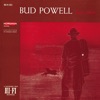
Billie Holiday’s plaintive version of “Yesterdays” ( The Complete Commodore Recordings) makes it instantly clear why so many people associate the tune with her. Among the many instrumental ballad versions, Bud Powell’s recording from 1950 ( Jazz Giant) stands out and is a stellar example of his mastery of solo piano ballads.
Noah Baerman - Jazz Pianist and Educator
|
Written without a verse, “Yesterdays” is not
as well known in the pop world as the other Roberta
hit “Smoke Gets in Your Eyes.” As a jazz standard, however,
it has been recorded by nearly twice as many instrumentalists
and vocalists, due in part to its chord progressions.
Operetta qualities, beyond Kern’s melody, come
through in such Otto Harbach lyrics as “Joyous free
and flaming life” “Forsooth was mine.” His message
is not one of lost love, as with “Smoke Gets in Your Eyes,” but of lost youth. The lines,
“Sad am I,” “Glad am I,” speak of the mixture of
pain and joy in remembering “mad romance” and “gay
youth.” -JW
|
Musical analysis of
“Yesterdays”
|
| Original
Key |
C minor |
| Form |
A – B – A
– B |
| Tonality |
Minor throughout |
| Movement |
Slow; sustained
pitches in the lower range, followed by
an eight-note ascending scale and more sustained
pitches in the upper range |
|
Comments
(assumed
background)
|
|
This is a dark and haunting tune. The melody
has little substance, but the chord progression
– similar to “Alone Together” in the first four bars (i
– vi – ii7 – V7) and the chromatic descent
of “My Funny Valentine” in the second four
(in the present key, Cm – G7/B – Eb/Bb –
Am7(b5) – has proven popular among jazz
improvisers. A cycle-of-fifths progression
in mm. 9-12, leading to Ab and Db, surprises
the ear as it moves up a half-step to ii7
and then descends chromatically back to
the tonic. |
|
K. J. McElrath - Musicologist for JazzStandards.com |
|
Clarinetist and bandleader Artie Shaw
had a great disdain for most of the output of Tin Pan Alley, which he
derided on many occasions
as “crap.” But then Shaw pointed out that the
music of the great craftsmen of song---Porter, Kern,
Gershwin, Rodgers---is music worth playing.
Shaw’s approach definitely had a strong impact
on the bebop generation of musicians who tended
to favor Shaw’s playing and his band over his rival,
Benny Goodman. The Shaw discography lists many
tunes that became standards for the next generations.
A case in point is Artie’s recording of “Yesterdays,”
not so much for being innovative but for the excellent
arrangement and musicianship on a song not often
played by swing bands.
Chris Tyle - Jazz Musician and Historian
|
Additional information for "Yesterdays" may be found in:
|
|
|
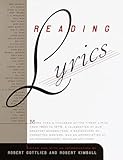 Robert Gottlieb, Robert Kimball
Reading Lyrics
Pantheon
Hardcover: 736 pages
(Includes the following types of information: song lyrics.)
|
|
|
|
|
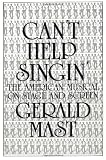 Gerald Mast
Can't Help Singin'
Overlook Press; Rei edition
Paperback: 400 pages
(2 paragraphs including the following types of information: lyric analysis and music analysis.)
|
|
|
|
|
 Gary Giddins
Visions of Jazz: The First Century
Oxford University Press; New Ed edition
Paperback: 704 pages
(2 paragraphs including the following types of information: history.)
|
|
|
|
|
“Yesterdays” was included in these films:
- Roberta (1935, Irene Dunne)
- Till The Clouds Roll By (1946,
Chorus)
- Lovely to Look At (1952, Kathryn
Grayson)
And on the small screen:
|
| This section shows the jazz standards written by the same writing team. |
|
|
|
|
Comment Policy
- Your comments are welcome, including why you like
this tune, any musical challenges it presents, or additional background information.
- Jazz musicians, fans, and students of all ages use this website as an educational resource.
As such, off-topic, off-color, unduly negative, and patently promotional comments will be removed.
- Once submitted, all comments become property of JazzStandards.com.
By posting, you give JazzStandards.com permission to republish or otherwise distribute your comments in any format or other medium.
JazzStandards.com reserves the right to edit or remove any comments at its sole discretion.
|
|
| Click on any CD for more details at Amazon.com |
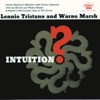
 Lennie Tristano
Intuition
1996 Blue Note 52771
Original recording 1949
|
|
Tristano’s unique combination of lyricism and angular dissonance is finely displayed on this influential recording.
|
 Bud Powell
Jazz Giant
Polygram Records
|
|
Powell, still at his peak, shows off his Art Tatum inspired style of solo piano ballad playing.
|
 Miles Davis
Highlights from the Plugged Nickel
Sony 67377
Original recording 1965
|
|
Davis revisits this tune with his ultra-flexible 1960s quintet. The tune weaves between floating introspection and confident swing and also features solos by Wayne Shorter and Herbie Hancock.
|
 Paul Gonsalves
Gettin' Together
1991 Original Jazz Classics 203
Original recording 1960
|
|
Gonsalves, best known for his work with Duke Ellington, breaks out with a swinging version of “Yesterdays,” aided by Nat Adderley, Wynton Kelly, Sam Jones and Jimmy Cobb.
|
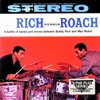
 Buddy Rich/Max Roach
Rich vs. Roach
1991, Polygram 826987
Original recording, 1959
|
|
What seems like a novelty act actually means twice the value for the listener. The Buddy Rich Quintet dukes it out with the Max Roach Quintet in an up-tempo romp as each group is fed through opposite channels in the recording.
|
|
 John Bishop/Jeff Johnson/Rick Mandyck/John Stowell
Scenes
2003, Origin Records
|
|
This contemporary quartet of drums, bass, tenor sax, and guitar creates a new, freewheeling “Yesterdays” before returning to the melody.
|
|
 Charles Mingus
Mingus Three
1997, Blue Note 57155
Original recording, 1957
|
|
This album contains a version highlighting wonderful dialogue between bass player Mingus, pianist Hampton Hawes, and drummer Dannie Richmond.
|
 Fred Hersch/Bill Frisell
Songs We Know
1998 Nonesuch Records 79468
Original recording 1998
|
|
Spontaneous and intimate, “Yesterdays”’ allows guitarist Frisell and pianist Hersch to showcase their innate sense of camaraderie and obvious reverence for the music.
|
|
|
|