|
|
|
| “In a trio setting pianist Monk delivers a breathtaking exploration of the song...” |
|
 |
|
- Ben Maycock
|
|
| |
Considering the spare melody and lyrics of “It Don’t Mean a Thing (If It Ain’t Got That Swing),” the immediate success was due, in no small way, to the vocal by Ivie Anderson, who introduced it with the Duke Ellington Band in February, 1932. The original version is available on Ivie Anderson’s It Don’t Mean a Thing CD.
|
| |
| |
|
| |
|
Ellington’s recording went onto the charts for six weeks, peaking at number six. In September, 1932, the Mills Brothers covered it and saw their rendition rise to number seven. It was the right combination of talent at the right time that made the song immediately popular.
|
|
| |
|
| |
|
There are many stories about the origin of the song’s title. Depending on whom you believe, it was a favorite saying of James “Bubber” Miley, who played the trumpet with Ellington’s band in the 1920’s. Yet another account has Cootie Williams (Miley’s replacement) insisting it was his catch phrase. Still another has Irving Mills taking credit for using the phrase in a sentence while telling Ellington that the customers weren’t dancing to the band’s music. In actual fact, any number of people may have been using the phrase when Ellington wrote the song.
|
| |
| |
|
| |
|
|
| |
| |
|
| |
|
The term itself, “swing,” has been used in a number of ways. Today, the most common use among jazz musicians relates to subtle changes in the timing of the melody, which promote a “swing feeling.” That is to say that the melody notes are played ahead of the beat, across the beat, or behind the beat, allowing the performer to express a more relaxed, rhythmic, or even driving feeling.
Another, more specific use of the term refers to the style of music played by big band dance orchestras of the 1930’s and 1940’s. But in the 1920’s, and before, musicians usually used the term “swing” as a synonym for “jazz.”
Regardless of the definition, there is little argument that Ellington’s “It Don’t Mean A Thing...” is the song that brought the word “swing” into general use. The song is further credited with predicting the swing era, giving the swing era its name, and providing one more reason to call Duke Ellington a prophet.
|
| |
| |
|
| |
|
|
|
|
|
More information on this tune... |
|
- Jeremy Wilson
|
|
| This section suggests definitive or otherwise significant recordings that will help jazz students get acquainted with
“It Don't Mean a Thing (If It Ain't Got That Swing).” These recordings have been selected from the Jazz History and
CD Recommendations sections.
|
Not surprisingly, Duke Ellington’s original recording of “It Don’t Mean a Thing” ( Ken Burns JAZZ Collection: Duke Ellington) is the most significant version of the tune, and it is musically brilliant. Ella Fitzgerald’s up-tempo performance from 1956 ( Day Dreams: The Best of the Duke Ellington Songbooks) is also significant, infectiously retaining the spirit of the original while updating it with a more modern interpretation of swing. Meanwhile, the tune has in many circles become popular as a test of musicians’ capacity to handle extremely fast tempos. Max Roach’s version with Sonny Rollins ( Max Roach Plus Four) is the definitive example of this approach.
Noah Baerman - Jazz Pianist and Educator
|
|
Musical analysis of
“It Don’t Mean a Thing (If It Ain’t Got
That Swing)”
|
| Original
Key |
F minor ending
in Ab major, with temporary shifts to Db
major and Eb major during the bridge. |
| Form |
A – A – B
– A |
| Tonality |
Primarily
minor – major tonality at the end and during
the bridge. Use of the flatted 5th “blue
note.” |
| Movement |
Arpeggiated
up, stepping down; many repeated notes. |
|
Comments
(assumed
background)
|
|
This is a favorite among jazz players, with
its minor descending progression similar
to “Steppin’ Out With My Baby” and the folk
song “Sixteen Tons.” A few changes have
taken place with this piece since it was
written. They are not an improvement on
the original. The last four measures of
“A” contain the (in)famous “du-wah-du-wah-du-wah”
passage. Modern players begin this on beat
two, but if one listens carefully to Ellington’s
original 1932 recording, one finds that
it actually starts on the second half of
the first beat! The chord progression of
this has also changed. Today, it is common
to play IV-iv(ii7/I)-I ( Bb7 – Bbm – Ab).
Originally, an ascending progression going
to a diminished-seventh, leading tone chord
was used (Bb7 – B˚7 – Ab – Cb˚7 – Ab) with
a V7(+5) returning to the second “A.” In
both cases, the original is preferable. |
|
K. J. McElrath - Musicologist for JazzStandards.com |
|
One of the most interesting of the early recordings
of Duke Ellington’s defining paean to jazz was done
by three sisters from New Orleans.
The Boswell Sisters--Connee, Helvetia (Vet) and
Martha--grew up with jazz in the Crescent City and
went on to have a short-lived yet prolific career
on radio, in movies, and on records. They were
the pioneer group of jazz vocal harmony.
Their treatment of Ellington’s tune is a typical
illustration of their musical creativity, featuring
a slow tempo solo chorus by Connee (who later went
on to a successful solo career); a double-time,
pig-Latin-style, scat chorus with the three sisters;
a slow, haunting trombone solo by Tommy Dorsey;
then a vocalized half chorus done double-time.
Chris Tyle - Jazz Musician and Historian
|
Additional information for "It Don't Mean a Thing (If It Ain't Got That Swing)" may be found in:
|
|
|
 Thomas S. Hischak
The Tin Pan Alley Song Encyclopedia
Greenwood Press
Hardcover: 552 pages
(1 paragraph including the following types of information: film productions, history and performers.)
|
|
|
|
|
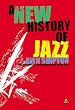 Alyn Shipton
A New History of Jazz
Continuum International Publishing Group
Paperback: 956 pages
(1 paragraph including the following types of information: history and music analysis. (Page 275).)
|
|
|
|
|
“It Don't Mean a Thing (If It Ain't Got That Swing)” was included in these films:
- Harlem Nights (1989)
- Swing Kids (1993, Billy Banks)
- Corrina, Corrina (2000, Ivie
Anderson with Duke Ellington and His Orchestra)
|
| This section shows the jazz standards written by the same writing team. |
|
|
|
|
Comment Policy
- Your comments are welcome, including why you like
this tune, any musical challenges it presents, or additional background information.
- Jazz musicians, fans, and students of all ages use this website as an educational resource.
As such, off-topic, off-color, unduly negative, and patently promotional comments will be removed.
- Once submitted, all comments become property of JazzStandards.com.
By posting, you give JazzStandards.com permission to republish or otherwise distribute your comments in any format or other medium.
JazzStandards.com reserves the right to edit or remove any comments at its sole discretion.
|
|
| Click on any CD for more details at Amazon.com |
 Duke Ellington
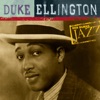
Ken Burns JAZZ Collection: Duke Ellington
Sony
Original recording 1934
|
|
This visionary performance is where the storied history of this song began. Of particular note are the vocals of Ivie Anderson and a stunning alto saxophone solo by Johnny Hodges.
|
 Ella Fitzgerald
Day Dreams: The Best of the Duke Ellington Songbooks
Polygram Records
Original recording 1956
|
|
It was inevitable that Ella Fitzgerald’s “Songbooks” series would come around to paying tribute to Ellington, and this performance is a highlight of those sessions. The tempo is burning, and Ella, predictably, is in total control with her reading of the melody and a brief but brilliant round of scatting. There are also delightful solos by pianist Paul Smith, guitarist Barney Kessel, violinist Stuff Smith and saxophonist Ben Webster.
|
 Kenny Burrell
Ellington Is Forever 1
Fantasy
|
|
Much has been written about the mutual admiration between Duke Ellington and guitarist Kenny Burrell, and this album is the first in a loving two-volume tribute by Burrell to Ellington. This infectious performance is also noteworthy for reuniting Burrell with his longtime collaborator, organist Jimmy Smith. Burell and Smith anchor the rhythm section and contribute wonderful solos.
|
|
 Joe Williams
Presenting Joe Williams & Thad Jones/Mel Lewis
1994, Blue Note 30454
|
|
Vocalist Williams gives a reading of the Ellington classic that jumps back and forth from playful to powerful. The song allows Williams to exercise his voice to its full potential, including some wonderful scatting.
|
 Max Roach
Plus Four
Polygram Records
Original Recording 1956
|
|
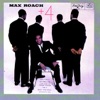
Drummer Max Roach is joined by a "hitting-his-stride"' Sonny Rollins on sax for a blistering version of the song that has everyone pitching in with abandon.
|
 Clark Terry and Red Mitchell
To Duke and Basie
1997 Enja 5011
Original recording 1986
|
|
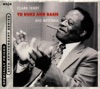
Terry and Mitchell take this tune at a moderate tempo, allowing each of them to relax and swing lightly and soulfully while engaging in playful interaction.
|
 Thelonious Monk
Plays Duke Ellington
Riverside 201
Original recording 1955
|
|
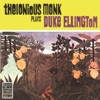
In a trio setting pianist Monk delivers a breathtaking exploration of the song, highlighting his ability to make a great song vibrate with new ideas.
|
 Modern Jazz Quartet
Pyramid
1990 Atlantic 1325
Original recording 1959
|
|
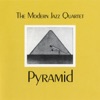
The Modern Jazz Quartet’s combination of sophistication and hard swing made them particularly well-suited to interpret Ellington’s music. This up-tempo performance is a wonderful showcase for vibraphonist Milt Jackson.
|
 The Ray Brown Trio
Summer Wind: Live at the Loa
1990, Concord 4426
|
|
The bassist's trios, despite personnel changes, had one thing in common, they could all swing. Gene Harris is at the piano here, but it is drummer Jeff Hamilton's show. By displacing the beat he transforms the song.
|
 Ernestine Anderson
Hello Like Before
1989, Concord 4031
Original recording, 1977
|
|
Vocalist Anderson gives the tune its full measure of swing. The full sound of her back-up group belies a mere trio. But look at the personnel: Hank Jones (p), Ray Brown (b), and Jimmie Smith (d).
|
|
|
|